









Jacob Elordi Height Fuels Fresh Talk Around the New Wuthering Heights Movie as the Classic Returns to Theaters

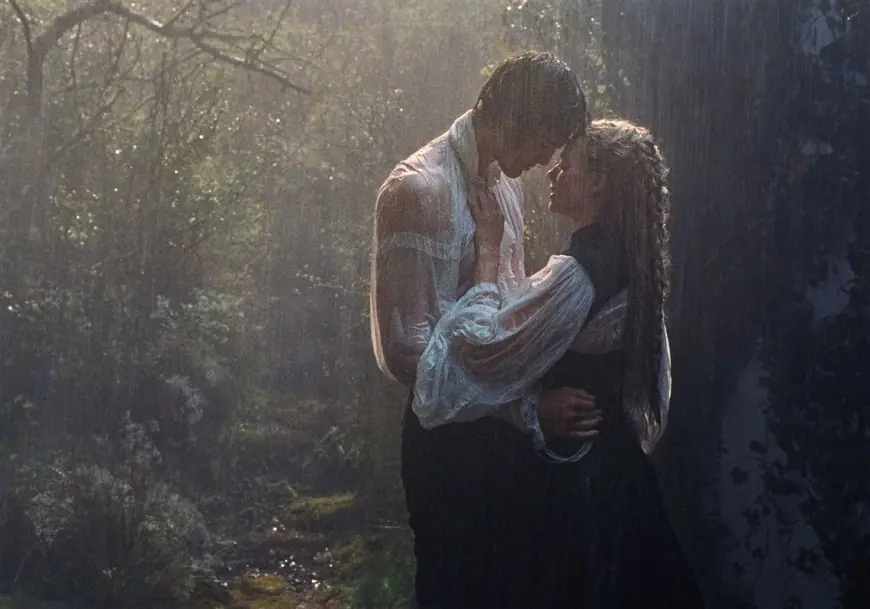
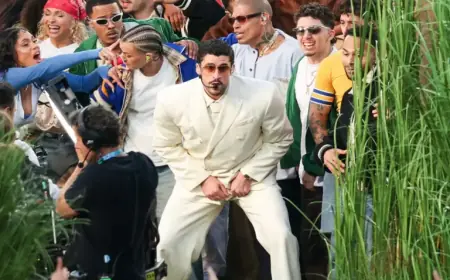
The new Wuthering Heights movie has reignited an old argument with a modern twist: how much do casting, physical presence, and screen chemistry shape a story that’s supposed to feel larger than life? One detail keeps popping up in fan conversation as the film rolls through its opening weekend: Jacob Elordi’s height, listed at 6 feet 5 inches, and how that scale changes the visual power dynamics of Heathcliff on screen.
The timing helps explain the volume of chatter. The latest big-screen adaptation of Emily Brontë’s novel opened in theaters on Friday, February 13, 2026, ET, and quickly turned into a buzzy, highly debated weekend draw. The box office start has been strong, and so has the reaction cycle: some viewers are praising its intensity and modern pulse, while others are arguing that Wuthering Heights loses something when it leans too hard into glamour and immediacy.
Jacob Elordi height: why 6 foot 5 becomes part of the story, not just trivia
A character like Heathcliff is often described as an emotional force of nature, but film has to translate that force into images. Elordi’s 6 foot 5 frame does real work here. In close quarters, the height difference can read as dominance or threat, even before a word is spoken. In wide shots, it can make Heathcliff look like he belongs to the landscape, a figure that can’t be ignored even when he’s silent.
That matters because Wuthering Heights is a story about obsession and control as much as romance. When the camera places a towering Heathcliff opposite Catherine, the audience is nudged toward interpreting their relationship through a physical lens: intensity feels bigger, arguments feel sharper, and tenderness can look more fragile because the visual contrast is so pronounced.
This isn’t inherently good or bad, but it’s a choice that changes the viewing experience. Height becomes a storytelling tool, whether the production set out to make it one or not.
Wuthering Heights movie 2026: what happened this weekend
The film’s opening weekend has positioned it as one of the year’s early theatrical success stories, particularly for an adult-skewing period romance. It arrived with enough marketing heat to feel like an event release rather than a niche literary adaptation, and the turnout suggests audiences were ready for a big, dramatic alternative to franchise-driven fare.
The movie pairs Elordi’s Heathcliff with Margot Robbie as Catherine Earnshaw, and the combination has become the center of both praise and criticism. Supporters point to the raw emotional temperature and the heightened, cinematic approach. Detractors argue that the story’s slow poison, the way love and resentment rot over time, can be hard to preserve when the film’s aesthetic is so immediate and seductive.
Behind the headline: the incentives pushing this version toward spectacle
A classic is never adapted in a vacuum. The incentives are straightforward:
Studios want recognizable titles with built-in awareness.
Filmmakers want stories that can be reinterpreted as personal statements.
Stars want roles that feel iconic and conversation-driving.
Audiences want a reason to leave home for something that feels larger than a streaming scroll.
This Wuthering Heights movie checks each box, and Elordi’s physical presence is part of that packaging. A 6 foot 5 leading man reads instantly on posters, trailers, and red carpets. It’s not just about attractiveness. It’s about silhouette, scale, and the promise of cinematic intensity.
Stakeholders: who wins and who risks backlash
A successful adaptation creates winners across the ecosystem, but it also creates exposure.
The producers and distributors benefit if the movie becomes a must-see date night drama, especially around a holiday weekend. The lead actors benefit if the film expands their range beyond prior roles and anchors them as true box-office draws. Fans of the novel benefit if the adaptation drives new readers back to the book, even if they argue about the film’s choices.
The risks are real, too. Any Wuthering Heights adaptation invites debate about fidelity, tone, and character interpretation. Height, surprisingly, can become a flashpoint inside that larger argument. If viewers feel the physical framing turns Heathcliff into a straightforward romantic lead, they may push back because the character is meant to be more troubling than aspirational.
What we still don’t know
The early weekend buzz answers one question: people are watching. It does not answer the bigger ones:
Will it hold in week two, or drop sharply after curiosity viewing?
Will word-of-mouth emphasize chemistry and visuals, or narrative choices and tone?
Will awards attention materialize, or will the movie remain more cultural moment than critical favorite?
These are the questions that decide whether the film becomes a lasting reference point or a loud, fast flare.
What happens next: plausible paths with clear triggers
Path one is endurance. If the film keeps drawing audiences beyond the opening rush, it becomes proof that adult period romance can still perform theatrically when it feels like an event.
Path two is volatility. If debate overwhelms enthusiasm, the movie may stay famous even if weekly ticket sales cool quickly.
Path three is repositioning. If conversation shifts from controversy to craft and performances, it could find a longer tail as a serious, rewatchable drama.
Why it matters
Elordi’s height being 6 foot 5 is not the point of Wuthering Heights, but it helps explain why this adaptation feels different in motion. Film turns bodies into meaning. When one of the central figures physically dominates the frame, it alters how power, longing, and fear register moment to moment. That’s why a simple fact like height can become part of the cultural story: it’s a reminder that every adaptation is not just a retelling, but a new set of visual arguments about what the classic is really about.