















‘Wuthering Heights’ Gallops to an $82 Million Global Opening, Fuels Debate Over Casting and Women Directors

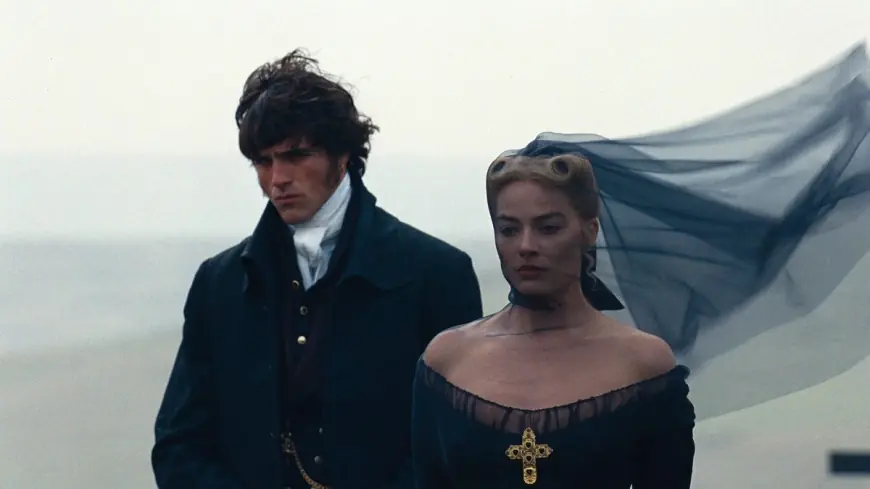
Emerald Fennell’s provocative reimagining of Wuthering Heights landed at No. 1 over the four-day holiday weekend, drawing an estimated $82 million globally and prompting renewed conversation about casting, adaptation choices and the industry’s treatment of women directors.
Box-office surge and rollout strategy
The film was on pace to sell roughly $40 million in tickets across the United States and Canada from Friday through Monday and about $42 million overseas, giving the title a pulse-pounding $82 million global debut. Production costs were estimated at about $80 million, not including hefty marketing expenses. The studio booked the movie into more than 18, 000 theaters worldwide, a wide release that its filmmakers chose over a large streaming offer that was said to have been in the neighborhood of $150 million.
The four-day holiday window included Valentine’s Day on Saturday, Feb. 14, 2026 (ET), and Presidents’ Day on Monday, Feb. 16, 2026 (ET), an unusually favorable calendar that helped drive foot traffic. Early exit polling showed the audience skewed heavily female, and ticket buyers gave the picture a B grade in exit surveys. The opening pushed the title to the top of the weekend box office charts and underscored that a bold, adult-rated romance can still find commercial traction with the right theatrical strategy.
Creative choices and cultural debate
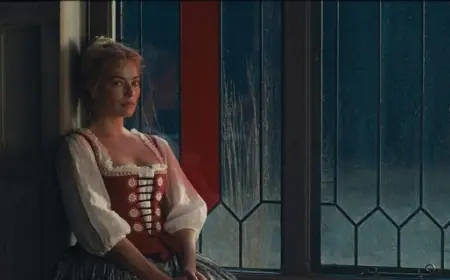
Fennell’s version amplifies sex, stylized shock and an anachronistic soundtrack, leaning into heightened visuals and musical cues to jolt a familiar text into something new. The casting of Margot Robbie as Catherine and Jacob Elordi as Heathcliff has proven polarizing: many viewers cheered the chemistry on display, while others in the literary community criticized the decision as whitewashing a character long depicted as racially ambiguous or nonwhite in the novel’s text and earlier adaptations.
Critics and audiences have also clashed over how the film handles the novel’s darker material. Emily Brontë’s original explores sustained cycles of cruelty, coercion and intergenerational trauma; some viewers say Fennell’s take tilts toward eroticization and glosses over the harshness that defines much of the source material. Still, the movie’s vivid aesthetic and star power have driven strong turnout, particularly among younger female moviegoers drawn to the production’s unabashed sensuality and modernized tone.
Industry implications: a win for a woman director, and a reminder
Fennell is a rare example in contemporary Hollywood: a woman director who has received substantial backing and a large theatrical release despite an uneven box-office track record. Her first feature won her an Academy Award for original screenplay and a director nomination, but it struggled at the box office amid pandemic-era disruptions. Her follow-up was modest commercially as well. The new film’s high-profile rollout — and the studio’s willingness to underwrite a sizable production and a global theater push — is being viewed as an exception rather than the rule.
Martha Lauzen, who leads research into gender representation in the industry, notes that women remain underrepresented behind the camera. Her recent work finds that the share of women directing the top domestic-grossing films remains low and, in some measures, has slipped in recent years. With overall domestic ticket sales still below pre-pandemic totals despite modest year-over-year gains, some industry observers say studios should be more actively cultivating directors from underrepresented backgrounds — not less — as a way to refresh creative pipelines.
For now, the film’s commercial start and the social-media buzz around its casting and creative decisions will likely shape awards-season chatter and studios’ appetite for similarly daring literary adaptations. Whether the financial momentum holds beyond the holiday weekend will determine if the release becomes a template for big-budget, director-driven risks led by women, or a high-profile one-off.