

























Elias Lajunen stretchered off after violent crash in men’s big air qualifier

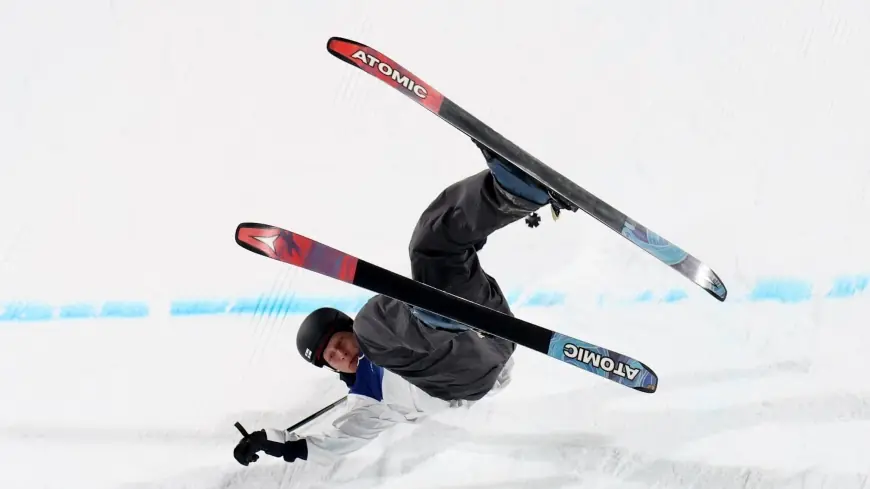
Finnish freestyle skier Elias Lajunen was taken to hospital Sunday, Feb. 15, after a heavy fall during the men’s freeski big air qualifying round at the Winter Games. The incident briefly silenced the venue as medics attended to the 18-year-old on the landing area, turning an otherwise progression-packed night into a reminder of how quickly big air can go wrong.
What happened on the landing
Lajunen crashed at the end of his first-round attempt, coming up short and landing awkwardly before sliding to a stop on the runout. Medical staff reached him quickly, and he was later carried away on a stretcher as the crowd watched in near silence.
Big air is designed to reward height, difficulty, and clean execution, but it also offers very little margin: a small change in speed, takeoff angle, or body position can turn a technical miss into a hard impact. Sunday’s qualifier featured some of the biggest tricks of the Games so far, and the same conditions that help athletes push the limits can also amplify the consequences when something is off.
Early condition update from team officials
Team officials said Lajunen was conscious and responsive after the crash and was able to move his hands and legs. He was transported to hospital for further evaluation.
Beyond that initial update, specifics about possible injuries were not publicly confirmed. In cases like this, athletes are typically assessed for head, neck, back, and internal injuries, with imaging and neurological checks guiding next steps. Until those exams are completed, it can be unclear whether an athlete will face only bruising and soreness or something more serious that requires longer recovery.
Key takeaways
-
Elias Lajunen crashed on his first run in men’s freeski big air qualifying on Feb. 15 (ET).
-
Team officials said he was conscious, responsive, and moving his limbs after the fall.
-
He was taken to hospital for further examination, and his competition status is uncertain.
Who Elias Lajunen is
Lajunen is an 18-year-old Finnish freeski athlete who has been competing internationally under the sport’s governing-body system. His listed birthdate is June 23, 2007, and he represents Finland in slopestyle and big air disciplines that emphasize spins, grabs, and switch takeoffs rather than traditional alpine speed.
For younger athletes, Olympic-stage big air can be a sharp jump in exposure and pressure: a single qualifying round becomes the gateway to a final, and the “safety trick versus score trick” decision gets more complicated when the cut line rises with each competitor’s run. In a qualifier packed with high scores, the incentive to increase difficulty can be strong.
Why big air keeps getting more dangerous
The men’s freeski big air field has been in a visible “progression race” for several seasons, and it showed again Sunday: multiple athletes landed high-difficulty combinations that would have been rare only a few years ago. As difficulty climbs, the runway becomes narrower—especially in qualification formats that reward peak scores rather than consistency.
Several factors can raise risk without any single “mistake” being obvious:
-
Speed control: Slightly too fast or too slow changes the rotation window and landing point.
-
Takeoff timing: Late edges or small toe/heel pressure shifts can throw off axis in the air.
-
Landing firmness: Hard-packed landings can punish even controlled crashes.
-
Score inflation: When the cut line is high, athletes may feel compelled to attempt a bigger trick earlier.
Event organizers and teams have increased emphasis on medical readiness and on-hill response, but prevention remains difficult because the sport’s core appeal is the same element that raises the stakes: athletes are constantly trying new combinations at competition speed.
What comes next for Finland and the event
For Lajunen, the immediate next step is medical clarity. If tests rule out serious injury, timelines can still vary widely depending on concussion symptoms, back or rib pain, or soft-tissue damage. If any red flags appear, return-to-sport protocols tend to be conservative, especially at a major event.
For the competition itself, the men’s big air final remains scheduled for Tuesday, Feb. 17 (ET). Sunday’s qualifying round underscored how tight the margins are likely to be in the final: the highest-scoring athletes separated themselves with both difficulty and execution, and the atmosphere suggested a “must-land” environment where a single under-rotation or sketchy landing could swing the podium.
As the Games move forward, Lajunen’s crash is likely to keep safety and course setup in the conversation—alongside the sport’s relentless push toward bigger, cleaner tricks.