






















Why Tesla Abandoned Radar and LiDAR for Vision Technology

The automotive industry is witnessing a significant transformation in autonomous driving technology. Central to this shift is Tesla’s controversial decision to abandon radar and LiDAR in favor of a vision-only approach. This shift has sparked heated debates among industry experts.
Understanding Sensor Fusion
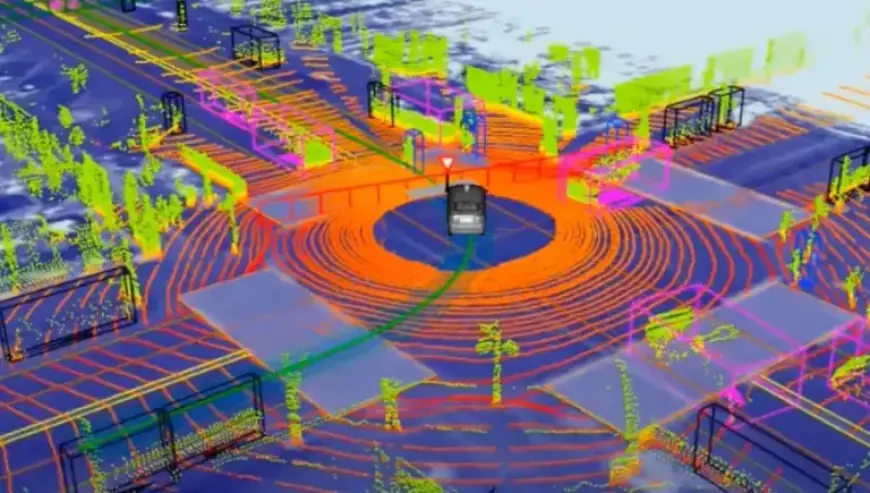
Sensor fusion combines various sensor types to create a comprehensive environment model. This method harnesses the strengths of each sensor while compensating for individual weaknesses. The main types of sensors include:
- Cameras: They offer high-resolution, color-rich data, allowing vehicles to read signs and recognize traffic lights. However, their performance diminishes in poor weather conditions.
- Radar: Excellent for measuring distance and velocity, radar can function in adverse weather. Still, it lacks precision in object identification, especially for stationary items.
- LiDAR: Utilizing lasers to create detailed 3D maps, LiDAR excels in distance measurement but is costly and struggles in inclement weather. It also generates a vast amount of data, which requires significant computational resources to process.
Tesla’s Initial Multi-Sensor Approach
Initially, Tesla incorporated both cameras and radar in its Autopilot systems. This conventional setup was designed to provide a safety net, particularly for features like Traffic-Aware Cruise Control. However, a major change occurred in 2021.
The Shift to Tesla Vision
In mid-2021, Tesla announced the removal of radar from its new Model 3 and Model Y vehicles. This marked the beginning of the Tesla Vision system, relying solely on a camera-based approach. Elon Musk emphasized the dangers of sensor contention, where conflicting data from different sensors can increase risk rather than mitigate it.
Musk argued that relying on multiple sensors could cause ambiguity in decision-making. Tesla’s engineers noted that radar struggles to differentiate stationary objects, which sometimes led to false braking incidents. They believe a successful autonomous system must solve the vision challenge, much like humans rely on their eyes for driving.
Current Progress with Tesla Vision
Today, all new Tesla vehicles are equipped with the Tesla Vision system, powered by eight cameras. This sophisticated system utilizes a neural network to analyze and navigate the world. Interestingly, while new Model S and Model X vehicles have high-definition radar, Tesla has not activated it for Full Self-Driving (FSD) use.
The Implications of a Vision-Only Strategy
Tesla’s decision to forego sensor fusion distinguishes it from other companies in the autonomous driving sector. This strategy is a calculated risk, with the belief that mastering computer vision is crucial for creating an efficient and scalable autonomous system. If successful, Tesla could develop a cost-effective solution, making their vehicles more competitive in the market.
In conclusion, Tesla’s commitment to a vision-only technology stems from a deep-seated belief in its potential to emulate human-like intelligence in driving. Their approach remains a subject of interest as the company continues to advance in the realm of autonomous vehicles.