
























How to Get to Heaven from Belfast review — a frenzied, female‑led murder caper

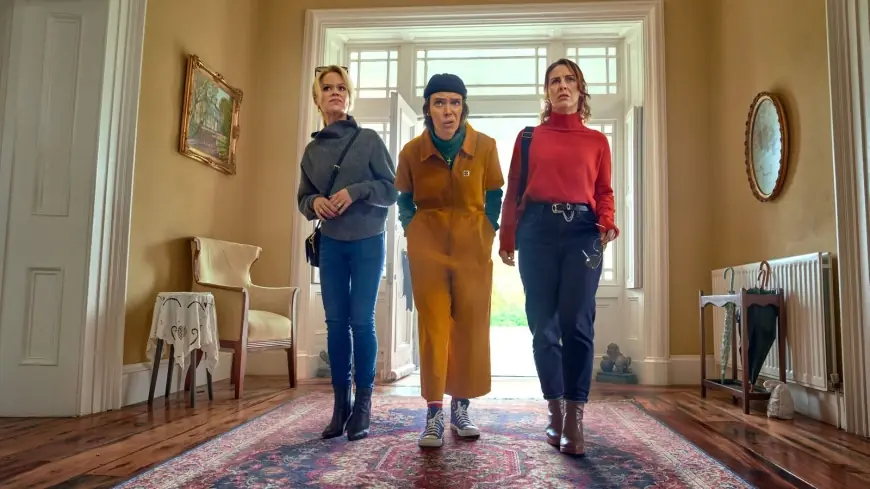
Lisa McGee’s new series how to get to heaven from belfast turns a reunion at a funeral into a slippery, often uproarious whodunnit. Equal parts comedy and conspiracy, the show sends three former schoolfriends back into the past to unpick a secret that has clearly refused to stay buried. Fast, funny and frequently unnerving, it is a clear creative throughline from the writer’s earlier work while striking out in sharper, darker directions.
Plot, pace and tone: mystery wrapped in mayhem
The premise is simple and immediately absorbing: Dara, Saoirse and Robyn reunite to attend the funeral of their estranged fourth friend, Greta. Flashbacks reveal a terrifying teenage night in a woods — a shack on fire, satanic‑style symbols on a wall and a matching occult tattoo — and the three women are left with an unresolved secret. At the wake, Saoirse, who makes her living writing crime on television, spots that the corpse in the coffin does not bear the distinctive tattoo. Suspicion hardens into a determined, increasingly chaotic investigation.
The series moves at breakneck speed. Scenes flit between present‑day sleuthing and memory, with comedic detonations placed amid genuine chills. The tone is mischievous rather than mean; McGee leans into the absurdities of small‑town life and the everyday frustrations of modern womanhood as much as she mines mystery beats. That buoyant, chaotic energy frequently recalls the creator’s past successes, but here the stakes feel sharper — the question of whether a friend is dead, alive or something in between gives the comedy a razor edge.
Characters, performances and why it lands
The three leads form a compelling center. Robyn is a frazzled mother navigating a thinning marriage and household chaos; Dara is the pragmatic, sceptical friend; Saoirse is the career crime writer whose instincts pull the others back into danger. Their loyalty and shared history propel the plot, and the emotional logic of old friendships — embarrassment, devotion, buried shame — keeps the caper grounded even when the plot pivots into farce.
Supporting players amplify the unease. Greta’s husband, the local police chief, is an unnervingly menacing presence; another elder family member cuts a forbidding figure that complicates easy sympathies. The cast sells both the comic timing and the darker emotional undertow so the series rarely feels tonally unbalanced. At points the show’s momentum is so relentless a viewer might wish for a pause, but the energy is part of its appeal: it rarely lets you relax until the credits roll.
Context and craft: a modern, female‑forward mystery
McGee has said she wanted a modern take on classic cosy mysteries, and that sensibility shows. There are obvious nods to the murder‑mystery canon, yet the series deliberately rejects tired stereotypes, offering a contemporary portrait of life in and around Belfast that is diverse, messy and lived‑in. The Irish language, border oddities and the lingering imprint of history surface in small, often comic ways, reminding viewers that this is a specific place with specific rhythms, not a postcard.
On a craft level, the writing balances tidy plotting with impulsive, character‑driven detours. The mystery unfolds across episodes with clues, red herrings and moments of genuine surprise; at the same time, the series finds space to examine what adulthood means for women who once swore eternal friendship and now face marriage, children and compromised ambitions. That combination — plot + pathos + punchlines — is what makes the show stick.
For anyone who enjoys a murder mystery with heart and bite, how to get to heaven from belfast is an invigorating watch: it entertains, unsettles and often makes you laugh at the very moment you should be horrified.