
























Rubio's Eastern Europe tour, MAGA echoes in the Netherlands and worries over US LNG dependence

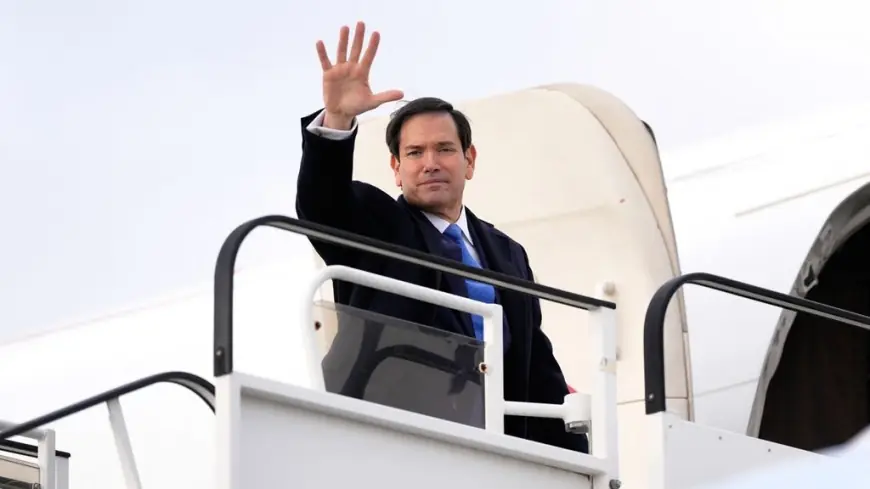
On Feb. 15 (ET) a trio of developments underscored how US politics and energy exports are reshaping parts of Europe. US Secretary of State Marco Rubio began a two-day visit to Eastern Europe aimed at tightening ties with Slovakia and Hungary, a think tank released findings on the reach of right-wing US ideas in the Netherlands, and a separate analysis highlighted growing concerns in Brussels about heavy imports of US liquefied natural gas.
Rubio visits Slovakia and Hungary to reinforce ties
Rubio's diplomatic stopover in Slovakia and Hungary comes at a moment of heightened transatlantic political tension. The trip is framed as a push to strengthen bilateral relations with capitals whose conservative leaders have clashed repeatedly with many of their European peers. These governments maintain notably warm relations with former US President Donald Trump, and US political currents have proven influential in parts of the region.
The visit signals a continued effort by US officials to cultivate alliances with Central European partners that are politically aligned on national sovereignty, judicial policy and migration. Diplomats in the region say those relationships are viewed as strategic both for regional security and for broader ideological alignment within Europe.
MAGA messaging and its reach in the Netherlands
A recent study by a leading European institute examined how much traction right-wing, pro-Trump messaging gains in the Netherlands. Researchers explored channels through which US political ideas spread, including support for far-right parties and informal networks that transmit ideological influence across borders.
Study contributors noted that while the United States has actively sought to bolster sympathetic parties across Europe, the resonance of that message varies widely by country. In Central Europe, particularly in Hungary and Slovakia, the study finds a more receptive environment for the US-originating right-wing ideology. In the Netherlands, the researchers mapped pockets of sympathy and identified the channels through which those ideas travel, assessing both mainstream party responses and fringe movements.
Experts who discussed the findings in studio interviews emphasized that the presence of sympathetic narratives does not necessarily translate into large-scale political realignment. Instead, they flagged a subtler phenomenon: ideological echoes that can influence discourse, campaign strategy and coalition-building long before they show up in election results.
Brussels alarmed over reliance on US LNG
Energy dependence emerged as the third strand of concern. A report examined Europe's growing imports of US liquefied natural gas and the strategic implications of that shift. Officials in Brussels are increasingly uneasy about the scale and pace of LNG purchases from the United States, warning that a heavy tilt to one supplier can limit policy flexibility and carry geopolitical consequences.
Researchers and policy experts who discussed the report highlighted several risks: supply concentration, contractual lock-ins, and the potential for energy policy to become entangled with broader geopolitical alignment. They urged greater diversification of gas sources and accelerated investment in renewables and infrastructure that would reduce exposure to any single external supplier.
The three developments together — high-level diplomatic outreach in Eastern Europe, scrutiny of ideological export from the US into Western Europe, and the debate over American LNG flows — paint a picture of an interlinked landscape. Political influence campaigns, bilateral diplomacy and energy agreements are interacting in ways that shape both domestic politics and strategic choices across the continent.
For policymakers in Europe, the challenge will be balancing immediate security and energy needs with long-term independence and resilience, even as political affinity and commercial ties with the United States deepen in some quarters.