






















Jeff Gordon: 'I'm Glad I'm Not Racing Today' — Why the Modern Cup Car Has Changed the Job

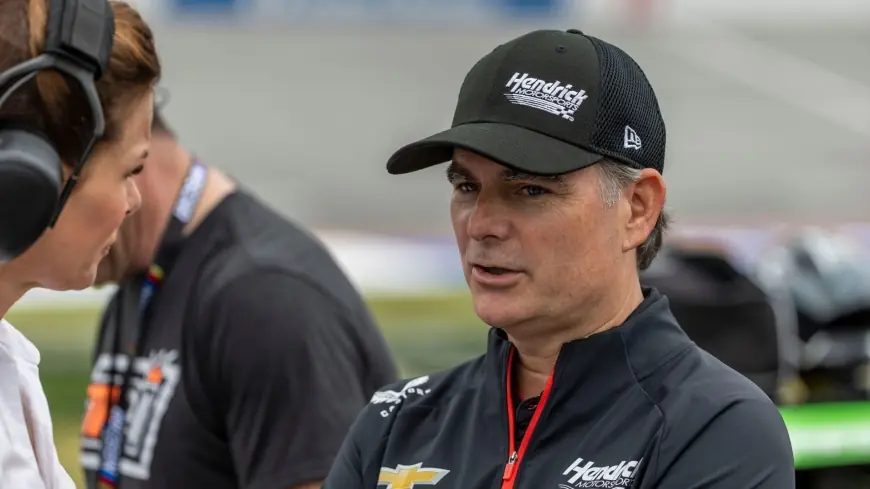
Jeff Gordon, now a senior executive with Hendrick Motorsports, says the modern demands on Cup Series drivers make him thankful he no longer races. The four-time champion argues today’s drivers juggle far more variables on track than in his era, shifting the nature of the sport.
Information overload on race day
Gordon, who drove exclusively for the same team from his debut through his retirement in 2015 and won four Cup Series titles, has been blunt about how the sport has evolved. "Yeah, I'm glad I’m not racing today. And I’ll tell you why, " he said, pointing to the barrage of in-race tasks modern drivers must manage.
He highlighted the constant calculations drivers now face: fuel saving, preserving track position, reacting to changing groove lines and staying in sync with pit strategies. "They’re saving fuel. Don’t give up this track position. There’s a line coming on the outside. There’s a line coming on the inside. ‘Hey, we’re going to pit this many laps. ’ There’s just so much information that they’re being fed that I think it would be overloaded, " he explained.
For Gordon, the contrast with his driving days is stark. Back then, teams focused the offseason on speed and balance, and the separation on race day often came down to car setup and clean execution. Today, the margins are often microscopic, and drivers must process telemetry and team directives while battling at full speed.
From driver to executive: a different vantage point
In his current role with the team he spent his entire driving career with, Gordon now views success as a collective achievement. He sees chassis shops, engine rooms, pit crews, engineers, commercial teams and logistical staff working in concert long before a car ever hits the track. That broader perspective reinforces his comfort in the front office rather than behind the wheel.
Gordon acknowledged that the increased complexity adds an intense layer of pressure for current drivers, even as it creates new drama for fans. The outcome of a race now depends on countless micro-decisions across multiple disciplines, and the driver often must be the final arbiter of choices conveyed over the radio in real time.
While he no longer laps the field himself, Gordon still feels a stake in on-track performance. He trusts the preparation and the personnel to put Hendrick cars in position to win, and he relishes the collaborative nature of modern operations. At this year’s Daytona event, his team will field four cars with genuine chances at the front — a scenario he says reflects the depth of work happening behind the scenes.
Young talent, old-school thinking — and a marquee weekend
Gordon’s comments come on the eve of a Daytona 500 that underscores the sport’s generational mix. The season-opening race is scheduled for Sunday, Feb. 15 at 2: 13 p. m. ET, and the field includes a broad spectrum of experience — from veteran campaigners to teenagers making their Daytona 500 debuts.
That blend illustrates another part of Gordon’s point: while young drivers bring raw speed and adaptability, they must acclimate quickly to the on-air instructions, strategy calls and data streams that define modern Cup racing. For an old-school driver who trusted car balance and lane discipline to make the difference, the contemporary cockpit looks like a very different workplace.
Gordon’s verdict is simple. He loves the sport and takes pride in contributing from the pit box and boardroom, but he is grateful the daily grind of modern Cup racing now rests with a new generation of drivers who are wired for the demands of the digital era.