





















Sarah Warren’s Long Road to Milan: From 10 Surgeries to the Olympic 500m Final

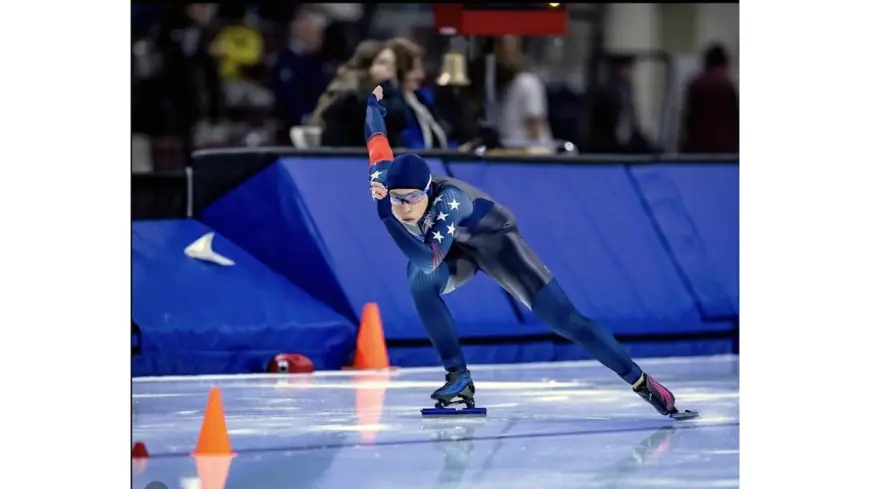
Sarah Warren will make her Olympic debut in the women’s long-track 500-meter final on Sunday, Feb. 16, 2026 (ET), after a decade of injuries, rehabilitation and perseverance. The 29-year-old from Willowbrook punched her ticket at the U. S. Trials in Milwaukee and now carries a story of comeback and family support to the Milan ice.
A surgical timeline and a relentless comeback
Warren’s path to the Olympic start line reads like a catalogue of obstacles. Her medical log began in 2009 when, at age 13, she underwent arthroscopic surgeries on both knees—the same year she started speed skating. Later, while playing Division I soccer at the University of Illinois, she needed anterior cruciate ligament reconstructions in both knees. Cartilage and meniscus cleanups followed. In total, Warren has had 10 procedures, including surgery as recently as October 2024 (ET) after competing on ruptured ankle ligaments during a World Championship team sprint.
“This process involved relearning how to skate, ” Warren wrote in her surgery journal. Even when multiple procedures piled up in a single season, she kept a belief that progress would come. “There were a lot of down days where you’re like, wow, can I get there? But then you see some light, ” she said. “I always believed. ”
Her qualification at the U. S. Trials on Jan. 4, 2026 (ET) at the Pettit National Ice Center came after that slog. Warren crossed the line in 38. 67 seconds, outpacing the fourth-place and narrowly beating the third-place skater by 0. 22 seconds to secure one of the coveted Olympic berths.
Family, sacrifice and the support network behind the skater
Warren’s rise required logistical sacrifice as well as medical grit. Her parents routinely drove from the Chicago suburbs to Milwaukee so she could train at one of the nation’s few indoor ovals. Her family watched her compete in three junior world championships and supported her dual-sport youth, where she excelled in soccer and track before focusing on speed skating.
Family members will be present in Milan. Her great uncle will travel with his wife and children to cheer her on, framing the trip as more than a race but a celebration of sacrifice and perseverance across generations. Those family ties, she says, are part of what kept her moving forward on days dominated by rehab routines and uncertainty.
Warren now trains out of Salt Lake City and credits coaches and teammates for steadying her return each time she needed to rebuild strength and technique after surgery. The cumulative message has been endurance: rebuild, refine, and race.
What to expect Sunday (ET) and beyond
Warren’s Olympic debut in the 500m will be a single, high-intensity effort that condenses years of work into roughly 38 seconds on the ice. Her Trials time suggests she can contend with the field’s speed, but Olympic racing brings its own pressure: split-second edges, clean starts and flawless technique will determine advancement and medal prospects.
For Warren, the moment is less about podium predictions than a personal milestone. Crossing the Trials finish felt surreal—“like everything flashed before my eyes, ” she said—and she approaches Sunday as the payoff for a surgical timeline and steady belief. Whatever the result in Milan, Warren’s story is already a major success: a demonstration of resilience that turned recurring setbacks into an Olympic opportunity.
Her presence in the 500m final will serve as a reminder that elite sport often hinges on far more than raw talent—preparation, medical care, family sacrifice and the refusal to quit are central parts of the equation. On Sunday, Feb. 16, 2026 (ET), all of that effort will be visible on the Olympic ice.