



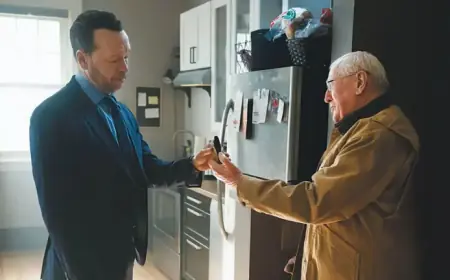





















Crime 101: Hemsworth and Ruffalo steer a stylish, Mann-adjacent heist


Bart Layton’s latest, Crime 101, races into cinemas as a tightly wound armed-robbery thriller that wears its influences openly while staking out its own lane. Chris Hemsworth plays Mike, a meticulous jewel thief whose calm professionalism collides with rumbling moral doubt; Mark Ruffalo is the dogged cop who spots a pattern along California’s Route 101. The film opens theatrically on February 13 (ET) in the US and UK and on February 12 in Australia.
Steely performances and taut character dynamics
At the centre of the film is Hemsworth’s portrayal of a thief who operates with surgical precision. He moves through robberies with the discipline of a craftsman, favouring blacked-out cars and Glock pistols and treating each job like a choreographed operation. That control begins to fray when personal stakes and conscience intrude: an inside contact in an insurance adjuster, Sharon, complicates a purportedly foolproof score, and a girlfriend, Maya, remains in the dark about his life of crime.
Opposing him is Ruffalo’s detective Lou Lubesnick, a dishevelled, single-minded figure who sifts through the evidence and notes the geographic logic of Mike’s crimes. Ruffalo brings a hangdog intensity to a role that recalls classic cops-and-robbers archetypes, grounding the movie’s cat-and-mouse dynamic. Supporting turns sharpen the tension: a leathery mentor known as Money looms over Mike’s choices, while a volatile young replacement candidate threatens to upend the careful rhythm of the crew.
Style, influence and limits
Crime 101’s visual and tonal choices clearly nod to the sun-bleached, precision-driven heist films of the 1990s. Layton channels that legacy in sleek night-time getaways and in the film’s emphasis on technical discipline over brute force, yet he stops short of full homage—eschewing grand, convoy-style overhead tracking shots for a leaner, more immediate vernacular. The result is a movie that feels methodical and moody rather than breathless, one that prefers the slow tightening of tension to constant pyrotechnics.
That stylistic restraint is a strength and, at times, a constraint. The film earns its suspense through economy and performance, but it occasionally leans on shorthand to gesture at larger social realities. Scenes that sketch Los Angeles’s marginalised populations feel perfunctory—brief glimpses that suggest a moral context without plumbing deeper consequences. Likewise, the introduction of a brash, bike-riding young thief as a foil offers combustible energy but risks a slightly cartoonish contrast to Hemsworth’s cool, controlled lead.
Still, the ensemble largely succeeds in steering audience sympathy in surprising directions. Hemsworth’s neurotic restraint is a fresh note against his more muscular recent roles, while Ruffalo’s weary determination provides a human counterpoint. The grizzled mentor and the unpredictable upstart round out a cast that keeps the narrative moving even when the film opts for reflection over spectacle.
What audiences can expect
Crime 101 is less an adrenaline-drenched set piece parade and more a study of professionalism fraying at the edges. Viewers who appreciate character-driven thrillers will find a lot to admire: crisp execution, a strong central performance, and a film that willingly wears the influence of its predecessors while carving out its own temperament. Those looking for operatic scale or deep social critique may leave wanting more. Either way, the film puts a neat, sizzling streak of rubber on the tarmac and leaves the audience watching the rearview mirror as the consequences roll in.
Runtime and wider distribution details vary by territory; the film is available in theatres beginning February 13 (ET) in the US and UK and February 12 in Australia. Expect a steady, stylish ride rather than a full-throttle chase from start to finish.