





















Carolyn Bessette Kennedy’s Style Haunts New Calvin Klein as ‘Love Story’ Sparks Debate

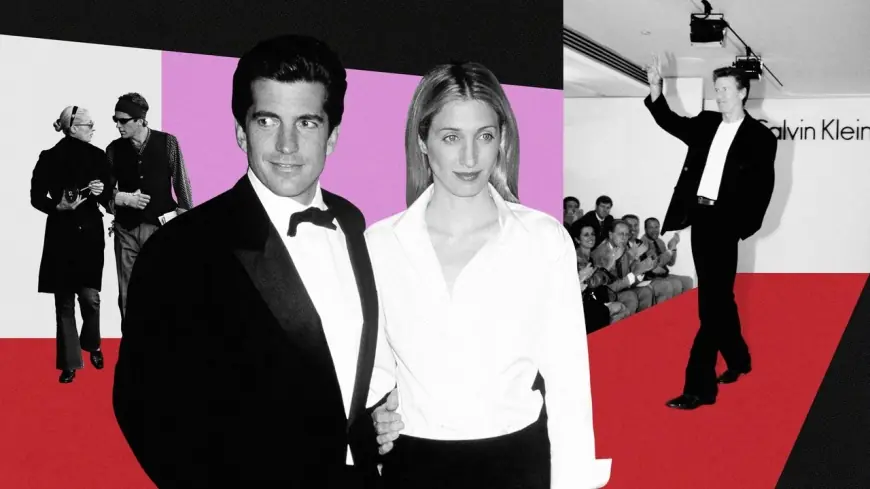
When Ryan Murphy’s dramatization of Carolyn Bessette Kennedy’s marriage to John F. Kennedy Jr. premiered just ahead of a major Calvin Klein runway, two conversations converged: one about fashion’s enduring appetite for 1990s minimalism and another about whether modern storytelling should mine private tragedy. The collision left designers, critics and members of the Kennedy orbit parsing style choices and questions of stewardship.
Fashion’s ghost: minimalism reborn — and rebuffed
Bessette Kennedy’s quiet, exacting uniform — pencil skirts, slip dresses, white shirts cut to precision — has long hovered over New York’s fashion conversation. The new dramatization leaned into that visual legacy, giving the show’s costume design credit for recapturing the brand of 1990s Calvin Klein that she helped personify. The television images obliterated earlier costume missteps and reinforced a renewed appetite for pared-down silhouettes.
But the runway that followed did not simply echo the show. Calvin Klein’s creative director said the season reached back even further, mining late 1970s and early 1980s references rather than leaning into the ’90s archetype most commonly linked with Bessette Kennedy. The resulting collection was a study in contradiction: muscular tailoring with sleeves intentionally removed, backless suiting that read conservative from the front but revealed delicate slips from behind, and a standout white racer-back tank dress trimmed with intricate beading.
The show drew a cluster of high-profile guests, though few of the television drama’s own stars were present. An actor who plays Caroline Kennedy attended, a visible reminder of the overlap between the runway and the small screen spectacle. Meanwhile, labels outside the house also began packaging nostalgia for the decade, offering capsule pieces that trade on the same romance the series stirred up.
Ownership, ethics and cultural appetite
The dramatization revived a thorny nationwide debate over who owns a public story and whether commercial entertainment should profit from real grief. Critics and some family members objected to the series, arguing that a private tragedy had been repurposed as public drama. One family member pushed back publicly, calling the project a grotesque exploitation of a loss that still resonates for relatives and for the public imagination.
The showrunner’s blunt public response to that critique intensified scrutiny. For many observers, the exchange crystallized larger questions about tone and taste: can a glossy period dramatization capture a person’s essence without commodifying their life? While costume teams garnered praise for reviving a specific aesthetic, the series’ dramatic merits remained contested. Some viewers found the portrait fetching in its production design but less persuasive as an elegy for a generation.
Where fashion and memory intersect next
The interplay between a televised retelling and a fashion house’s seasonal pivot illustrates how quickly cultural artifacts can be repackaged. When a popular series reanimates a familiar look, other brands move to claim that visual territory — a dynamic that risks diluting the distinctiveness of an iconic style even as it broadens its reach.
For designers, the moment is both opportunity and hazard: referencing the past can bring instant cultural resonance, but it can also invite critique about originality and sensitivity. For the public, the dual release offered a reminder that style and story are often inseparable — and that the way a life is remembered on screen can shape what people wear, talk about and insistently re-create on runways and in wardrobes.
The fallout is still unfolding. Whether fashion houses will retreat into clearer homages to the ’90s canon or continue to reinterpret earlier decades remains to be seen. What is certain is that Carolyn Bessette Kennedy’s aesthetic, and the unresolved feelings her life evokes, will continue to influence both closets and conversations for the foreseeable future.