





















Ryan Murphy’s ‘Love Story’ Reignites Debates Over Carolyn Bessette Kennedy’s Life and Legacy

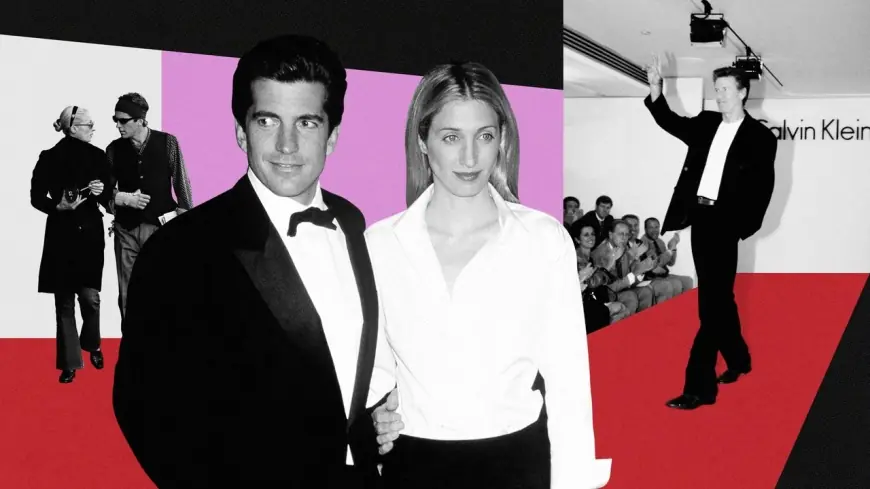
The debut of a high-profile dramatization of John F. Kennedy Jr. and Carolyn Bessette Kennedy has reopened old fault lines around the family’s public story. The series, which focuses on the couple’s romance and tragic end, has prompted a collision between creative ambition, questions about consent and ownership, and a surprisingly timely fashion conversation about Bessette’s lasting cultural imprint.
Family Pushback and a Heated Exchange
The project’s announcement and early episodes have provoked sharp objections from members of the extended Kennedy family who view the dramatization as an exploitation of a personal tragedy. Jack Schlossberg, a nephew of John F. Kennedy Jr., publicly criticized the showrunner, calling the depiction a profiteering move that commodifies the family’s loss. He said the project profited off his family’s tragedy “in a grotesque way. ”
The showrunner pushed back during a public conversation, dismissing Schlossberg’s objection as “an odd choice to be mad about your relative that you really don’t remember. ” That exchange intensified scrutiny of the creative decisions behind the series and underscored a broader debate: who gets to tell intimate chapters of widely mythologized lives?
Those who oppose the dramatization frame it as another front in the long struggle over the Kennedy narrative. Since the assassination of President John F. Kennedy, caretakers of the family’s image have fought to manage legacy and privacy, while others have repeatedly mined the family’s history for cultural material. The series has reopened questions about consent—especially given that the central figures are no longer alive to weigh in—and about how dramatists balance public interest with personal harm.
Carolyn Bessette Kennedy’s Style Returns to the Spotlight
Beyond the ethics debate, the show has reignited fascination with Carolyn Bessette Kennedy as a style prototype. Costume work for the series leaned into the spare, reticent aesthetic she became famous for in the 1990s: slip dresses, pared-back tailoring and the quiet elegance associated with a particular Calvin Klein era. That visual choice has dovetailed with a larger fashion moment that has been revisiting 1990s minimalism.
Designers and critics have noted how the series’ wardrobe choices foreground not just nostalgia but the real cultural power of Bessette’s look. For many viewers, the clothes serve as a reminder that her influence extended beyond celebrity gossip into the mainstream fashion vocabulary—helping to normalize a specific kind of urban, understated chic that continues to be reinterpreted by contemporary brands and runways.
That aesthetic attention is a double edge: it raises the profile of the series and its historical subjects, but it also risks turning private memory into merchandising and style cycles. The timing of the show’s release with high-profile fashion events has amplified the sense that Bessette’s image is being reclaimed—and repackaged—for commercial consumption.
What the Debate Means for Biographical Drama
The conflict around the series illuminates broader tensions inherent in biographical storytelling. Producers argue that dramatic adaptations can explore cultural history and public fascination in a way that illuminates meaning; critics and family members question whether narrative liberties and commercial incentives distort private lives and grief.
For audiences, the series is both spectacle and provocation: it offers a dramatized window into a celebrity marriage that has accrued mythic status, while reminding viewers that those myths can obscure lived realities. The couple’s cremation and the scattering of their ashes at sea have long contributed to their aura of disappearance—the sort of unknowability that invites dramatization but also complicates ethical storytelling.
As the conversation continues, the series will likely be judged on multiple fronts: its artistic merits, the accuracy and sensitivity of its portrayals, and the extent to which it contributes thoughtfully to public memory rather than merely capitalizing on it. The debate over ownership of the Kennedy story is far from settled, and this dramatization has only intensified the argument.