






















Nancy Guthrie Update: New DNA Findings, Intensified Searches, and No Arrests Yet in Tucson Disappearance Case

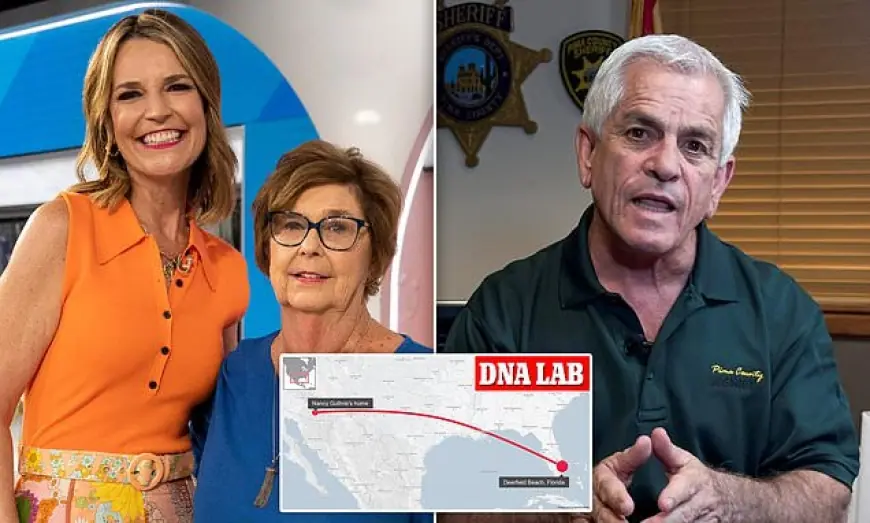
A fast-moving investigation into the disappearance of Nancy Guthrie, 84, has entered a more urgent phase this weekend as authorities disclosed additional forensic developments and executed follow-up searches near her home in the Tucson area. Even with heightened law-enforcement activity, officials say there have still been no arrests, and Nancy Guthrie has not been located.
Investigators have treated the case as a criminal matter since early evidence suggested she was taken against her will. The newest thread focuses on what forensic teams can learn from biological material recovered at or near the property, along with items collected off-site that may connect to the person captured on security video.
What happened so far in the Nancy Guthrie case
Nancy Guthrie was reported missing after she did not appear for a normal morning routine on Sunday, February 1, following her last known night at home on Saturday, January 31. The scene quickly drew attention because investigators found signs of violence outside the home, including blood that was later linked to Nancy Guthrie.
In the days since, authorities have pursued a wide-ranging investigative strategy: neighborhood canvassing, public tip intake, targeted searches, and forensic review of surveillance footage. One clip has become central to the case: a masked person seen near the home around the time investigators believe Nancy Guthrie was taken. Officials have described that individual as a primary focus of the investigation, while also signaling they have not ruled out additional involvement.
Key new developments in the past 24 hours
Authorities have indicated that DNA recovered from the property includes material that does not match Nancy Guthrie or known close contacts, raising the likelihood that an unknown person was present. Investigators have also collected multiple gloves found in the surrounding area, including at least one located some distance from the home, which may be undergoing forensic testing.
Separately, law enforcement activity increased late this week and into the weekend, including the execution of a court-ordered search tied to a lead near the abduction area. While individuals were questioned during these operations, officials said no one has been arrested and no suspect is in custody as of Saturday, February 14, with the search continuing into Sunday, February 15 (ET).
A reward for information remains in place, and authorities say the case has generated a large volume of public tips, adding both potential value and significant noise to the investigative process.
What’s behind the headline: incentives, pressure points, and stakeholders
The incentives on all sides explain why the case is accelerating now. For investigators, time is the enemy: the likelihood of locating a missing older adult alive generally drops the longer a case goes unsolved, and evidence becomes harder to preserve as weather, foot traffic, and public attention disrupt scenes. For whoever took Nancy Guthrie, the incentive is to avoid identification, dispose of trace evidence, and exploit delays created by false leads.
Stakeholders extend well beyond the immediate family. Local residents have a direct safety stake in whether this was a targeted abduction or a broader threat. Law enforcement faces reputational risk if early investigative focus proves wrong, but also operational risk if too much detail is released and prompts evidence destruction. Nancy Guthrie’s family, including her daughter Savannah Guthrie, is caught between public visibility that can generate leads and the possibility that publicity spawns hoaxes or complicates negotiations if the case involves ransom demands.
What we still don’t know and what to watch next
Several crucial pieces remain unconfirmed publicly:
-
Whether the unknown DNA is usable for identification, and whether it appears on items strongly tied to the suspect’s movements
-
Whether any recovered gloves or other items contain biological material or trace fibers that can be matched to a person, vehicle, or location
-
Whether the masked individual on video can be linked to a real-world identity through gait analysis, clothing sourcing, or digital forensics
-
Whether this was targeted (someone who knew the home and routines) or opportunistic (a crime of circumstance)
The most important “watch” item is whether investigators announce a concrete suspect description update, request specific public help (such as a vehicle or route), or shift from broad tip collection to narrow, targeted appeals.
What happens next: realistic scenarios and triggers
-
A breakthrough from forensics
Trigger: DNA, fingerprints, or trace evidence from recovered items ties to a known individual or a searchable profile. -
A breakthrough from video and route reconstruction
Trigger: investigators map the suspect’s movements to a specific vehicle, neighborhood camera, or purchase trail. -
A break from public tips
Trigger: a tip contains verifiable specifics—time-stamped observations, vehicle identifiers, or corroborating details. -
A suspect interview becomes a detention
Trigger: inconsistencies or evidence discovered during a search warrant provide probable cause. -
A shift to expanded ground searches
Trigger: credible information points to a specific corridor, property, or remote area requiring concentrated resources.
Why this matters beyond one case
Cases like this test how well modern investigations can merge public participation with disciplined evidence work. Video can supply a compelling lead, but it also fuels online speculation that can swamp tip lines. Unknown DNA can be powerful, but only if it is tied to a meaningful point in the timeline and handled with enough context to avoid misdirection.
For Tucson-area residents, the core question remains unresolved: was Nancy Guthrie taken by someone familiar with her home and habits, or is this part of a wider pattern that could affect others? Until authorities identify a suspect and clarify motive, the community impact will continue to grow—along with the urgency to turn fragments of evidence into a coherent, provable story.