





















Carolyn Bessette Kennedy’s 1990s Minimalism Looms Over Calvin Klein’s New Direction

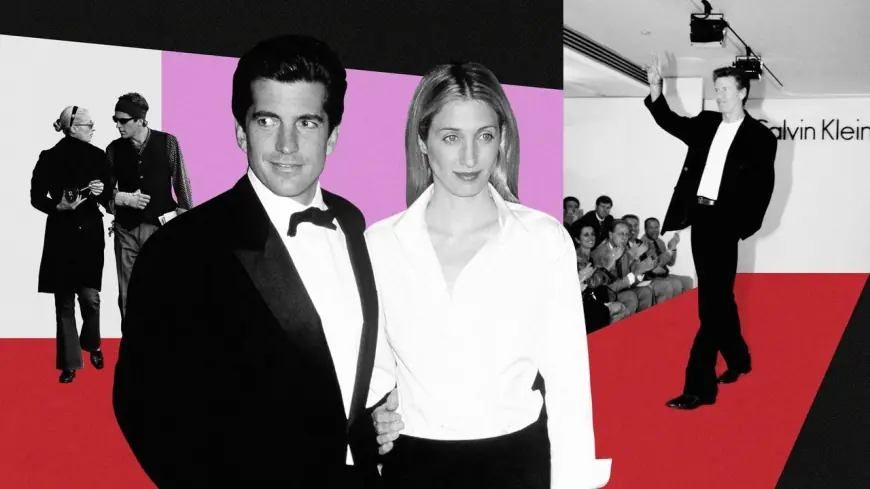
As a television retelling of the marriage of John F. Kennedy Jr. and Carolyn Bessette Kennedy arrives on screens, the spirit of Ms. Bessette’s pared-back style has been cast anew across New York Fashion Week — even as Calvin Klein’s latest collection looks deliberately elsewhere. The near-simultaneous cultural moments have intensified questions about who owns a look, and what it means when a brand and a dramatization of a private life collide on the public stage.
How a TV series rekindled a fashion myth
The new series about Ms. Bessette Kennedy has thrust her aesthetic back into the conversation: pencil skirts, restrained tailoring, slip dresses and an insouciant minimalism that felt like a private language in public. Costume choices for the show have been met with largely favorable notice, after an early wave of criticism over some set photos — footwear and small details that initially rattled viewers — was corrected as full episodes rolled out.
That revival has had ripple effects. Designers and labels have begun reissuing and riffing on signature pieces tied to the late-1990s Calvin Klein moment, and even smaller labels tied to the series have started marketing silk camisoles and iconically pared-back pieces billed as tributes to that era’s New York romance. For many observers, the show has underscored how Ms. Bessette Kennedy both wore and helped define a look that was both reticent and intensely magnetic.
Calvin Klein’s show chooses a different origin story
All of this arrived the night before Calvin Klein presented its runway collection — an awkward overlap that made the fashion house’s choices read like a direct response. The brand’s creative director said the season sought to look "before" the shorthand everyone associates with the label, mining late 1970s and early 1980s references rather than the 1990s minimalism now being re-popularized by the television project.
The resulting collection was a mixed bag. There were intriguing gambits — suits with sleeves removed to spotlight biceps, experiments in backless tailoring, and garments that played serious facades up front but revealed slip-like linings from the rear. At other moments the collection felt unsettled, as if the house were searching for its next definitive vocabulary rather than affirming one.
Celebrity attendance did little to tether the runway to the television buzz. Many of the series’ stars were not in the front row; one notable presence was the actress who appears as a member of the Kennedy family, whose attendance offered a symbolic link. The creative director also struck a conciliatory, outward-facing tone after the show, greeting guests and framing the season as an exploration of roots rather than a nostalgic replay.
Style, commerce and disputes over ownership
The current moment highlights a larger tension: when a cultural revival of a private figure’s look intersects with commercial fashion, questions of ownership and propriety quickly surface. Members of the Kennedy family have voiced objections to dramatizations in the past, and public debate has flared over whether dramatizing a tragic life lends itself to aesthetic appropriation or opportunism.
For designers and marketers, the math is straightforward: visible cultural moments create demand. For heirs and friends of those depicted, the stakes are personal and ethical. Fashion brands must choose whether to lean fully into the revived iconography or to push the label into new historical terrain. Calvin Klein’s recent runway — thoughtful in places, uncertain in others — makes clear that the answer is not simple, and that Ms. Bessette Kennedy’s silent, refined influence will continue to shape both commerce and conversation for the foreseeable season.