
























From street plays to TV success: Lisa McGee on How To Get To Heaven From Belfast

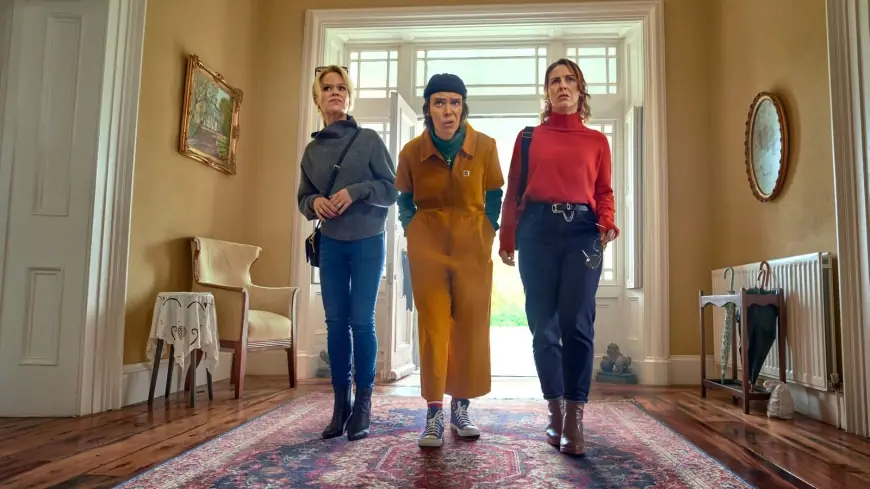
Lisa McGee has taken the theatrical mischief of her youth and turned it into a new, sharply observed series. How To Get To Heaven From Belfast blends comedy, grief and mystery as a group of women reunite after the death of a childhood friend — and the writer behind Derry Girls explains why she needed to tell this story on her own terms.
Childhood theatrics and a taste for darker stories
McGee’s storytelling roots, she says, go back to the street where she grew up. Long before television commissions and critical acclaim, she was writing short plays and cajoling neighbourhood children into performing them. The domestic theatre of her childhood was no simple pastime: it offered an early rehearsal space for voice, character and the comic timing that would later underpin much of her work.
Even at that young age McGee noticed an appetite for darker twists in her tales. Growing up in Derry in the shadow of political conflict informed an instinct to weave unease into otherwise playful setups. She recalls the familiarity of checkpoints and military presence as elements that made everyday life feel layered with tension — details that might seem strange to outsiders but formed the texture of her early imagination.
A female-led mystery with messy humour
How To Get To Heaven From Belfast reunites a circle of women following a tragic death, then sends them down a path where secrets and suspicions collide. McGee has described her affection for classic murder-mystery frameworks and an early fascination with detective dramas; here she channels that into a story that is distinctly female-led and deliberately messy. The result foregrounds humour and warmth alongside the procedural puzzle.
She has explained that the project grew from a desire to marry her love of whodunits with the broad comic palette she honed in earlier work. McGee wanted to avoid a straight thriller and instead create a series that could pivot between laughs and darker turns, letting characters bumble, bicker and reveal long-buried truths in equal measure. That approach gives the show a tonal looseness — scenes can be tender one moment and wickedly funny the next — that feels intimate rather than stylised.
Central to the series’ design is the decision to centre women’s friendships and fallibility. The ensemble’s dynamics are written to reflect the complexity of adult relationships: loyalties, resentments and history all play into how they respond to the central mystery. The comedy often springs from those human entanglements rather than from gags alone.
Where this fits in McGee’s career
Nearly four years after the emotional close of her breakout show, McGee’s new work is being framed as both a departure and a continuation. Thematically, she remains invested in sharp portrayals of life in Northern Ireland — the quotidian realities that outsiders might find surprising — while expanding into a genre that allows for more overt narrative suspense. The result feels like a natural evolution: the same ear for authentic dialogue and comic timing, now applied to a mystery with higher stakes.
For viewers familiar with her earlier series, this new title offers echoes of McGee’s strengths — an affection for character-led scenes, a willingness to foreground messy humanity, and a knack for balancing levity with pathos. For McGee, the project also allowed her to return to an early love of mysteries and to fashion one that foregrounds female agency and comedic imperfection.
Whether the show becomes the next cultural touchstone will depend on audience response, but for now it stands as a clear statement of intent from its creator: a storyteller who learned to direct neighbourhood children into improvised drama has matured into a writer determined to make genre television that feels personal, funny and infused with the quiet realities of her upbringing.