
























Parker Kingston and BYU Football: Star Receiver Charged in Utah Case, Leaving Team USA’s 2026 Season Plans in Limbo

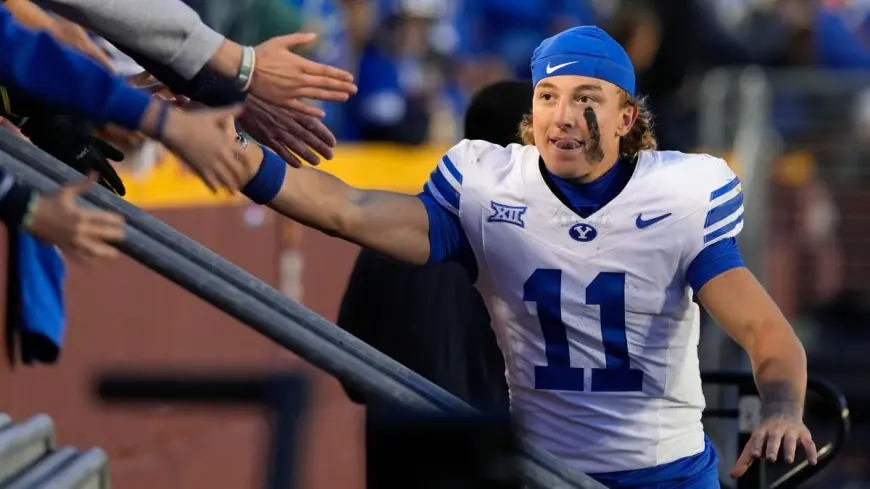
Parker Kingston, a standout wide receiver and return specialist for BYU football, is facing a major legal challenge after Utah prosecutors filed a first-degree felony rape charge tied to an alleged incident in St. George on February 23, 2025. The case, which is still developing, has immediate consequences for Kingston’s playing status and for BYU’s roster planning heading into the 2026 season.
Kingston, 21, is accused of sexually assaulting a 20-year-old woman after a meeting in which she says she communicated she did not want to have sex. Kingston has maintained the encounter was consensual. He was arrested in Washington County, Utah, and court proceedings have moved quickly, including a hearing in which a judge granted bail with conditions.
Who is Parker Kingston at BYU?
Kingston is one of BYU’s most productive recent playmakers, a versatile weapon who has been used as a receiver and as an explosive punt returner. Listed at 5 feet 11 inches and 185 pounds, he emerged as a focal point in the Cougars’ passing game and special teams, earning conference recognition for his return production.
In BYU’s most recent season, Kingston led the team in receiving volume, posting 66 receptions for 924 yards and five touchdowns, while also contributing as a returner. His special teams work has been a differentiator, including a touchdown punt return that helped swing a key game late in the season.
What happened in the legal case, and where it stands now
The charge stems from an allegation reported to law enforcement after the woman sought medical care. Investigators pursued digital and forensic evidence and conducted witness interviews before prosecutors filed the charge.
Key points that matter right now:
-
The charge is a first-degree felony rape allegation.
-
Kingston has not been convicted of any crime.
-
The case is active in court, and the next major public inflection points will be hearings that address evidence, conditions of release, and scheduling toward a preliminary hearing or trial path.
BYU has said it is cooperating with law enforcement and has cited privacy requirements as limiting what it can say publicly.
Behind the headline: why this is bigger than one player
This story sits at the intersection of three pressure systems that shape how it plays out next.
First, there is the criminal justice process, where the stakes are highest and the standard of proof is strict. Second, there is the university athletics layer, where schools must make decisions about participation, team access, and student conduct while a case is unresolved. Third, there is the public attention layer, where reputational harm can move faster than facts can be tested in court.
That combination creates competing incentives:
-
Prosecutors are incentivized to move carefully and build a record that holds up under scrutiny.
-
Defense counsel is incentivized to challenge timelines, consent narratives, and the handling of digital and forensic evidence.
-
The university is incentivized to protect institutional credibility, comply with privacy and student rights, and maintain team stability.
-
Teammates and coaches are incentivized to keep the season on track while avoiding statements that could affect proceedings.
What BYU football loses on the field if Kingston is unavailable
If Kingston cannot play, BYU would be replacing a player who affects games in two ways: he produces first downs in the passing game and changes field position on special teams.
The second-order effect is roster math. Losing a high-volume receiver forces more snaps for younger wideouts, changes how defenses allocate coverage, and can push BYU to lean more heavily on tight ends or the run game. On special teams, explosive punt returns are hard to replicate because they rely on both vision and fearless decision-making under pressure, not just speed.
What we still don’t know
Several facts that typically shape outcomes are not publicly settled:
-
What specific digital evidence will be central, and how it will be interpreted by both sides
-
Whether any additional witnesses strengthen or complicate the timeline
-
Whether the court imposes conditions that would restrict travel, contact, or participation in team activities
-
How BYU’s internal conduct process interacts with the court schedule
Until those pieces are clearer, it is difficult to predict whether this becomes a long-running case that stretches into the season or one that resolves earlier through hearings or negotiated outcomes.
What happens next: realistic scenarios and triggers
-
Kingston remains out indefinitely while the case proceeds
Trigger: Court dates extend into spring and summer and conditions discourage team participation. -
Kingston is suspended or held out by team policy pending resolution
Trigger: University conduct decisions or conference guidance, independent of the court timetable. -
The legal timeline accelerates
Trigger: An early preliminary hearing, expedited motions, or a resolution that narrows the case quickly. -
BYU reshapes its offense around other targets
Trigger: Spring practices confirm a new receiving hierarchy and a different special teams return plan. -
The case becomes a broader referendum on athlete accountability
Trigger: Additional public filings, contested evidence, or parallel university actions that draw heightened attention.
Why it matters
For BYU football, Parker Kingston’s situation is a critical uncertainty at exactly the time programs install offenses, allocate scholarships, and define leadership roles for the next season. For Kingston, the stakes are far more consequential than football: the trajectory of the case will determine his freedom, his future, and whether he ever returns to the field.