























Mikhail Shaidorov stuns field for Olympic gold in men’s figure skating

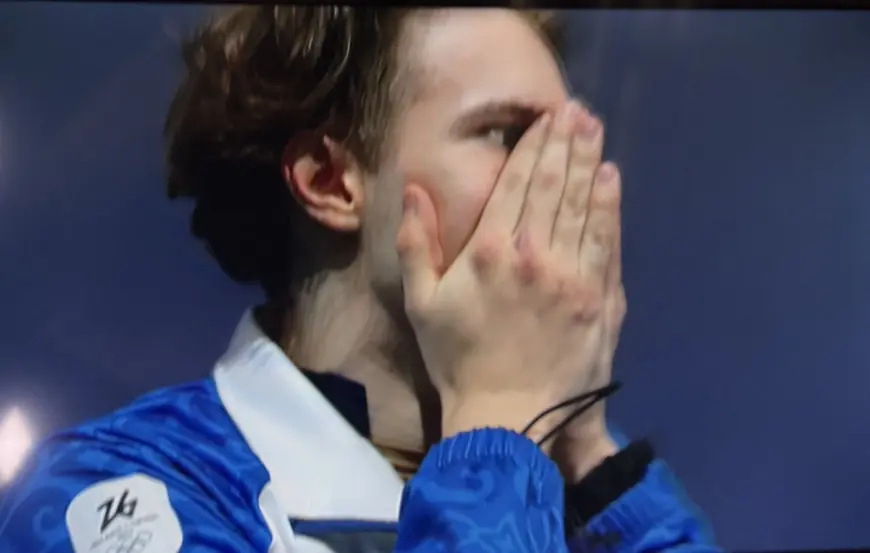
Mikhail Shaidorov delivered the biggest men’s figure skating upset of the Milan-Cortina Winter Games on Friday, winning Olympic gold after the heavy favorite struggled through a mistake-filled free skate. The result is a landmark moment for Kazakhstan’s program and instantly reshapes the conversation heading into the next full Olympic cycle.
Shaidorov had been in striking distance after the short program, then put down the performance of his life when it mattered most, finishing with a total of 291.58 points to top the standings.
How Shaidorov seized the moment
The final turned on composure. Shaidorov’s free skate was built to score: difficult jump content, fast transitions, and enough cleanliness to keep the technical panel and judges with him through the second half of the program.
He entered the night needing two things to happen at once—his own skate to hold up under Olympic pressure and the leaders ahead of him to leave points on the ice. Both broke his way. By the time the last skater finished, Shaidorov had moved from contender to champion, turning a strong position after the short into a decisive overall victory.
For viewers who only knew the surname “Shaidorov” from recent results, this was the arrival of a new Olympic headline name rather than a one-off surprise.
The favorite’s collapse and the points swing
The pre-event favorite opened the competition with a lead from the short program, but the free skate unraveled with multiple costly errors, including falls and missed elements that stripped away base value and execution points. The combined damage was enough to drop him off the podium entirely, finishing eighth on 264.49 points.
That swing is what made the final feel so sudden: one skater delivered under pressure, the other leaked points in clusters. In men’s skating, where quad-heavy layouts can balloon scores, the margin between “gold pace” and “no podium” can be only a few jump mistakes.
Japan’s steady climb to silver and bronze
Behind Shaidorov, Japan placed two men on the podium. Yuma Kagiyama earned silver, while Shun Sato took bronze, each benefiting from steadier overall skates across both segments.
Their results also underlined a broader theme of this event: the medalists weren’t necessarily the ones with the biggest reputations entering the week, but the ones who managed risk across two programs. When the technical ceiling is high for many skaters, Olympic medals can come down to who keeps the blade work, landings, and levels intact under maximum stress.
What this gold means for Kazakhstan
For Kazakhstan, Shaidorov’s win is more than a single medal—it’s a program-defining moment. Olympic champions tend to trigger tangible changes: increased funding, deeper junior pipelines, and more international attention for training teams and choreographic choices coming out of the country.
Shaidorov has also built a reputation for ambitious technical combinations in recent seasons, and this title validates that approach on the sport’s biggest stage. The gold will likely increase expectations quickly, both at home and internationally, especially as the next World Championships and Grand Prix season become the first tests of how a new Olympic champion handles the target on his back.
Key takeaways and what’s next
-
Shaidorov’s total of 291.58 points was enough to capitalize on mistakes ahead of him and secure gold.
-
The pre-event favorite fell to eighth overall, showing how quickly the standings can flip in a quad-driven era.
-
Kagiyama and Sato delivered Japan a silver-and-bronze finish built on steadier two-program execution.
-
The next major checkpoint will be how Shaidorov follows this up as Olympic champion, with rivals recalibrating difficulty and consistency to chase him.
The immediate question now isn’t whether Mikhail Shaidorov belongs among the sport’s elite—it’s how the rest of the field responds. If the top contenders increase difficulty to match his scoring potential, consistency will become even more decisive. If they prioritize cleaner layouts, the strategic game shifts toward execution and component strength. Either way, Shaidorov’s win ensures the post-Olympic men’s landscape starts with a new benchmark—and a new name at the center of it.