

























Nathan Chen’s shadow looms over Milan as Ilia Malinin chases history and reignites the GOAT debate

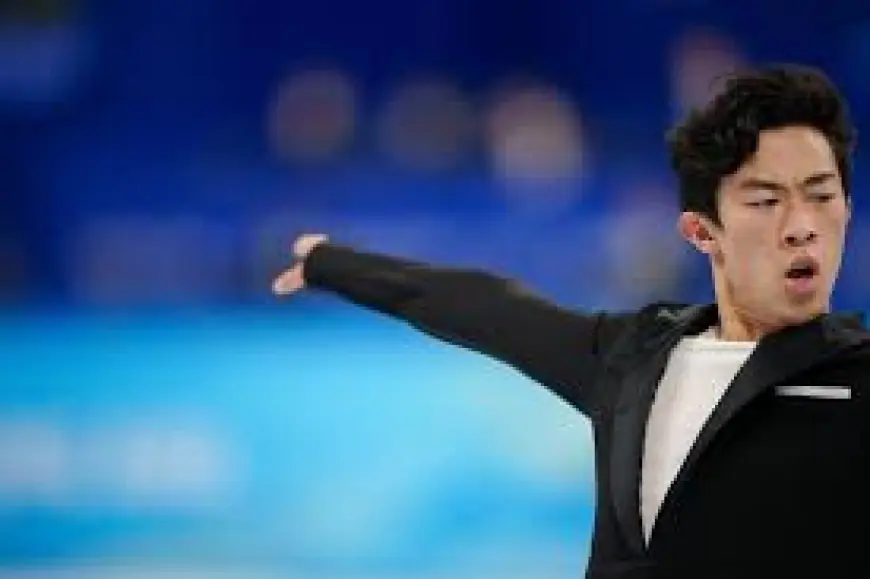
Nathan Chen may be in the stands this week, but the men’s event in Milan-Cortina still orbits his legacy. As Ilia Malinin targets gold in Friday’s free skate (Feb. 13, ET) and a roaring debate over the greatest of all time gathers pace, the shape of the contest — its technical ceiling, its mental demands, and its measure of artistry — keeps pulling back to one name: Nathan Chen.
Chen’s imprint on today’s technical arms race
The modern men’s field competes inside a scoring framework Chen helped define. His quad-heavy template turned multiple four-rotation jumps from a high-wire novelty into standard issue, forcing programs to stack difficulty while guarding execution. That foundation is now the launchpad for Malinin, the 21-year-old phenom who has normalized seven quads in a single free skate and remains the only skater to land a quadruple axel in competition. He has dominated for multiple seasons and arrives in Milan as the clear technical pacesetter.
What once looked like a ceiling — loading programs with quads without losing control — has become the baseline for medal contention. The ripple effect is visible in layout choices across the field: aggressive back-half bonuses, tighter transitions leading into jumps, and choreographic risks designed to keep component scores competitive against towering base values.
The peak standard still belongs to Chen
Even as Malinin pushes the outer limits, one summit remains untouched on Olympic ice. In 2022, Chen reset the short-program bar with 113. 97 points and cruised to the men’s title by a commanding margin. That performance — clinical, confident, and clean across two programs — stands as the benchmark for Olympic peak form in the sport’s current scoring era.
That apex is even more striking given where his Olympic story began. In 2018, Chen’s short program unraveled, dropping him well out of contention before a surge in the free skate salvaged a top-five finish. Four years later, he returned to the stage, erased the narrative, and delivered two near-flawless skates under maximal pressure. Until an athlete replicates that arc on the Olympic stage, Chen’s 2022 peak remains the gold standard.
Hanyu’s enduring case on artistry and longevity
Any GOAT discussion that lives solely on jump math misses a core part of figure skating. Yuzuru Hanyu’s claim is anchored in longevity, consistency under bright lights, and an unparalleled blend of musicality and movement quality. He is a two-time Olympic men’s champion — a modern-era rarity — whose competitive body of work elevated the sport’s artistic bar while remaining technically formidable.
In the current debate, Chen and Malinin often command the technical headroom, while Hanyu sets the pole for performance nuance and emotional weight. The result is a three-way argument that hinges on how much to value peak Olympics output, sustained dominance, and the intangible pull of artistry.
Malinin’s bid to flip the hierarchy Friday
If Malinin converts his technical firepower on Olympic ice Friday (ET), the conversation could pivot quickly. He brings the hardest jump content the sport has ever seen, the confidence of an extended winning run, and a willingness to test limits in real time. He has also expanded the sport’s showmanship — dazzling crowds in exhibitions with gravity-defying moves — while refining his competitive packaging to squeeze every point from the current judging system.
But the Olympic filter is unforgiving. It rewards the athlete who pairs maximum difficulty with control and a full-performance presence under the sport’s brightest glare. That is the crucible Chen mastered in 2022. It’s the test Malinin now faces.
What Chen is doing in Milan — and why it matters
Chen has not officially retired, yet he hasn’t competed since his gold-medal season. In Milan, he is observing, engaging with sponsors, and offering private insights to supporters — a different vantage point that still keeps him close to the ice. His influence stretches beyond layout strategy: a generation of skaters, Malinin included, studied his training habits, program construction, and the way he managed expectations when the stakes were highest.
Even off the competitive sheet, his presence shores up an American lineage of men’s skating that once chased quad credibility and now helps define it. The athletes on the ice this week are operating on a track he helped lay.
The mindset that turned a fall into a framework
Chen has been candid about the head game of the Olympics — how putting the Games on a mental pedestal can magnify mistakes, and how shifting focus to controllables rewires performance under pressure. He came to see the 2018 stumble not as a permanent scar but as data: a lesson in reframing, in composure, and in allowing the moment to be a stage rather than a trap.
That blueprint resonates in Milan. The medals will go to skaters who land the jumps and hold their nerve. If Malinin lands the strike he’s been plotting, the hierarchy may tilt by Friday night (ET). But whatever the podium says, the event’s contours — its difficulty, its expectations, its definition of what “clean” looks like with five or more quads — still reflect Nathan Chen.