
























High On Life 2 kickflips the FPS formula with full‑throttle skateboarding

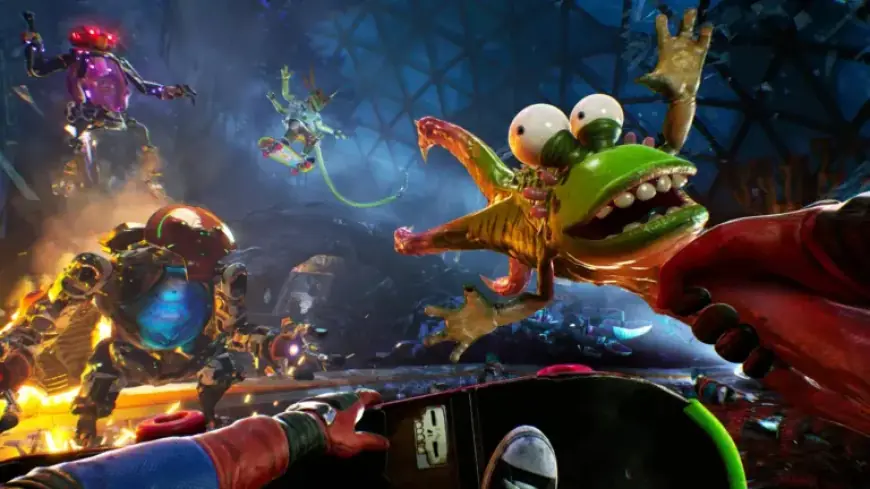
High On Life 2 is rolling in hot with a bold twist: a skateboard woven directly into first-person gunplay. Early hands-on impressions and first reviews spotlight the new movement system as the sequel’s standout feature, bringing speed, flow, and slapstick chaos to every encounter—while also noting uneven storytelling and performance stumbles that could use post-launch polish.
A skateboard that replaces sprinting
The sequel reframes movement by mapping your go-to dash to a board you can pop on the fly. Instead of just running, you grind rails, hop obstacles, and even hurl yourself as an improvised attack. The result is a faster, more kinetic game than the original, where your board becomes an extension of your arsenal—another way to reposition, stun, and style your way through firefights. Level layouts are clearly built to be “skateable,” with chunky props and rails turning arenas into lines you can string together while your chatty Gatlian companions crack jokes between shots.
The design spark and influences
Chief Design Officer Erich Meyr says the spark traces back to early concepts during the first game’s development—an idea that stuck even when the schedule didn’t. For the sequel, the team reshaped that seed into a grounded skateboard that fits the bounty hunter’s Earthling roots. Several developers previously worked on a traversal-heavy action game known for its flow, and that experience shows here: the board is designed to encourage momentum, improvisation, and environmental rhythm. Classic skate titles were dissected, not to copy their control schemes, but to capture the sensation of timing, chaining, and risk-reward in a first-person space.
How it changes fights and exploration
The board isn’t just a novelty; it’s core to the game’s pacing. Movement is snappier, escapes are cleaner, and vertical routes become viable mid-combat options. You can vault into a grind to evade a bombardment, snap off shots while carving a corner, then launch into a finisher as you dismount. Outside of firefights, traversal pulls more weight: secrets and side paths encourage experimenting with angles and momentum, making simple commutes feel like miniature skill runs. When everything clicks—the rails, the boosts, the weapon alt-fires—it creates a breezy loop that pushes you to keep rolling for one more line.
Early verdict: big laughs, bumpy ride
First reviews highlight the board-driven movement as a genuine upgrade over the original, and the gun companions remain a reliable source of absurd banter. The campaign structure returns to a familiar rhythm of tracking down targets, this time squaring off against a pharmaceutical empire across a roughly 10-hour run. Where reactions split is the narrative scaffolding around those missions. Plot turns don’t always land, and exposition can overexplain the joke, softening the punch of a world that thrives on deadpan lunacy. Technical hiccups are part of the picture as well, with shakier performance than the first outing reported on some setups. Even so, there’s enthusiasm for the sheer creativity on display—especially when the skateboard, level design, and combat systems sync into a chaotic groove.
For skaters, shooters, and stunt-chasers
High On Life 2’s board isn’t a feature grafted onto a shooter; it’s the spine that holds the moment-to-moment action together. Fans of classic skate design will recognize the emphasis on flow and line-building, while shooter diehards get a new layer of decision-making that turns movement into a weapon. It’s a rare case where a single mechanic redefines the feel of a sequel without losing the personality that made the first game a cult hit. If post-launch updates can smooth out the story beats and performance snags, the path is set for a follow-up that earns its wild premise—and grinds it into something special.
The bottom line
High On Life 2 swings for the fences with a skateboard-first approach that meaningfully speeds up traversal and combat. The humor still hits memorable highs, even if not every gag sticks the landing, and the technical side needs attention. But when you’re kickflipping through crossfire and cackling with your guns, it’s clear this sequel finds its flow where it matters most: in motion.