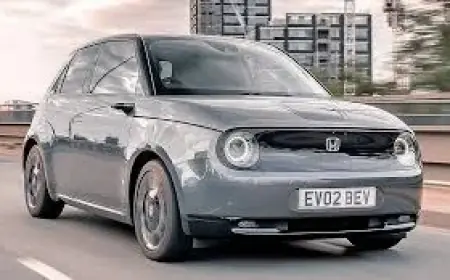

























Why Legacy EVs Are Falling Behind


The electric vehicle (EV) market is facing significant challenges, particularly for legacy automakers based in Detroit. Despite massive investments, these companies are struggling to compete with newer, more innovative players in the industry. This article explores the factors contributing to the decline of legacy EVs and their inability to keep pace with global competitors.
Investment and Financial Losses
Detroit automakers have written off approximately $55 billion in EV investments. This steep financial loss reflects their inability to produce EVs that are profitable. For years, these companies sold EVs below their cost of manufacturing, which led to gross revenue losses.
Market Dynamics and Consumer Preferences
General Motors (GM) recently announced a reduction in EV production, resulting in a stock increase. This move illustrates a strategic shift toward less costly internal combustion engine (ICE) vehicles, a response to escalating operating losses from EV production.
Technological Limitations
Legacy automakers have consistently struggled to create effective small, fuel-efficient cars. Their attempts have often resulted in recalls and increased operational costs. Failed past initiatives and reliance on prior government subsidies have hampered long-term profitability.
Subsidies and Market Manipulation
- The U.S. government has historically provided substantial subsidies to automotive manufacturers, particularly for EV development.
- Such financial supports often resulted in the manufacturing of larger vehicles, contrary to the original intentions of developing smaller, more efficient models.
- This reliance on government aid has created a cycle of dependency without fostering genuine innovation.
Competition Stifled by Regulation
U.S. policies have largely prevented foreign EV manufacturers, especially from China, from entering the domestic market. This protectionism favors established automakers and inhibits competition. As a result, the strength of the EV market in the U.S. has diminished.
Global Innovations in EV Production
In contrast, leading EV manufacturers from China have successfully built profitable businesses by focusing on innovative design and production. These companies have introduced competitive price points for their vehicles, surpassing traditional ICE vehicles.
The Future of Legacy Automakers
Looking ahead, the likelihood of a significant turnaround for legacy automakers without fundamental changes in strategy appears slim. Future governmental support may only serve to perpetuate existing business models rather than inspire true innovation.
Conclusion
The ongoing obsession with ICE vehicles by Detroit manufacturers highlights a fundamental misalignment with current market demands. A shift toward embracing global competition and fostering genuine technological advancements is crucial for the survival of legacy automakers in the evolving automotive landscape.