
























Software Rescue: Rivian Survives 2025 Challenges

In 2025, Rivian experienced a notable transformation driven by its software and services, which significantly contributed to its revenue growth. The company’s annual revenue reached $5.38 billion, marking an 8% increase from the previous year’s $4.97 billion. However, automotive revenue faced challenges, declining by 15% to $3.8 billion due to various factors, including a reduction in regulatory credit sales.
Rivian’s Revenue Breakdown
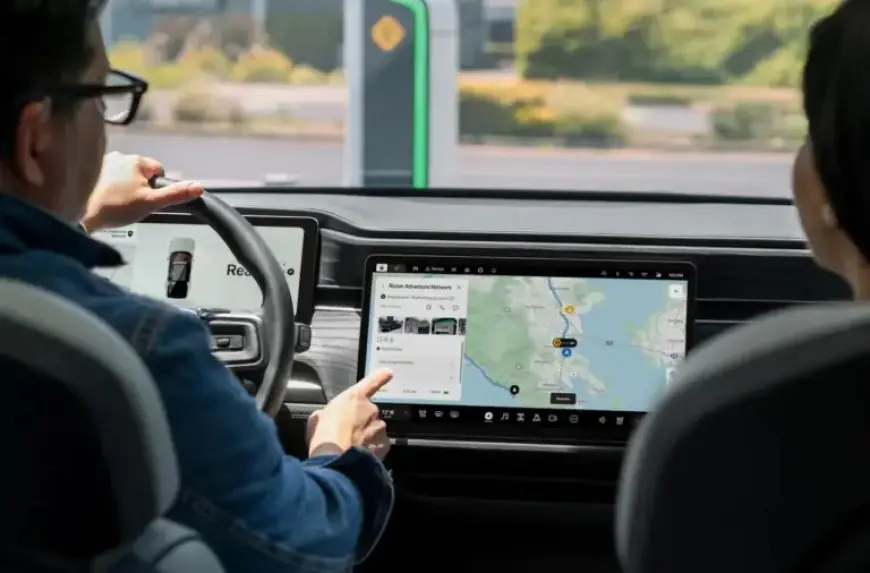
The rise in total revenue was primarily fueled by an impressive increase in software and services revenue, which surged over threefold to $1.55 billion. This growth was largely attributed to Rivian’s joint venture with Volkswagen Group, established in 2024, which is valued up to $5.8 billion. This collaboration also entails a technology sharing agreement, wherein Rivian provides VW Group with its existing electrical architecture and software technology stack.
Financial Highlights
- Total Revenue: $5.38 billion (2025)
- Automotive Revenue: $3.8 billion (2025)
- Software and Services Revenue: $1.55 billion (2025)
- Joint Venture Value: Up to $5.8 billion
- Projected Vehicle Deliveries in 2026: 62,000 to 67,000
Rivian’s joint venture with VW includes milestone-based payments. In 2025, the company achieved a significant milestone, leading to a $1 billion payout through a share sale. To facilitate this venture, Rivian had previously received $1 billion through a convertible note in 2024 and another $1 billion in July 2025.
The Upcoming R2 SUV
Looking ahead, Rivian confirmed plans to launch its new R2 SUV by June 2026. This model aims to be more cost-effective to produce, addressing Rivian’s historical challenges with profit margins. The company noted a reduction in the cost of goods sold per vehicle, experiencing improvements in production efficiency with its R1T truck and R1S SUV.
Cost Management and Projections
- Cost of Goods Sold (COGS) per unit: $92,000 in Q4 2025
- Projected net loss for 2026: Between $1.8 billion and $2.1 billion
- Capital Expenditures: Estimated between $1.95 billion and $2.05 billion in 2026
Rivian is optimistic about enhancing its production capabilities and has ambitious expectations for the upcoming year. The company anticipates a substantial increase in vehicle deliveries, coupled with advancements in its electric delivery van (EDV) lineup, which has Amazon as its main client.
Conclusion
Despite posting a net loss of $3.6 billion in 2025, Rivian’s focus on software and its strategic partnerships indicate a forward-looking approach as it navigates the evolving electric vehicle market. Through its innovative strategies and upcoming product releases, Rivian aims to solidify its position in the industry while steering towards profitability in the coming years.