























Mike Sullivan lays down challenge to Brennan Othmann as Rangers enter Olympic break

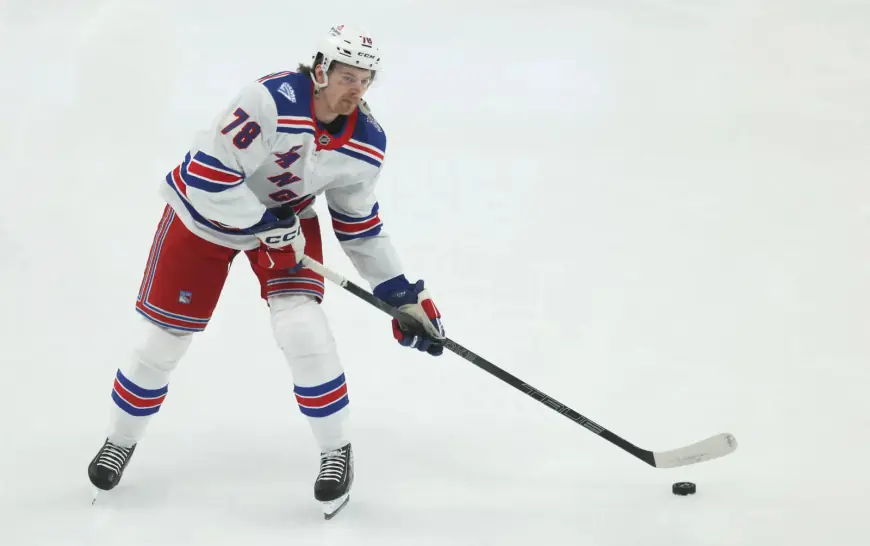
New York’s bench boss sent a clear message before the Olympic pause, scratching Brennan Othmann and stating the young forward must sharpen key areas to secure a permanent NHL role. The decision — and the blunt words that followed — frame a crucial stretch for both player and team when the schedule resumes on Feb. 26 (ET).
Sullivan’s blunt assessment and the scratch that sparked debate
In the final game before the break, Mike Sullivan held Brennan Othmann out of the lineup, a move many initially linked to roster mechanics during the pause. The coach dispelled that notion, emphasizing performance over paperwork. “I think there are elements of his game that have to continue to improve in order for him to establish himself as an NHL player,” Sullivan said, underscoring that the decision centered on standards and readiness, not contract or assignment rules.
The scratch came after a run of 10 straight NHL appearances for Othmann, a span that suggested growing trust and opportunity. Yet Sullivan’s message made it plain that opportunity must be met with NHL-caliber consistency to stick.
Usage, production, and the gap to a full-time role
Othmann, 23, had been elevated into a third-line role and given time on the second power-play unit, signaling the staff’s willingness to see if his AHL momentum could translate. While the winger had recently surged with Hartford, he sits at one point in 16 NHL games this season. For a team intent on reshaping its identity and future core, the contrast between potential and production has become a focal point.
Sullivan’s bar for a full-time job appears to be built on detail and trust. That includes board battles, puck management, reads without the puck, and sustaining forecheck pressure shift after shift — the kinds of habits that earn defensive-zone starts and late-game minutes. Until those habits are bankable, ice time can fluctuate quickly.
Development versus results: a roster caught between timelines
The timing of the decision has amplified a broader conversation about the club’s direction. The organization is in a declared retool, with more trades possible, and younger players expected to audition for long-term roles. Othmann and defenseman Scott Morrow have both spent time on the active roster, with lineup choices around them fueling discussion about how minutes are allocated during a season skewing toward evaluation.
Recent moves have also added competition. The team claimed Vincent Iorio on waivers, while Morrow sat versus Carolina, choices that highlighted the staff’s ongoing search for optimal combinations on the blue line and up front. The dynamic underscores a reality: even in a development-tilted stretch, ice time must be earned daily under a coach committed to standards.
What the break means for Othmann and the team
As of the pause, Othmann had not been reassigned to Hartford, though that option remains on the table before the club returns on Monday, Feb. 26 (ET). If he stays, he’ll re-enter a lineup in flux, with potential trade fallout and a competition for roles that could intensify down the stretch. If he goes back to the AHL, it would present a targeted opportunity to stack strong minutes, touch special teams, and return with a clearer blueprint for NHL details.
Either route aligns with Sullivan’s message: sharpen specific elements, deliver consistency, and rebuild the kind of trust that withstands the nightly demands of top-league play.
Othmann’s response and the path forward
Othmann has embraced the feedback with candor. “You're still trying to earn, and you're still trying to build a little bit of trust from the coaching staff,” he said. “I'm still trying to build trust. I'm still trying to learn.” It’s a pragmatic stance that fits the developmental arc many young forwards face when transitioning from top-line AHL roles to specialized NHL usage.
For the team, the mandate is equally clear: define roles, keep standards high, and create an environment where opportunity meets accountability. For Othmann, the task is to turn flashes into a foundation — more pucks won, fewer turnovers, smarter routes on the forecheck, and harder stops in the defensive zone. If he nails those layers, the points are likely to follow, and the scratch before the break could be remembered as the inflection point.
With the Olympic pause offering a reset, the next few weeks will tell whether Sullivan’s challenge accelerates Othmann’s climb or temporarily redirects it. Either way, the message has been delivered. The response begins when the schedule flips back on in late February.