






















UK Met Office Enhances Forecasts, Cuts Air Travel Delays

The UK Met Office has implemented a significant upgrade to its forecasting system, leveraging a powerful supercomputer. This enhancement focuses on improving predictions of cloud cover and fog, which are crucial for air travel. The latest evolution marks the first major overhaul of the Met Office’s forecasting models in over three years.
Improvements to Air Travel Forecasts
The upgraded system is designed to provide clearer and more precise forecasts, particularly for low clouds, mist, and fog. These weather conditions often lead to capacity constraints at airports. The new model also offers improved winter temperature forecasts, aiding in electricity grid management, road salting, and de-icing operations.
Extended Forecast Horizons
- The forecast horizon has been extended from seven to ten days.
- This change allows for earlier warnings of hazardous weather conditions.
- Advanced modeling enhances the detection of mist and fog.
With more realistic rainfall intensities simulated, the Met Office can better predict operational conditions for air travel. These advancements will support airport planning, including rotation adjustments and de-icing processes.
Previous Upgrades
This upgrade follows the decision made in May last year to adopt the Microsoft-supplied supercomputer, which has been pivotal in enhancing forecasting accuracy. Patrick Vallance, Minister of State for Science, Research and Innovation, noted the benefits of improved weather forecasting on both air travel and public safety.
Reducing Delays Caused by Weather
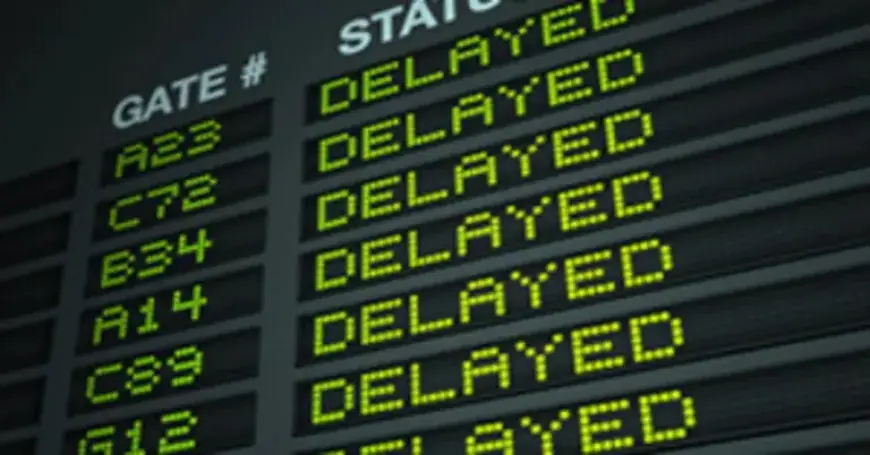
The Met Office aims to minimize weather-related uncertainties that lead to flight delays. In airports like Heathrow, where operations are often adversely affected by weather conditions, improvements in forecasting will facilitate better resource management for airport operators and air traffic control.
Challenges Faced by UK Airports
British airports are particularly prone to weather-induced delays. A 2024 report by Eurocontrol identified Heathrow, Gatwick, and Porto Airport as leading locations for severe weather disruptions. Additionally, Skyrefund labeled the UK as one of the worst destinations for delays and cancellations in the summer of 2025, highlighting the urgent need for accurate forecasting.
With these enhancements, the UK Met Office is well-positioned to improve the reliability of air travel, reduce disruptions, and support the UK’s aviation industry as a whole.