

























CBA share price jumps after half-year result as ASX investors weigh dividend lift against valuation and rate risks

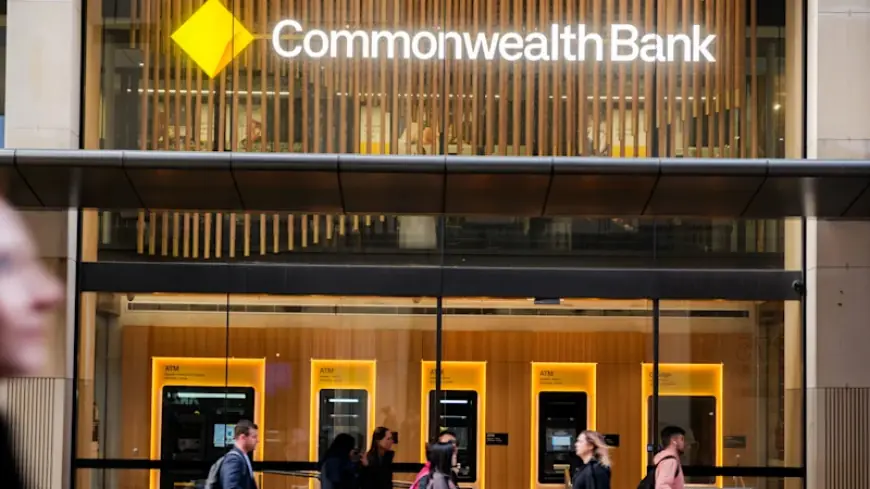
Commonwealth Bank of Australia’s share price surged in the latest trading session after the lender posted a stronger-than-expected half-year result and lifted its interim dividend, reigniting a debate that has followed the stock for months: is CBA a dependable defensive compounder, or an expensive trade that leaves little room for error if the economy slows?
In Wednesday, February 11, 2026 ET coverage of the Australian market, CBA was one of the dominant drivers on the ASX as investors reacted to the earnings beat and the dividend increase. The move marked a sharp reversal from earlier 2026 volatility, when the stock’s premium valuation had made it especially sensitive to sentiment swings around interest rates, housing, and bank competition.
What moved the CBA share price
The immediate catalysts were straightforward: a solid first-half performance, upbeat management tone on asset quality, and a higher interim dividend. Investors tend to reward banks when three boxes are ticked at once:
-
Earnings momentum that looks durable, not just a one-off
-
Credit quality that appears stable, with arrears contained
-
Capital confidence, signaled through dividends
CBA’s interim dividend was increased to AUD 2.35 per share, fully franked, a detail that matters disproportionately for Australian income-focused portfolios. Even when growth is modest, a higher payout can be enough to pull sidelined money back into the stock, particularly if the broader market is searching for perceived stability.
Behind the headline: why the ASX keeps treating CBA like a “market inside the market”
CBA is not just another bank on the ASX. It is a heavyweight that shapes index performance, portfolio construction, and even household investing psychology. When CBA rallies, it can pull the broader market higher; when it slides, it can drag sentiment down even if other sectors are fine.
That creates a self-reinforcing incentive loop:
-
Large funds often hold CBA by default, because avoiding it is a benchmark risk.
-
Retail investors are drawn to the dividend profile and brand familiarity.
-
Short sellers and skeptics focus on valuation, using any earnings wobble as a potential trigger.
In other words, CBA’s share price is frequently a referendum on how investors feel about Australia’s household balance sheets and the interest-rate path, not just a verdict on one set of numbers.
The valuation question is still the main fight
The key tension after a sharp post-results jump is whether the market is paying for quality or overpaying for comfort.
CBA typically trades at a premium to peers because it is seen as having a stronger franchise, a large deposit base, and consistent execution. But premium valuation cuts both ways. When expectations are high, the stock can fall hard on small disappointments: a margin squeeze, a funding-cost surprise, or early signs of rising loan stress.
This is why the “beat” matters more than it might for a cheaper bank. With CBA, the market often asks not only “Did you deliver?” but “Did you deliver enough to justify the multiple?”
Rates, mortgages, and competition: the incentives driving the next move
The next leg for the CBA share price likely hinges on three forces that can pull in different directions:
1) Interest rates and margins
Higher rates can support bank margins, but they can also slow credit growth and pressure borrowers. Investors will watch how management frames the balance between earnings support and household stress, particularly if rates remain restrictive longer than expected.
2) Mortgage growth and housing sensitivity
CBA’s outsized mortgage footprint makes it a high-beta play on housing confidence. If housing activity stays resilient and arrears remain contained, that supports the bull case. If job conditions soften or living costs bite harder, the bear case reasserts itself quickly.
3) Deposit and pricing competition
Competition for deposits and mortgage pricing can erode profitability in a quiet way that only shows up over time. Even if headline earnings look strong now, the market will track whether the bank is “buying” growth through sharper pricing, and whether that trade-off is sustainable.
What we still don’t know
Several missing pieces will decide whether this rally holds:
-
Whether credit quality stays as benign as recent data suggests once the lagged effects of past rate rises fully filter through
-
How aggressively competitors chase mortgage share, and how much margin compression CBA is willing to accept
-
Whether the broader ASX rotates toward cyclicals, reducing demand for defensive, high-valuation names
-
How dividend expectations evolve for the second half, especially if earnings moderate
What happens next: 5 realistic scenarios for CBA on the ASX
-
Rally consolidates if guidance and credit metrics stay steady. Trigger: stable margins and no uptick in arrears.
-
Rally fades into range-trading as valuation becomes the ceiling again. Trigger: neutral outlook language and softer growth momentum.
-
Another leg higher if the market pivots to income and defensives. Trigger: risk-off sentiment and falling bond yields.
-
Sharp pullback if funding costs rise or competition squeezes spreads. Trigger: weaker net interest margin commentary.
-
Broader bank sector re-rating if rates settle and housing stays firm. Trigger: improved confidence in a soft landing.
For now, the CBA share price move is a classic post-results repricing: investors are rewarding delivery and dividend certainty, while keeping one eye on the same unresolved issue that never really leaves this stock — how much is too much to pay for safety.