
























Annie Guthrie in focus as investigators widen search in Nancy Guthrie case

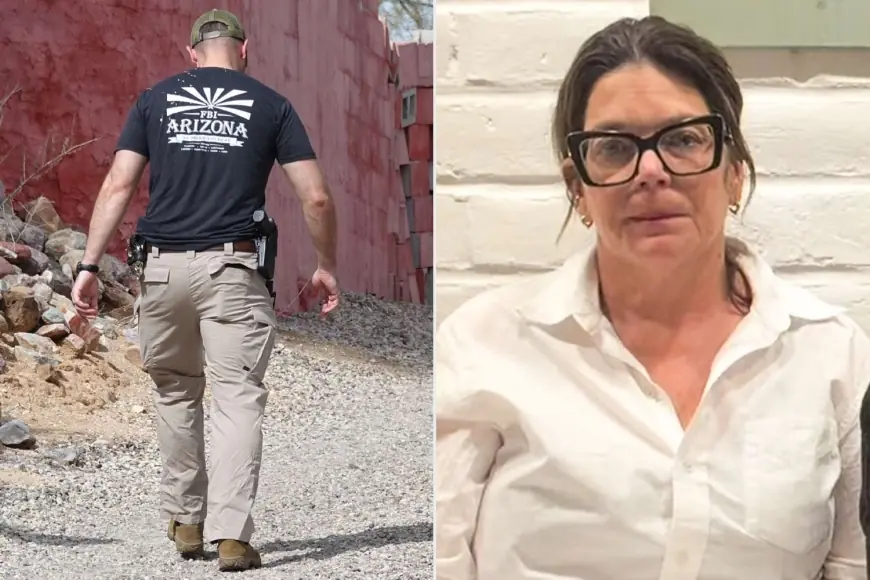
Annie Guthrie, the Tucson-based sister of a nationally known morning TV anchor, has become a central figure in the public-facing timeline of the disappearance of her mother, Nancy Guthrie, 84. Investigators say Annie and her husband were the last confirmed family members to see Nancy before she vanished, and authorities have now searched Annie’s home more than once while expanding door-to-door work in her neighborhood.
The case remains unresolved as of Wednesday, Feb. 11, 2026, and federal agents have released new surveillance images tied to the moment investigators believe someone tampered with Nancy Guthrie’s home security camera.
Who is Annie Guthrie
Annie Guthrie lives in Tucson, Arizona, and is known professionally as a writer and jeweler. She is married to Tommaso Cioni, and the couple has one child. Compared with her sister’s national TV profile, Annie has largely kept a lower public footprint—until the investigation pulled her into the spotlight.
Her identity matters to the case for a simple reason: investigators have treated the hours after Nancy’s last confirmed contact with family as the most important window for establishing what happened next.
Why investigators searched her home again
Investigators carried out a second search at Annie Guthrie’s home on Saturday, Feb. 7, 2026, as part of the ongoing abduction investigation. Authorities have not publicly detailed what prompted the return, what they were specifically looking for, or whether anything was collected.
A follow-up search in a missing-person case can reflect many possibilities—new tips, a refined timeline, or a need to document or re-check items—without indicating wrongdoing by the residents. Officials have not publicly accused Annie Guthrie of any crime, and no charges have been announced against her.
Timeline anchors that keep pointing back to the family’s last contact
Investigators have publicly described a sequence that begins with Nancy Guthrie being dropped off at home late Saturday night, Jan. 31. A key official marker is the closing of her garage door at about 11:50 p.m. ET (9:50 p.m. local time), a moment authorities have used as a working assumption that she was inside for the night.
Then, in the early hours of Sunday, Feb. 1, two digital disconnects define the narrow time window investigators have emphasized:
-
About 3:47 a.m. ET (1:47 a.m. local): the doorbell camera disconnects
-
About 4:28 a.m. ET (2:28 a.m. local): the pacemaker app disconnects from her phone
Officials have stressed that a disconnect does not, by itself, prove what happened. But the clustering of events has kept investigative focus locked on the minutes around those disruptions.
The latest FBI image release and what it adds
On Tuesday, Feb. 10, federal agents released surveillance images and short video clips showing a masked person on Nancy Guthrie’s porch during the overnight window. The person appears to approach the front door wearing gloves and a backpack, with a flashlight held in their mouth in one clip, and to raise a gloved hand toward the camera before moving away. Investigators have described the figure as an “armed individual,” noting a visible holster; whether a firearm is present is not publicly confirmed.
The release is significant for two reasons. First, it is the first major visual evidence shared publicly that places a person at the home during the critical hours. Second, it signals investigators believe public identification could be decisive—especially if neighbors recognize clothing, gait, or a pattern of movement that matches other camera footage in the area.
What police activity around Annie’s neighborhood suggests
After the images were released, investigators were seen canvassing near Annie Guthrie’s neighborhood—knocking on doors, speaking with neighbors, and searching drainage areas and culverts. This kind of work typically aims to surface two categories of evidence: (1) additional video from private systems that might show approach or escape routes, and (2) witness recollections that can be matched against timestamps.
That activity does not establish where Nancy Guthrie is now, but it indicates investigators are trying to stitch together movement across a wider radius than the immediate scene—particularly if the porch footage is only a partial glimpse of a longer sequence.
What happens next
The next meaningful developments likely hinge on identification and corroboration: naming the masked figure, connecting that person to a vehicle or route, and verifying a timeline that explains how Nancy Guthrie could have been removed from her home without immediate detection.
For Annie Guthrie, the public attention is unlikely to fade soon. She sits at the intersection of the case’s most sensitive facts—family proximity to the last confirmed sighting and the expanding search activity in her area—while investigators continue to say the disappearance shows signs of an abduction.
Sources consulted: Associated Press, Federal Bureau of Investigation, Pima County Sheriff’s Department, CBS News