
























TrumpRx: What the new “Trump Rx” drug site is, what’s on the list, and what it isn’t

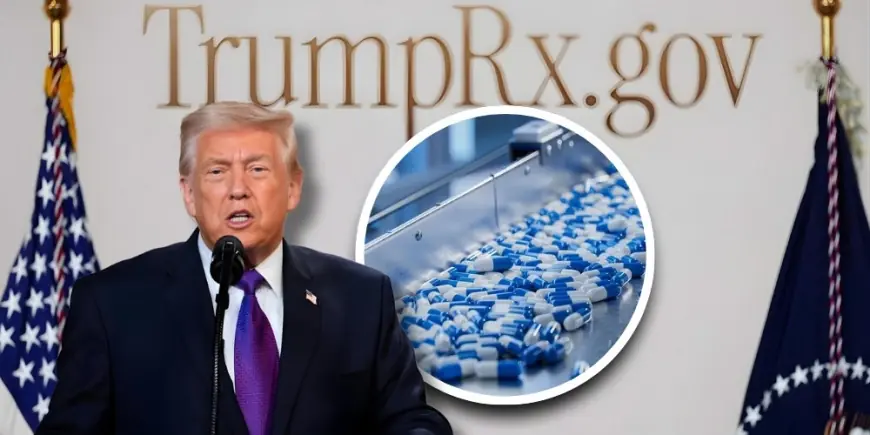
A new federal prescription-discount platform branded “TrumpRx” (often searched as “Trump Rx” or “Invest America”–style accounts, though this one is health-focused) has gone live with a promise of lower cash prices on a starter slate of medications. The rollout has also sparked confusion: some people expect a full pharmacy, others expect insurance-style coverage, and many are asking whether look-alike websites such as “trumprx.com” are connected.
Here’s what’s actually known right now about the TrumpRx program, the initial medication list, and how it compares to existing coupon-style options.
What TrumpRx is (and is not)
TrumpRx is a federal web portal that aggregates discounted, out-of-pocket medication offers. It does not write prescriptions, and it is not a government-run mail-order pharmacy in the traditional sense. Instead, it generally routes patients to manufacturer purchase programs or pharmacy discount coupons that can be used at participating retail pharmacies.
That distinction matters because the savings depend on the specific drug, the manufacturer’s terms, and whether you’re paying cash. For many insured patients, the price through a normal insurance copay may still be lower than the portal’s cash price.
“TrumpRx list of drugs”: what’s included at launch
At launch, the TrumpRx browse page shows about 40+ medications (43 has been widely cited) spanning several categories. The list includes widely discussed brand-name drugs, including GLP-1 diabetes/weight-loss medicines (people have specifically searched for Zepbound in relation to the site), as well as other high-cost specialty medicines and some more common therapies.
The program’s public messaging emphasizes that this is a starting lineup and that additional drugs will be added over time.
Medication examples commonly referenced as being on the initial list include:
-
GLP-1 medicines used for diabetes and weight loss (including Wegovy-family and Zepbound)
-
Certain cholesterol and heart medications
-
Fertility drugs
-
Select antivirals and specialty therapies
Because prices and availability can vary by strength, quantity, and fulfillment method (pharmacy coupon vs. manufacturer direct), the most reliable “price” is the one shown for your exact configuration on the portal at the time you search.
Who the program seems designed for
The clearest fit is people who:
-
are paying cash for prescriptions (including many uninsured patients), or
-
have insurance but face a high copay or deductible on a specific medication and want to compare a cash alternative.
A key limitation is that the portal’s terms around eligibility and reimbursement can restrict use alongside certain coverage. Public-facing terms shown during the rollout have included language requiring users to confirm they are not using government-funded insurance for the purchase and not seeking reimbursement for the same transaction—an important point for anyone on Medicare-, Medicaid-, or state-subsidized coverage to review carefully.
Separately, federal health officials issued recent guidance about how manufacturers can structure direct-to-consumer discount programs while reducing legal risk under federal rules. How that guidance will translate into day-to-day eligibility on the portal is still unsettled in public details, so people using government coverage should treat “eligible” as something to verify before relying on a posted cash price.
TrumpRx prices: what “discount” means here
TrumpRx highlights percent-off claims and headline savings, but the real-world outcome depends on your alternatives:
-
Brand vs. generic: Many of the listed drugs have cheaper generic or near-generic substitutes in the market. If your prescriber can switch you safely, your lowest cost may come from a generic channel instead of any branded discount.
-
Cash price vs. your copay: Even a steep discount off a brand-name list price can still be more expensive than an insured copay.
-
Pharmacy coupon vs. manufacturer direct: Some offers are coupon-style at retail pharmacies; others send you to a manufacturer purchase pathway, which can have extra steps and eligibility checks.
In other words: TrumpRx can reduce prices for certain cash payers, but it doesn’t automatically beat every existing option for every patient.
“GoodRx” comparisons and why people are confused
A major reason the TrumpRx rollout triggered confusion is that many Americans already use coupon-style pharmacy discounts offered by well-known private services. TrumpRx’s coupon mechanism can look similar on the surface, which leads some users to assume it’s simply re-labeling what already exists.
The practical difference is that TrumpRx is positioned as a single federal directory that also emphasizes manufacturer-direct pricing tied to the administration’s “most favored nation” messaging. Whether that delivers unique savings (beyond what patients could already access by going straight to manufacturers or comparing coupons) will likely depend on how many companies participate, how many drugs are added, and whether prices remain consistently lower than common cash alternatives.
Watch-outs: “trumprx.com” and look-alike sites
Search traffic has surged for “trumprx.com,” “trump rx.com,” and other similar addresses. The safest rule is simple: use only the official federal address that ends with the government suffix and avoid third-party sites that ask for sensitive personal or payment information.
If you land on a page that:
-
asks for Social Security numbers, bank details, or “membership” fees,
-
promises prescriptions without a clinician,
-
or aggressively pushes unrelated products,
treat it as a red flag and exit.
What happens next
Two near-term developments will determine whether TrumpRx becomes a lasting consumer tool or a short-lived political splash:
-
How quickly the medication list expands beyond the initial ~40+ drugs
-
Whether posted cash prices stay consistently competitive versus common coupon-and-generic alternatives
For now, TrumpRx is best understood as a new, federal-branded comparison and access portal for cash prices—not a replacement for insurance, and not a guarantee of the lowest price for every prescription.
Sources consulted: Associated Press; U.S. Department of Health and Human Services; The Wall Street Journal; The White House