

























Lindsey Vonn injury update after Cortina crash: what’s confirmed, what’s unknown, and what comes next

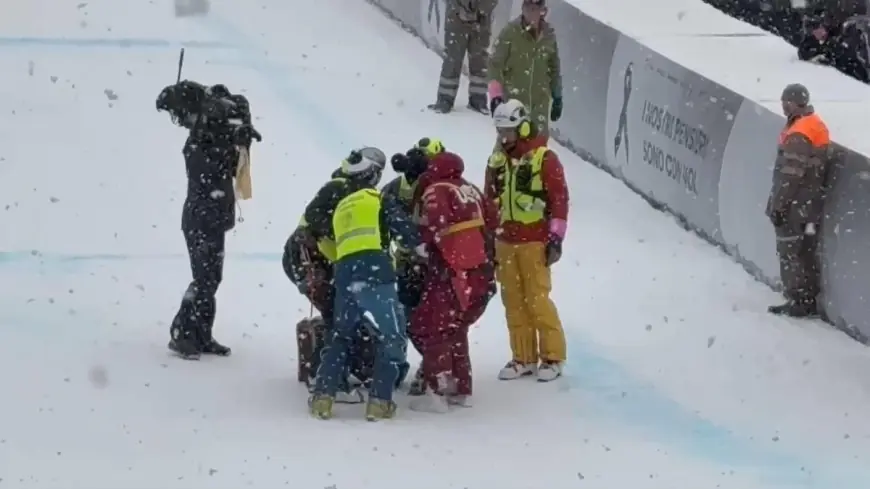
Lindsey Vonn’s Olympic downhill ended just seconds after it began on Sunday, February 8, 2026 (ET), when the American skiing icon crashed near the top of the course in Cortina d’Ampezzo. She was treated on the slope, airlifted by helicopter to a hospital for urgent evaluation, and later underwent orthopedic surgery to stabilize a fracture in her left leg. Medical officials have said she is in stable condition, and that her life is not in danger.
The crash has also intensified the wider conversation about risk in speed events—especially with Vonn having entered the race after a recent, significant injury to her left knee.
What doctors and officials have confirmed
The confirmed medical picture, as of late Sunday in Italy (early afternoon ET), is centered on one primary injury and one major intervention:
-
Vonn sustained a fracture in her left leg during the crash.
-
She underwent orthopedic surgery to stabilize the fracture.
-
She was reported to be in stable condition after the procedure.
-
She has been under close monitoring, with officials indicating intensive-care-level supervision was used for monitoring and privacy.
Beyond those points, there has been no comprehensive public medical briefing that details the full extent of additional injuries (if any), and no public recovery timeline has been formally issued.
What happened in Cortina, and why the evacuation was immediate
Vonn crashed roughly 13 seconds into her downhill run. She lost control after contacting a gate and went down hard, sliding and tumbling before coming to a stop. Medical personnel reached her quickly and remained with her on the snow for several minutes as she was stabilized.
In alpine skiing—especially downhill—helicopter evacuation is a standard response when there is concern for fractures, head/neck issues, or when rapid transport is needed from terrain that is difficult to reach by ground. The decision to airlift is not, by itself, an indicator of life-threatening injury; it often reflects caution and logistics.
What’s still unknown: the fracture details and the recovery path
Several key details that determine recovery length and return-to-sport likelihood have not been publicly specified yet:
-
Which bone(s) in the left leg were fractured (for example, lower leg vs. upper leg).
-
Whether the fracture was simple or complex, and whether it involved joint surfaces.
-
What hardware was used in surgery (for example, plates, screws, a rod), and whether doctors expect weight-bearing restrictions for weeks or months.
-
Whether she sustained additional injuries (hip, pelvis, ankle, or soft-tissue damage) that sometimes accompany high-speed crashes.
Those details matter because “fracture stabilized” can cover a wide range of severities—from injuries that heal with relatively straightforward rehabilitation to injuries that require prolonged non-weight-bearing periods and extensive physical therapy.
The knee factor: why the crash hit harder than a “normal” downhill fall
Vonn’s crash landed differently because it came against a known backdrop: she had recently disclosed a serious left-knee injury sustained in late January. She still chose to start the Olympic downhill, a decision that drew heavy attention because downhill skiing demands instantaneous lower-body stability at very high speed.
What is not publicly confirmed is whether that knee injury contributed to the crash. Downhill falls can occur for many reasons—line choice, a late adjustment, equipment, visibility, course setup, or an unfortunate gate contact. Still, the injury context amplifies the post-crash debate: how athletes, teams, and medical staff weigh “one last chance” against elevated risk.
Next steps: what recovery typically looks like after surgical fracture stabilization
While every case differs, the next steps after this kind of surgery generally follow a predictable medical sequence:
-
Post-op imaging and monitoring to confirm alignment and hardware position, and to watch for swelling or complications.
-
Pain control and mobility planning, including when she can safely stand or move with assistance.
-
A staged rehabilitation plan (range of motion, strength, balance, then sport-specific work) guided by healing milestones.
-
Travel and follow-up care, which may include coordinating continued treatment with specialists closer to home once stable for transport.
Whether Vonn returns to competition is ultimately dependent on fracture specifics, her knee status, and rehabilitation progress—none of which has been publicly defined in enough detail to forecast a timeline responsibly.
Key takeaways for fans right now
-
Vonn fractured her left leg, had surgery, and is stable.
-
The exact fracture type and recovery timeline have not been publicly detailed.
-
The major near-term priority is healing and safe rehabilitation, not competition scheduling.
Sources consulted: Reuters, Associated Press, ESPN, U.S. Ski & Snowboard