
























Backyard Pods Indicate a Housing Trend, Not a Crisis Solution

Australia faces a significant housing challenge as it struggles to meet the demand for adequate homes. Recent data from the National Housing Supply and Affordability Council reveals a projected shortfall of more than 250,000 homes by 2029. The government aims to construct 1.2 million homes, yet only around 938,000 are expected to be built in the next five years. This discrepancy is creating enormous pressure on the housing market.
Backyard Pods: A Trend or a Temporary Fix?
The growing popularity of backyard pods represents a broader housing trend rather than a definitive solution to the housing crisis. Major retailers, like Bunnings, have begun selling these small modular units, often referred to as flat-pack homes. Priced from approximately $26,000, these pods can be assembled quickly, attracting interest from those looking for affordable housing alternatives.
The Reality of Backyard Pods
Despite their appeal, these backyard pods are primarily designed for temporary use. Their configurations and features cater to short-term living arrangements rather than serving as permanent homes. Moreover, many of these units do not require full planning or building approvals in certain areas. This classification as ancillary structures further questions their viability as long-term housing solutions.
- Backyard pods provide useful space for offices or guest rooms.
- They may lack necessary site preparation and utility connections.
- Permitting requirements vary by location and intended use.
The Future of Prefabricated Housing in Australia
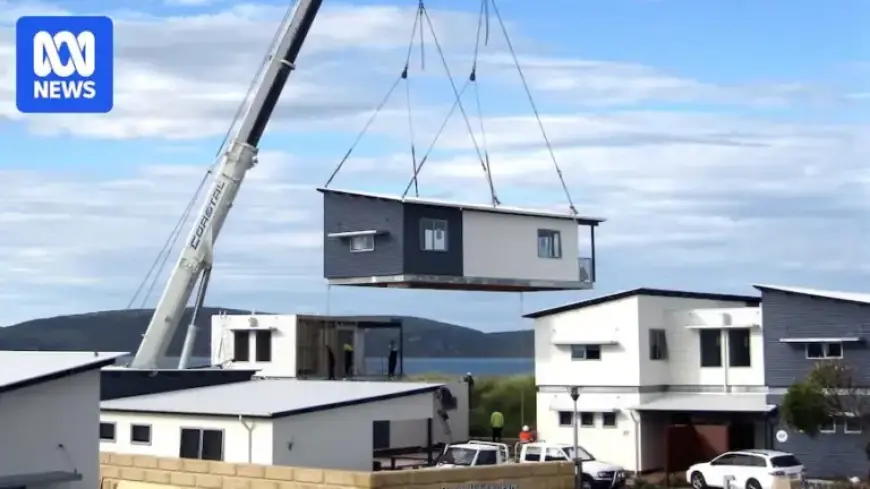
The Australian construction industry is increasingly exploring industrialized methods of homebuilding, including prefab and modular homes. This approach promises a 50% faster construction timeline compared to traditional methods. However, these alternative housing solutions currently represent less than 8% of the overall construction market.
Market Growth and Challenges
The Australian prefab construction sector is valued at approximately $12.91 billion, with annual growth projected at 7.88%. Nevertheless, the scale remains small compared to countries like Sweden, where a substantial portion of detached housing is prefabricated. The challenge lies in scaling production to lower costs effectively.
Investing in Long-Term Solutions
While backyard pods may serve certain needs, they are not the comprehensive answer to Australia’s housing crisis. Substantial investment in alternative construction methods is essential. Government support for industrial strategies, workforce training, and land reform will play significant roles in resolving the housing shortfall.
A Path Forward
Australia needs to move toward a future of quality homes produced at scale rather than focusing solely on small, temporary structures. By enhancing factory-based building capacities and fostering clear pathways from prototypes to full-scale housing developments, the country can pave the way for sustainable living solutions that benefit its communities.
As Bunnings and other retailers continue to explore the modular housing market, public awareness and acceptance of these innovative construction methods will likely increase. However, a more coordinated approach involving both state and federal governments is crucial for long-lasting impacts in solving the housing crisis.