





















Bad Bunny Halftime Show Delivers a Puerto Rico Tribute, Surprise Guests, and a Unifying Message at Super Bowl LX

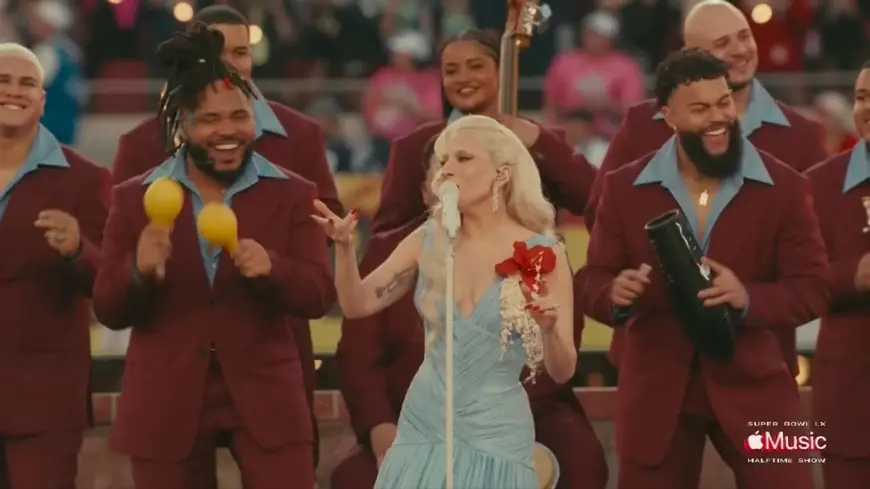
Bad Bunny turned the Super Bowl LX halftime show into a high-concept love letter to Puerto Rico and a broader statement about identity, community, and belonging, blending stadium-scale spectacle with distinctly Caribbean and Latin musical DNA. The performance, staged Sunday night, February 8, 2026, landed in the heart of the game after a first half that was already tense, and it immediately shifted the night’s energy from football anxiety to festival release.
For viewers trying to time it: the halftime segment began shortly after 8:00 p.m. ET, with the musical portion running roughly 12–15 minutes inside a longer halftime break that included stage build and teardown.
What happened in the Bad Bunny halftime show
The set opened with a cinematic scene that leaned into rural imagery tied to Puerto Rico, then snapped into bright, kinetic choreography as the field transformed into a moving neighborhood tableau. The staging emphasized everyday life—street corners, family spaces, and communal celebration—rather than abstract fireworks-for-fireworks’ sake. That choice made the show feel less like a generic pop medley and more like a single narrative that happened to be delivered at maximum volume.
Bad Bunny’s wardrobe and visual motifs reinforced the theme, threading personal symbolism through the performance without slowing the pace. The result was a halftime show that looked expensive, but also intentional: not just “big,” but pointed.
Songs, tempo, and the shape of the set
The performance moved through a tightly edited medley anchored by some of Bad Bunny’s most recognizable hits, favoring sharp transitions over long song sections. The pacing followed a deliberate arc:
-
A familiar, high-energy opener to grab casual viewers immediately
-
A mid-set shift into more melodic moments and cultural nods
-
A final sprint designed for replay clips: fireworks, crowd shots, and a closing message
One standout production flourish: the field staging included a celebratory moment that played like a real-life community ceremony, framed as part of the story the set was telling about love and togetherness.
Surprise guests and why they mattered
The show featured multiple guest appearances that weren’t random star-stacking. Each cameo served a function: genre range, cross-audience reach, or cultural reinforcement. By pairing Bad Bunny with artists from different corners of the pop and Latin music universe, the halftime show widened its emotional palette—switching from reggaeton pulse to dance-floor theatrics to classic Latin-pop familiarity.
The guests also provided a practical advantage: in a halftime show, you can’t build tension slowly. Surprise faces create instant lift, and this set used them as momentum engines rather than distractions.
What’s behind the headline
This wasn’t only a performance; it was a strategic piece of mass communication.
Context and incentives
Bad Bunny has long been positioned as both hitmaker and cultural symbol, and the Super Bowl halftime stage is the rare platform where those roles merge. The incentive is obvious: reach the widest possible audience, including viewers who don’t follow his music, and leave them with a clear image of what he represents.
Stakeholders
-
The artist and his team, trying to deliver a career-defining mainstream moment without sanding off identity
-
The league, which benefits when the halftime show pulls in non-football viewers
-
Advertisers, whose value spikes during the halftime window
-
Fans, who want authenticity and spectacle at the same time
-
Critics, who read the performance as a cultural barometer, not just entertainment
Second-order effects
A halftime show like this can shift the industry’s center of gravity. When a Spanish-language, Latin-rooted performance dominates the night’s conversation, it becomes harder for future decision-makers to treat global audiences as “niche.” It also raises the bar for storytelling: viewers now expect halftime shows to have a thesis, not just a playlist.
What we still don’t know
Even after the lights go down, a few big questions remain open:
-
How the performance will be graded long-term once the highlight clips stop circulating
-
Whether any planned collaborations teased by the guest choices become real releases
-
How the show’s cultural message will be received across different parts of the audience over the next news cycle
In other words: tonight’s reaction is loud, but the real verdict forms over days, not minutes.
What happens next: realistic scenarios and triggers
-
A streaming surge for the featured songs
Trigger: replay clips and playlists driving casual viewers into the catalog. -
A debate about what halftime shows “should” represent
Trigger: polarized takes about language, culture, and national identity on a mass stage. -
More Latin-forward halftime bookings in future years
Trigger: strong engagement metrics and broad social reach from this performance. -
A spotlight on Puerto Rican issues and symbolism
Trigger: viewers digging into the references embedded in the staging and visuals. -
A long tail of guest-driven headlines
Trigger: fans tracking backstage connections, setlist clues, and possible future collaborations.
Bad Bunny’s halftime show succeeded on the two hardest axes at once: it was instantly accessible for the widest audience, and it was still unmistakably his. In a format that often flattens artists into a medley machine, he delivered something closer to a statement—fast, loud, and culturally specific—without losing the party.