

























Concerns Rise as Key U.S.-Russia Nuclear Treaty Expires

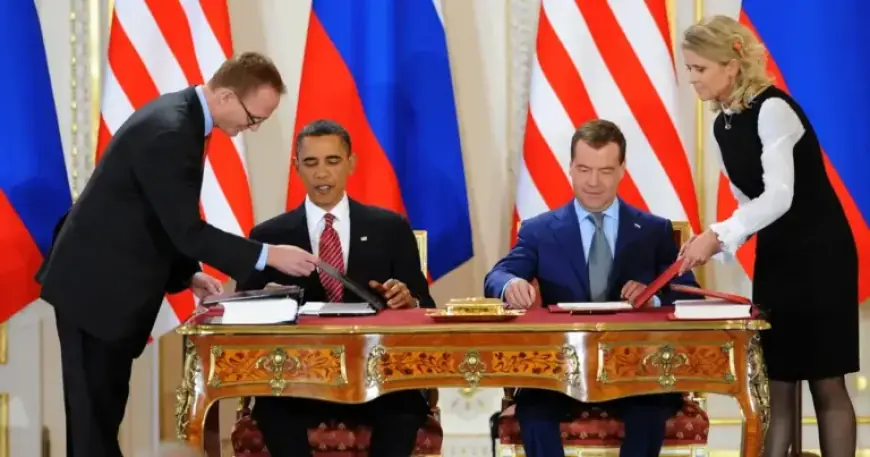
Concerns are rising as the key U.S.-Russia nuclear treaty, known as New START, has expired. This development has reignited fears reminiscent of the Cold War era, marked by uncertainty and increased hostilities.
Historical Context of U.S.-Russia Relations
Experts, including Sokov from the Vienna Center for Disarmament and Non-Proliferation, trace the current tensions back to pivotal events such as the Cuban Missile Crisis in the early 1960s. During that period, the deployment of U.S. nuclear warheads in Europe coincided with the Soviet Union’s missile placement in Cuba.
This confrontation brought the world to the brink of nuclear war, emphasizing the need for regulatory frameworks. Over the past few decades, interest in arms control has diminished, leaving a void filled by rising global tensions.
Significance of the New START Treaty
The New START treaty, signed in 2010 under President Barack Obama, was crucial for maintaining a degree of predictability and communication between the U.S. and Russia. Before its suspension in 2023, the treaty facilitated:
- Warhead limits
- Data sharing
- Mutual compliance checks
- Dialogue mechanisms to address potential misperceptions
According to the U.S. State Department, both nations conducted 328 on-site inspections and exchanged over 25,000 notifications regarding their nuclear activities prior to the suspension.
Implications of Treaty Expiration
The cessation of the New START treaty means both nations lack a formal mechanism to verify each other’s nuclear intentions. Dmitry Medvedev, former Russian president, highlighted this point and criticized the absence of an official U.S. response to Russia’s proposals for future dialogue.
China has expressed regret over the treaty’s expiration, emphasizing its own increasing nuclear capabilities. According to a 2025 Pentagon report, China is projected to possess over 1,000 warheads by 2030, a significant expansion that reflects a lack of predictable arms control measures.
Future Prospects and Arms Control
While the current atmosphere is fraught with mistrust, some officials, including those from the Trump administration, have indicated a willingness to engage in future nuclear arms control discussions. However, Beijing’s response to invitations for negotiation has been dismissive, arguing that it is unfair to engage in talks when its nuclear arsenal is substantially smaller than those of Russia and the U.S.
In light of the evolving geopolitical landscape, the necessity for new arms control agreements remains paramount. Experts suggest that any new treaty should consider the implications of China’s nuclear build-up, ensuring that both the U.S. and Russia maintain strategic flexibility in their responses.
Conclusion
The expiration of the New START treaty raises significant concerns about global nuclear stability. As tensions between nuclear powers escalate, proactive steps toward new agreements may become critical in preventing a renewed arms race and fostering international security.