

























Lindsey Vonn injury update: broken left leg, surgery details, and Olympic status

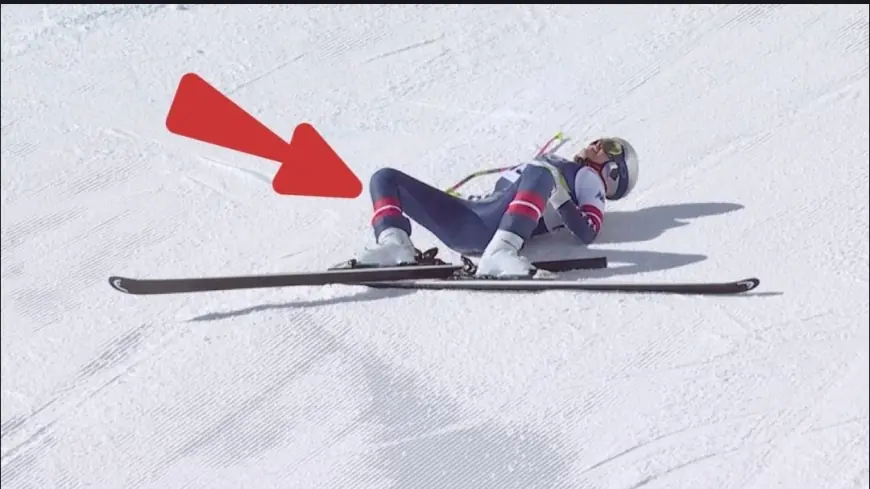
Lindsey Vonn’s Olympic downhill ended 13 seconds after it began Sunday, February 8, 2026, when she crashed near the top of the Cortina course and was flown by helicopter to a hospital for evaluation. Medical staff later confirmed she suffered a fracture in her left leg and underwent orthopedic surgery to stabilize the injury. She was described as in stable condition afterward, with her life not in danger.
The crash came just over a week after Vonn disclosed a complete rupture of her left ACL, along with bone bruising and meniscal damage, raising immediate questions about how the new leg injury affects her remaining Olympic plans.
What’s confirmed about her injury right now
The most concrete update is the diagnosis that emerged after her evacuation: a left-leg fracture requiring surgery. Hospital statements described treatment by a multidisciplinary medical team and an operation performed to stabilize the fracture. Team officials also indicated she was in good hands, emphasizing stability and ongoing care.
Public updates have not consistently specified the exact bone involved (for example, tibia/fibula), nor have they detailed whether the fracture is clean, displaced, or associated with ligament or tendon injury elsewhere. Until those specifics are released, treat precise claims about the fracture pattern as unconfirmed.
Video of Lindsey Vonn crash today fuels fresh debate over racing while injured
Lindsey Vonn's accident
by u/Ecstatic-Ganache921 in olympics
The crash timeline and immediate medical response
Vonn lost control after clipping a gate, went airborne, and tumbled hard down the slope. She remained on the snow while medical personnel stabilized her, then she was evacuated by helicopter—standard procedure when there is concern for serious trauma, potential fracture, or head/neck injury.
After arrival at the hospital, the combination of clinical exam and rapid imaging typically determines next steps. In her case, the fact that she went to surgery soon after evaluation strongly suggests the fracture required urgent stabilization rather than observation alone.
Imaging and exam results to watch for next
The initial imaging sequence after an alpine crash usually begins with X-rays to confirm fracture and alignment. If the fracture is complex or near a joint surface, CT is commonly used to map the break and guide surgical planning. MRI is usually reserved for later assessment of soft tissue (ligaments, cartilage, meniscus) once the acute fracture management is complete and swelling allows.
Given Vonn’s already-known ACL rupture and meniscus damage, the next meaningful “imaging update” would be any statement addressing:
-
Whether the fracture involves a joint surface (which can affect recovery time and function)
-
Whether there is additional knee involvement on the injured side beyond what was already known
-
Whether there were any head, neck, or concussion findings (often shared only in general terms)
If officials use phrases like “no additional injuries” or “no head injury,” that’s useful, but it still doesn’t answer the orthopedic question that matters most: how the fracture will heal and what weight-bearing limits will be required.
What the surgery implies about severity
Surgery “to stabilize a fracture” generally means the injury needed hardware support (often plates, screws, a rod, or external fixation) to restore alignment and protect the bone as it heals. The mention of intensive-care monitoring in some updates can reflect caution after anesthesia and major trauma, not necessarily a life-threatening situation—especially when officials also emphasize that she is stable.
The main practical implication is that recovery becomes measured in weeks to months, not days. Even in best-case orthopedic scenarios, returning to high-speed downhill racing during the same Olympics becomes extremely unlikely.
Is she ruled out of further Olympic events?
As of Sunday afternoon, February 8, 2026 (ET), there has been no universal, formal event-by-event announcement detailing withdrawals from every remaining start. But the combination of a confirmed fracture, surgical stabilization, and post-op monitoring is functionally consistent with being done competing at these Games.
In speed disciplines, athletes need full lower-limb strength, balance, proprioception, and pain-free absorption of impacts—requirements that are incompatible with a fresh fracture repair. Even if a public “ruled out” notice arrives later, the medical facts already point strongly in that direction.
What to watch for in the next 24–72 hours
The next updates likely to add real clarity are:
-
A more specific orthopedic description (which bone, whether the fracture is displaced, and whether a joint is involved)
-
Post-op guidance on weight-bearing status (non-weight-bearing vs partial weight-bearing)
-
A definitive competition-status announcement from team leadership or Olympic organizers
If Vonn makes a public statement, pay attention to whether she mentions pain control, mobility, and the surgery outcome—those details often signal the expected recovery arc more clearly than generic “stable condition” wording.
Sources consulted: Associated Press; Reuters; ABC News; Olympics.com