





















Simone Biles keeps Los Angeles 2028 in view while reframing Olympic pressure

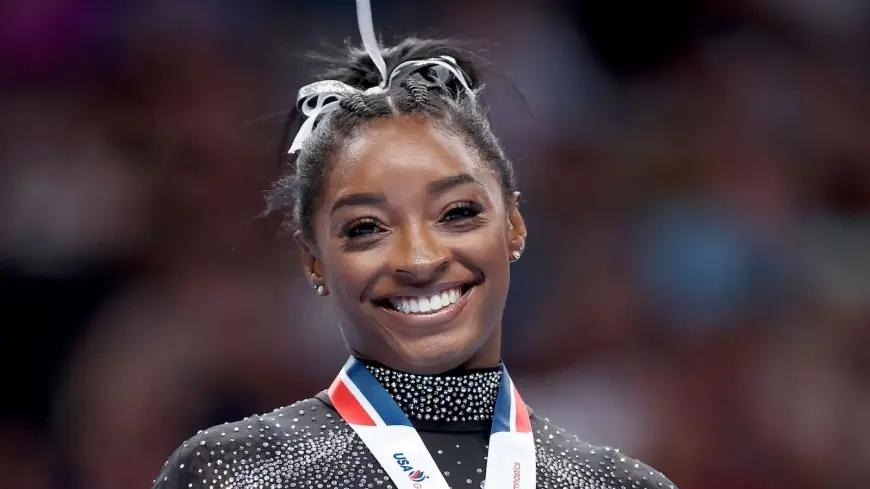
Simone Biles is entering 2026 in a familiar position—globally famous, widely celebrated, and still asked the same forward-looking question: is another Olympics on the table? Her most recent public comments have kept the door open on Los Angeles 2028 without committing, while underscoring that the biggest challenge at the sport’s highest level is often less about difficulty and more about expectation, perception, and how an athlete absorbs the weight of “supposed to.”
Biles, now 28, has described the post-Paris period as physically taxing and emotionally noisy, and she has emphasized that any future run would need to be driven by genuine excitement rather than external momentum.
The latest on LA 2028: open, not promised
Biles has not announced a firm decision about competing at the 2028 Summer Olympics in Los Angeles. She has said she expects to attend the Games in some capacity, but whether that would be as an athlete remains undecided.
The hesitation is not framed as doubt about her ability. Instead, it’s rooted in what elite cycles demand: years of training, constant body management, and the psychological grind of chasing precision in an environment that treats anything short of gold as a story.
How Paris changed the recovery conversation
In reflections on the Paris Olympics, Biles has described a sharp physical “come-down” after competition—an exhaustion that lingered well beyond the closing ceremonies. That framing has resonated with many athletes across sports because it pushes back on the idea that a medal ends the work.
For gymnastics specifically, it also highlights how narrow the performance window is. A summer where routines peak at exactly the right moment often comes with a hidden cost: tightened training schedules, limited recovery room, and the mental load of repeating high-risk skills when the whole world is watching.
Pressure, perception, and the “one mistake” narrative
In early 2026, Biles spoke candidly about the way Olympic pressure can distort perception—how the public often reduces an entire career to a single routine, a single landing, a single wobble. She has emphasized that “it can happen to any athlete,” a point that lands differently after her own Tokyo experience and after watching other champions struggle under similar scrutiny.
Her message has been consistent: pressure isn’t proof you’re weak; it’s proof the moment is real. The challenge is learning to treat the noise as background rather than instruction.
Why her mindset matters beyond gymnastics
Biles is not just a medal count in motion; she has become a reference point for how modern athletes talk about mental health, identity, and the line between personal limits and public demands. That influence is one reason her undecided status for 2028 remains a major sports storyline even in years without a Summer Games.
The broader impact is cultural as much as competitive: more athletes are openly discussing anxiety, burnout, and the reality that “ready” is not always a physical determination. Biles’ willingness to name those pressures—without dramatizing them—has helped normalize a more honest vocabulary for performance.
What a realistic path to 2028 could look like
If Biles were to pursue Los Angeles, the timeline would likely involve a gradual return to structured training rather than an immediate declaration. Gymnastics comebacks typically hinge on three practical checkpoints: health, motivation, and the ability to regain consistency under pressure.
A key factor would be workload control. Modern gymnastics rewards extreme difficulty, but it punishes fatigue. Any future Olympic push would almost certainly be built around smart event selection, careful pacing, and an approach that prioritizes longevity over constant escalation.
What to watch next
Biles has left enough signals to keep the conversation alive while still protecting her space. The next meaningful indicators will be behavioral, not rhetorical: whether she increases training intensity, appears in competition-adjacent settings, or begins describing goals in time-specific terms rather than open-ended ones.
Key things to monitor in 2026
-
Any confirmed return to full training blocks and skill rebuilding
-
Public hints about competition plans in 2026–2027 seasons
-
How she talks about motivation: “curious” versus “committed”
-
Whether her schedule aligns with major qualification milestones
For now, the clearest picture is simple: Biles is not promising Los Angeles 2028, but she isn’t closing the door either—and she is still shaping how the world understands pressure, recovery, and what it takes to choose another Olympic climb.
Sources consulted: Reuters, Olympics, People, Forbes