






















Trump-Obama monkey video sparks backlash after president deletes post

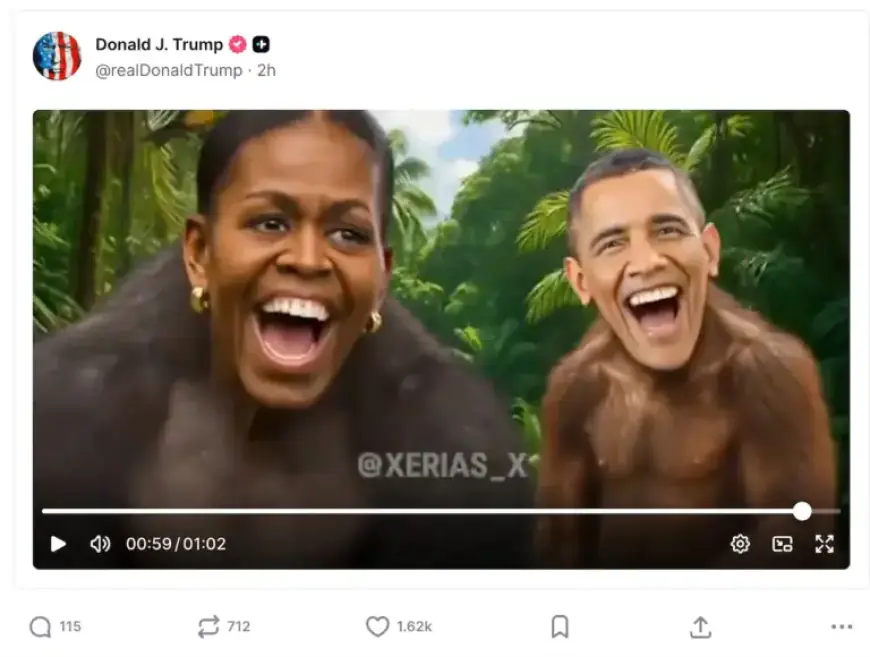
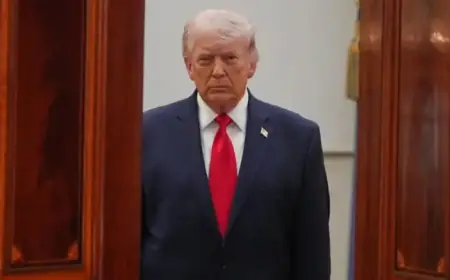
A racist “monkey/apes” video shared from President Donald Trump’s social media account late Thursday night triggered swift condemnation across U.S. politics and culture, after the clip showed former President Barack Obama and former first lady Michelle Obama portrayed as apes. The post was removed about half a day later, but not before it ignited a round of demands for accountability—along with questions about who approved it and why it went up in the first place.
The episode has quickly become the defining answer to “what did Trump do today” searches, as the White House tried to contain the blowback while Trump declined to apologize.
What the Trump-Obama video showed
The video circulated as part of a broader montage that also pushed false claims about U.S. elections and voting systems. Near the end, it included a brief animated segment in which the Obamas’ faces were edited onto primates dancing in a jungle, with “The Lion Sleeps Tonight” playing.
Depicting Black people as apes is widely recognized as a racist trope. The imagery prompted immediate criticism not only from Democrats but also from prominent Republicans who rarely confront Trump’s posts publicly.
Timeline: when it was posted and removed
All times are Eastern Time (ET).
| Event | Time/Date (ET) |
|---|---|
| Video posted from Trump’s account | Thu., Feb. 5, 2026, late night |
| Public backlash builds through the morning | Fri., Feb. 6, 2026 |
| Video removed | Fri., Feb. 6, 2026, roughly 12 hours later |
| Trump comments publicly while traveling | Fri., Feb. 6, 2026, evening |
The White House initially attempted to wave off the controversy, but the decision to delete the post underscored the intensity of the reaction.
Trump’s response: no apology, blame shifts
Trump said he did not watch the entire video before it was posted and framed the upload as an error made by a staffer. He also said he condemned racist content while insisting he did not “make a mistake” in sharing the broader message. He refused to apologize for the post.
That posture—disavowing the offensive segment while defending the overall thrust—left critics arguing the response minimized the harm and sidestepped basic responsibility for what appears on a president’s official feed.
Tim Scott, Jeffries, and the political backlash
Sen. Tim Scott, the only Black Republican in the Senate, delivered one of the sharpest rebukes from within Trump’s party, calling the post the most racist thing he had seen come from the White House and urging that it be removed. His intervention mattered because it signaled discomfort inside the GOP beyond the usual intra-party critics.
On the Democratic side, House leader Hakeem Jeffries condemned the imagery and pressed for consequences. Other Democrats echoed the argument that the incident fits a longer pattern of Trump targeting the Obamas and stoking racial grievance politics.
The split-screen outcome was telling: Republicans who criticized the video focused heavily on the imagery itself, while Democrats argued the post reflects a broader governing style that treats provocation as a tool rather than a mistake.
Karoline Leavitt and the White House message control test
Press secretary Karoline Leavitt attempted to tamp down the controversy by describing the content as part of internet meme culture and emphasizing that it was removed. The messaging challenge, though, was immediate: the presidency is not a private account, and “meme” framing does not resolve how such content reached the president’s official channel.
The episode has also revived a recurring operational question for the administration: who has access to post, what review exists (if any) for inflammatory content, and whether accountability stops at a nameless staffer when the post is issued under the president’s name.
Jack White joins the cultural backlash
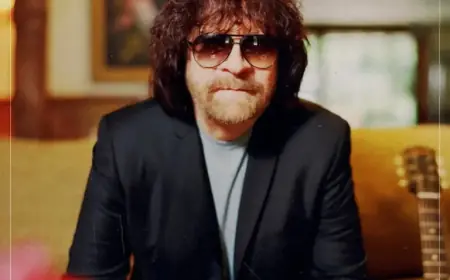
Outside politics, musician Jack White publicly blasted Trump over the post, calling the president “deranged” and arguing the content would have gotten any other worker fired. The reaction stood out because it tied the controversy to a broader cultural critique: that political power can insulate behavior that would be disqualifying in most workplaces.
That celebrity response also helped keep the story in the public conversation beyond Washington, extending it into entertainment news and social commentary.
What to watch next
Two developments will determine whether the fallout fades quickly or lingers: whether the White House provides a clearer account of who posted the video and what safeguards exist, and whether lawmakers—especially Republicans—continue to press the issue after the post’s removal.
For now, the incident has become a flashpoint not only about a single offensive clip, but about the standards a president applies to official communication—and whether deleting a post is treated as closure, or merely the beginning of scrutiny.
Sources consulted: Reuters; Associated Press; The Washington Post; The Wall Street Journal