





















Charlize Theron invokes Nelson Mandela at Olympics as Milan–Cortina Games open

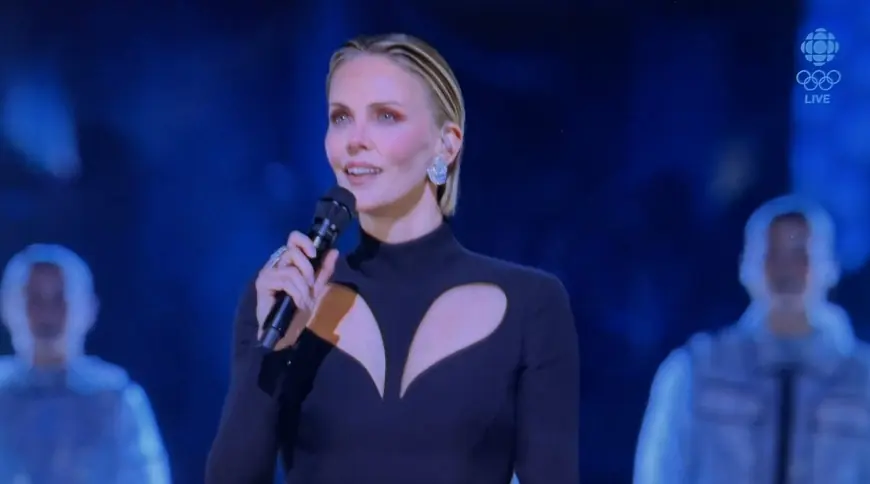
Charlize Theron made a surprise appearance at the opening ceremony of the 2026 Winter Olympics on Friday, February 6, 2026 (ET), delivering a short message centered on peace and unity that drew directly from Nelson Mandela’s words. The moment landed as the Games begin under heightened global tension, with organizers leaning hard into the Olympics’ traditional role as a symbolic pause point—one where athletes compete while politics is urged, however imperfectly, to step back.
Theron’s remarks, framed as a call for an “environment where all can flourish,” immediately became one of the ceremony’s most-discussed segments because it tied her South African identity, Mandela’s legacy, and the Olympics’ truce theme into a single, plainspoken appeal.
What happened at the opening ceremony
Theron appeared late in the ceremony at San Siro in Milan, dressed in a formal black gown, and addressed the stadium and global audience with a message that emphasized peace as more than simply “the absence of conflict.” She attributed the words to Mandela, describing him as her “beloved countryman,” and positioned the Games as a reminder of shared humanity.
The ceremony’s staging underscored that theme with a prominent dove symbol used during the segment, echoing a long-running Olympic peace motif.
Why Nelson Mandela was the centerpiece
Mandela’s line—about peace being the creation of conditions where people can thrive regardless of social difference—has been widely quoted for decades because it’s both aspirational and concrete. By choosing that framing, Theron avoided partisan specifics and instead highlighted a universal standard: safety, dignity, and inclusion as prerequisites for real peace.
For Theron, the Mandela reference also served as a cultural bridge. Mandela remains a global moral figure associated with reconciliation rather than revenge, which makes his language especially resonant in Olympic settings where the goal is unity without pretending differences don’t exist.
Theron’s role beyond entertainment
Theron’s appearance wasn’t presented as a film promotion or celebrity cameo. It aligned with her long-standing public work around peace and humanitarian themes, including her involvement with global advocacy efforts. That matters because Olympic ceremonies are often criticized when celebrity segments feel disconnected from the event’s stated values; here, the choice of messenger and message were designed to match the ceremony’s stated purpose.
The Olympics also continue to promote an international “truce” concept—an appeal for safe passage and protection around the period of the Games. Theron’s speech effectively functioned as a human voice for that institutional message, making it easier to digest and share.
A snapshot of the moment
| Detail | What we know |
|---|---|
| Date and time | Friday, Feb. 6, 2026 (ET) |
| Setting | Opening ceremony at San Siro, Milan |
| Core theme | Peace, unity, and human flourishing |
| Mandela reference | Peace as conditions for all to thrive |
| Visual motif | Dove symbol during the segment |
Why “Charlize Theron Olympics” searches spiked
Interest spiked for three reasons. First, her appearance was not widely telegraphed beforehand, so it played as a genuine surprise. Second, her use of Mandela’s language gave the segment a gravity that cut through the usual spectacle. Third, the message was short and easily repeated, which helps it travel across clips, quotes, and social posts.
The broader context is that opening ceremonies are increasingly judged on whether they feel meaningful rather than merely grand. A concise, values-driven statement—especially one rooted in a globally recognized moral voice—tends to outperform more elaborate symbolism when audiences are looking for clarity.
What it could mean going forward
This isn’t likely to change Olympic outcomes, but it does set an early tone for how the Milan–Cortina Games will talk about themselves: not only as sport, but as a public ritual meant to reinforce common ground. Expect organizers and athletes to echo similar language over the next two weeks, particularly when spotlighting refugee participation, anti-hate messaging, and cross-border cooperation themes.
For Theron, the moment reinforces a pattern: using highly visible cultural stages to deliver focused, non-partisan appeals tied to personal identity and widely shared values. The choice of Mandela as the anchor makes the message harder to dismiss as generic, because it points back to a specific historical legacy of reconciliation—one that many people still see as instructive in polarized times.
Sources consulted: Reuters; Associated Press; Variety; BBC Sport