

























Eileen Gu Survives Early Slopestyle Fall to Reach Milano Cortina 2026 Final, Turning a Scare Into a Statement

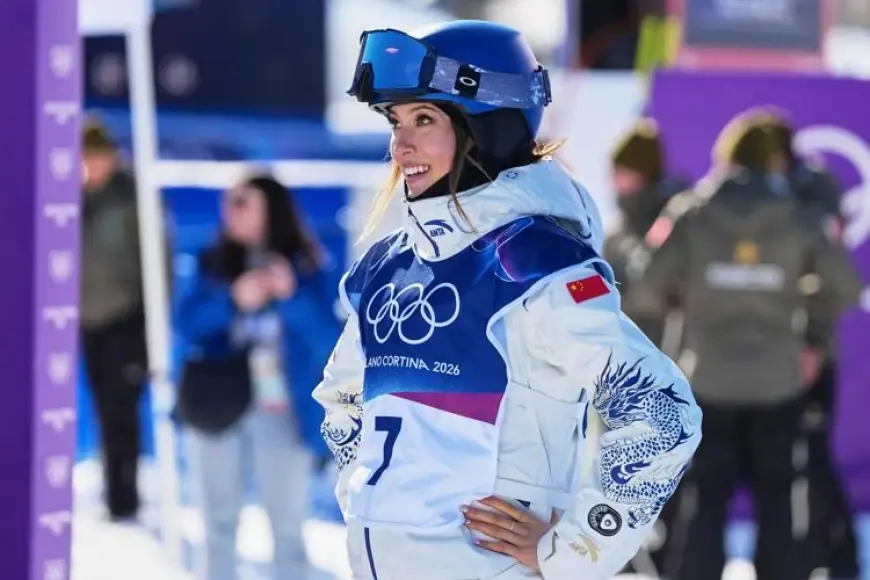
Eileen Gu’s Milano Cortina 2026 campaign had its first jolt on Saturday, February 7, 2026, when the two-time Olympic champion fell on her opening run in women’s freeski slopestyle qualifying, then regrouped to post a clean second run that advanced her into the final. The turnaround kept one of the Games’ biggest stars on track for another medal bid and set up a renewed duel with Switzerland’s Mathilde Gremaud, the reigning Olympic slopestyle champion who led qualifying.
The slopestyle final is scheduled for Monday, February 9, 2026, in U.S. Eastern Time. The exact start time was not consistently listed in early public schedules, so fans should expect confirmation closer to event day.
What happened today in the slopestyle qualifier
Gu’s first run ended almost immediately after a mistake on the opening rail feature. In a discipline where rhythm and confidence are everything, that kind of early error can snowball: it forces athletes to decide whether to chase difficulty, play safe to qualify, or risk missing the final entirely.
On her second run, Gu made a strategic pivot toward execution and control. She landed cleanly, scored high enough to move through comfortably, and finished qualifying in second position behind Gremaud. The result was less about winning the qualifier and more about reasserting stability after a high-visibility wobble.
Behind the headline: why the rebound matters
Context is doing most of the work here. Slopestyle is as mental as it is technical, and Olympic qualifying magnifies that pressure because the margin for error is thin and the consequences are immediate. A fall can become a narrative trap: either “shaken favorite” or “champion under pressure.” Gu’s second run short-circuited that storyline before it could grow.
The incentives are clear:
-
Gu’s incentive is to protect the long game. Olympic campaigns aren’t won in qualifiers; they’re won by keeping risk calibrated for finals.
-
Gremaud’s incentive is to keep control of the matchup. Leading qualifying sends a message that the title defense is real and that the course suits her.
-
The broader field’s incentive is to capitalize if the favorites blink again. In slopestyle, one clean, high-difficulty run in a final can flip expectations instantly.
Stakeholders extend well beyond the start gate. Coaches and service teams are under microscope because rail speed, wax choices, and equipment feel can influence whether an athlete commits to trick selection or dials it down. Organizers have a separate stake: slopestyle courses must be challenging but safe, and early falls always trigger quiet scrutiny about feature design and course flow.
The suit story is not a sideshow
Gu also drew attention for a custom competition suit with layered cultural design elements and personalized details. It landed as a reminder that she occupies a rare lane: elite competitor, global brand figure, and a symbolic athlete for the country she represents. That matters because Olympic fame can become a second competition running parallel to sport, with every appearance framed as message and identity.
In a normal season, style chatter might fade quickly. At the Olympics, it can stick, because visuals are how most casual viewers remember athletes. For Gu, the upside is obvious: the visibility amplifies her platform. The downside is equally real: it can pull attention away from the only thing that decides medals, which is performance under pressure.
What we still don’t know
Even with qualifying settled, several pieces remain unresolved heading into the final:
-
How aggressively Gu will raise difficulty after choosing a cleaner, more controlled second run
-
Whether the course’s long rail sections continue to punish risk, pushing athletes toward safer, lower-scoring lines
-
How weather and snow texture evolve by Monday, which can change speed into jumps and balance on rails
-
Whether the field spreads out or compresses, which determines how perfect a run must be to medal
Second-order effects: what today’s moment changes
A fall-and-rebound sequence often reshapes tactics. Athletes who watched the mistake will likely rethink early-run aggression, especially on the first rail. That can make the final more conservative early, then more explosive late as skiers realize what score is required.
It also alters the story economy of the Games. When a marquee athlete survives a scare, attention concentrates even more on the final, raising pressure not only on Gu but on everyone expected to challenge her. The risk is that one star narrative crowds out the depth of the field. The benefit is that it draws eyes to the sport, which can elevate the athletes who deliver when the spotlight is hottest.
What happens next: realistic scenarios and triggers
-
Gu wins with a clean, high-difficulty run
Trigger: she restores full trick difficulty while maintaining execution
Result: the “scare” becomes a footnote in a gold story -
Gremaud holds the title
Trigger: she lands her biggest jump tricks cleanly and stays mistake-free on rails
Result: qualifying leadership converts into Olympic control -
A surprise champion emerges
Trigger: favorites play slightly safe and an outsider hits maximum difficulty clean
Result: the medal table swings and the discipline gets a breakout name -
The final turns into an error contest
Trigger: course complexity and pressure produce multiple falls
Result: consistency beats ambition and the podium looks different than expected
Eileen Gu’s day at Milano Cortina 2026 wasn’t perfect, but it was exactly what champions need at the Olympics: a mistake that didn’t become a collapse, and a recovery that kept the medal path open. Monday’s final will decide whether the rebound was merely survival, or the first step toward another defining Olympic moment.