

























Canada’s New Auto Strategy: Will It Meet Carney’s EV Target?

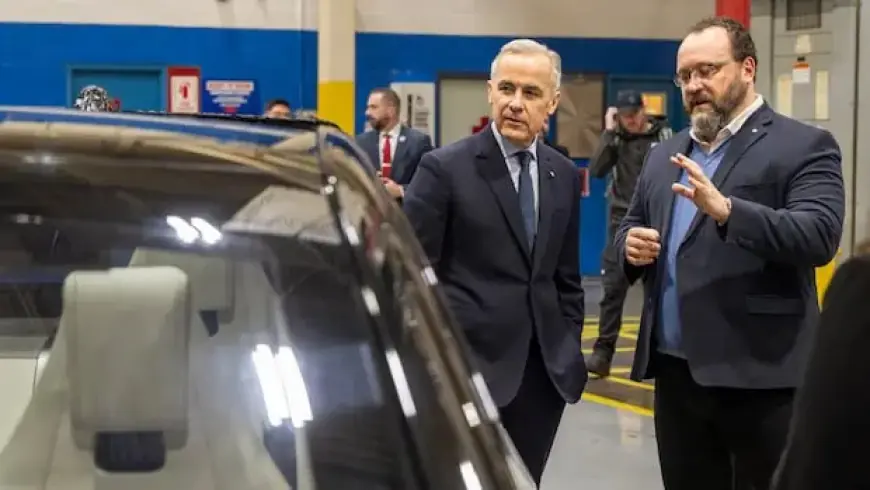
The recent developments in Canada’s auto strategy have raised significant questions about the future of electric vehicles (EVs) in the country. Prime Minister Mark Carney announced the termination of the national EV mandate and the introduction of new measures aimed at enhancing fuel efficiency.
Key Changes in Canada’s Auto Strategy
On Thursday, Carney shared his government’s new approach. This includes:
- Ending the electric vehicle sales mandate.
- Reinstating consumer purchase incentives for EVs.
- Implementing stricter fuel efficiency standards.
Despite the support from several provincial leaders and auto manufacturers, experts are skeptical about whether these changes will indeed accelerate the transition to electric vehicles.
Future EV Sales Expectations
Carney claims that EVs will constitute 75% of new car sales by 2035 without the need for a sales mandate. However, climate experts challenge this assertion, arguing that Canada’s climate goals may be jeopardized by the new strategy. Simon Donner, a climate scientist at the University of British Columbia, expressed concern that the strategy could hinder actual progress, especially given the influence of North American automakers who lag in EV production.
Concerns Over Climate Commitments
Experts warn that the transportation sector is among the largest sources of pollution in Canada. The continuation of high greenhouse gas emissions from conventional vehicles threatens Canada’s target of achieving net-zero emissions. As part of his first actions in office, Carney revoked the consumer carbon tax, citing its divisive nature. This decision, along with moves to dilute previous commitments—such as the oil and gas emissions cap and the tree-planting initiative—has led to critical reactions from climate activists and opposition members.
Reactions to Carney’s Policies
Political figures such as interim NDP Leader Don Davies and Green Party Leader Elizabeth May criticized Carney’s approach. Davies noted that Carney’s actions contradict the claims of being a climate leader. Meanwhile, May described the situation as an “absolute joke,” arguing that Canada remains a climate laggard.
New Tailpipe Emission Standards
In lieu of the EV mandate, Carney intends to enforce stricter tailpipe emissions standards. These new regulations aim to enhance vehicle efficiency and promote the use of battery-powered vehicles. However, experts like Donner emphasize that merely establishing these standards does not guarantee an increase in EV sales.
The Road Ahead
As the government works to finalize these new regulations, the success of Carney’s auto plan remains uncertain. Industry experts are wary that major automakers may oppose these new rules, potentially stalling progress toward an expanded EV market in Canada. The Canadian Climate Institute suggests that while the policy may not satisfy all parties, it still provides a feasible route toward reducing emissions.
As Canada approaches critical climate deadlines, all eyes will be on how Carney’s auto strategy unfolds and its effectiveness in driving meaningful change in the electric vehicle landscape. Filmogaz.com will continue to monitor these developments closely.