






















Jalen Duren’s Knee Soreness Exit Puts Pistons on Alert as All-Star Break Momentum Meets a New Health Question

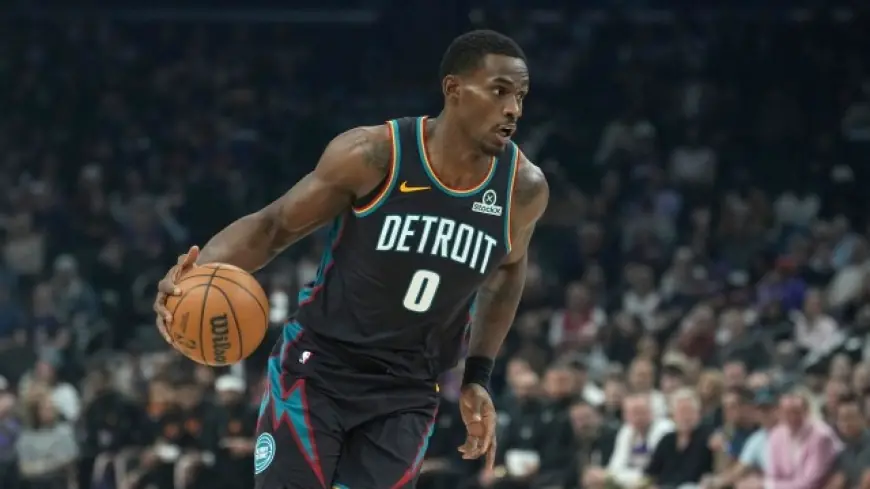
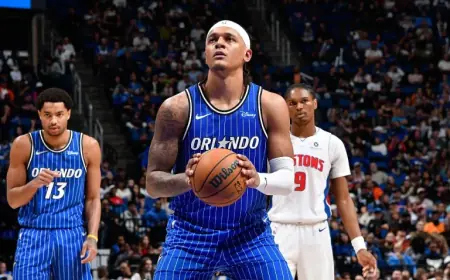
Detroit’s breakout season hit a sudden speed bump Thursday night when Jalen Duren left the Pistons’ game against the Washington Wizards with right knee soreness and was ruled out for the remainder of the contest. The early exit landed like a jolt because it comes at the exact moment Duren’s profile has never been higher: he was recently named a first-time All-Star, he is set for the 2026 Slam Dunk Contest, and he has been powering a Pistons run that has turned Detroit into a legitimate East-leading headline.
Duren’s status now becomes one of the most important short-term variables in the conference. Detroit has depth, but it does not have another player who combines Duren’s rim pressure, rebounding volume, and vertical athleticism in quite the same way.
What happened: Duren ruled out with right knee soreness vs. Wizards
Duren logged only 13 minutes before he was shut down, finishing with four points and three rebounds. The Pistons did not immediately provide a detailed timeline during the game beyond the right knee soreness designation. That wording matters: it is often used when a team is still evaluating severity and trying to avoid overcommitting to a diagnosis before imaging, follow-up testing, or next-day swelling checks.
This is the kind of update that tends to evolve in the next 24 to 48 hours. If the soreness is minor, teams typically pivot quickly to “day-to-day.” If it lingers, you start seeing more specific language and a clearer plan.
Why it matters: Duren is not just a center, he’s Detroit’s engine room
Duren has been the Pistons’ interior foundation all season, putting up an 18-point, 10-plus rebound line nightly while finishing at an elite rate around the rim. The obvious value is the double-double production. The less obvious value is how much he simplifies everything else.
When Duren is healthy and rolling, Detroit can:
-
Play faster because defensive rebounds turn into immediate runouts
-
Collapse defenses because his dives pull help defenders out of position
-
Live with perimeter cold spells because second-chance points keep the scoreboard moving
-
Protect the paint without overhelping, which steadies the entire scheme
Remove him, and the Pistons don’t collapse, but they do change. They become more dependent on jump shooting, more sensitive to foul trouble, and more likely to get dragged into slow, physical games where every possession becomes a grind.
Context: a historic blowout and a statement win right before the scare
The timing is especially frustrating because Duren has been peaking. Over the weekend, Detroit demolished Brooklyn 130–77 in a franchise-record margin of victory, with Duren posting 21 points and 10 rebounds in a game that was effectively over by the third quarter. Two nights later, he followed with another loud performance in a 124–121 win over Denver, putting up 19 points and 13 rebounds.
That sequence was supposed to be the runway into All-Star week: the young center surging, the team winning, the national spotlight arriving. Instead, the Wizards game introduced the one storyline nobody wants in February: health uncertainty.
Slam Dunk Contest, All-Star nod, and the business of visibility
Duren’s rise is happening on two tracks at once.
Track one is basketball. Detroit is winning, and Duren is central to the formula.
Track two is visibility. A first-time All-Star selection and a dunk contest invitation are not just accolades, they are brand accelerants. They create endorsement opportunities, national conversations, and the kind of broader recognition that can shape a player’s next contract narrative.
That’s also why the knee soreness news travels so fast. When a player becomes a headliner, every status update becomes league-wide information, not just a local injury note.
What we still don’t know: the missing pieces that decide the next week
Several details will determine how serious this is:
-
Whether Duren felt discomfort earlier and played through it, or whether it came on suddenly
-
Whether swelling, stability tests, or imaging reveal anything structural
-
Whether the Pistons hold him out preemptively with the break approaching
-
Whether the dunk contest and All-Star participation plans change if soreness persists
A key “tell” will be practice availability and travel participation. When a player stays with the group and returns to controlled work quickly, it often signals caution rather than crisis.
What happens next: realistic scenarios and triggers
Scenario one: Short-term precaution, quick return
Trigger: soreness settles within a day or two, and he’s listed as day-to-day with minimal restrictions.
Scenario two: Managed absence through the break
Trigger: Detroit decides to buy time, protect a cornerstone, and prioritize March and April over a February appearance.
Scenario three: A longer shutdown with a clearer diagnosis
Trigger: imaging shows something that requires rest and rehab rather than simple maintenance.
Scenario four: Detroit shifts into matchup mode at center
Trigger: Duren misses time, and the Pistons rotate bigger lineups for rebounding and smaller lineups for speed depending on opponent.
Detroit has built real momentum this season. The question now is whether Thursday’s knee soreness exit is a brief detour or the first sign that the Pistons will have to navigate the next stretch without their most irreplaceable interior force.