




















NPA trades.. Jose Alvarado trade gives Knicks a deadline boost as standings tighten

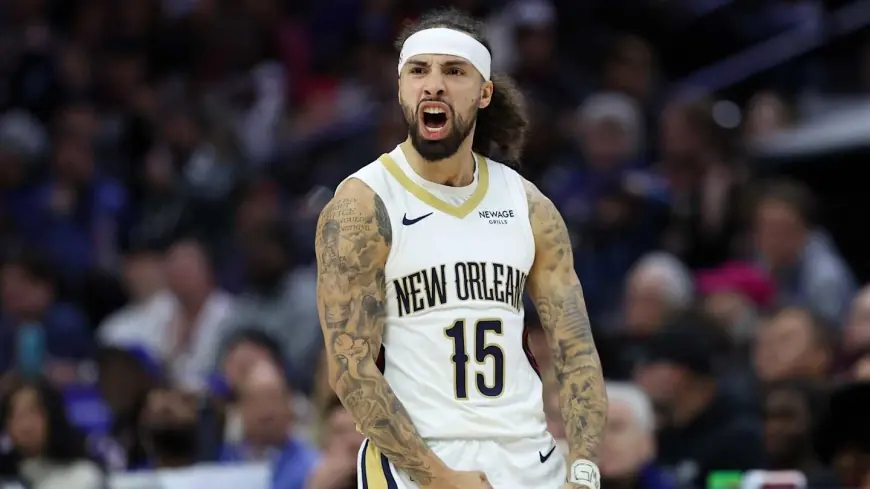
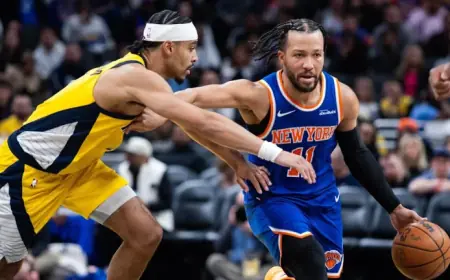
The New York Knicks made a late deadline move to deepen their guard rotation, acquiring Jose Alvarado from the New Orleans Pelicans in exchange for Dalen Terry, two second-round picks, and cash. The deal arrives with New York sitting near the top of the Eastern Conference, where a small swing in health or bench reliability can decide home-court advantage.
Alvarado’s arrival is less about changing the Knicks’ identity and more about protecting it: stabilizing non–Jalen Brunson minutes, keeping defensive pressure high, and giving the coaching staff another playable guard for the playoff-style games already piling up on the schedule.
Jose Alvarado trade terms
The swap is straightforward: New York adds a proven two-way reserve guard, while New Orleans takes a young player and draft capital.
| Item | New York Knicks | New Orleans Pelicans |
|---|---|---|
| Player received | Jose Alvarado | Dalen Terry |
| Draft compensation | — | Two second-round picks |
| Cash considerations | Sends cash | Receives cash |
Why the Knicks made this move
New York’s deadline priorities centered on reliability. Alvarado fits as a tough, high-motor guard who can run offense in short bursts and, more importantly, change the tone defensively with ball pressure and disruptive hands.
He’s averaging 7.9 points and 3.1 assists this season in a reserve role, and he has a track record of rising in bigger moments—especially when the game turns into a half-court grind and the margin is a couple of stops. For a Knicks team leaning on Brunson to shoulder heavy creation minutes, an extra handler who can keep the offense organized without hijacking possessions has real value.
The move also addresses a practical problem: depth. Late-season bumps and bruises are inevitable, and New York has been operating with less margin behind its top ball-handlers. Even if Alvarado isn’t a nightly closer, he can prevent those fragile stretches where the second unit bleeds points and momentum.
What the Pelicans are getting back
For New Orleans, this is a classic “convert a rotation piece into future flexibility” play. Two second-round picks expand options at the next draft and can also become currency in future trades. The Pelicans also take a flier on Terry, a 23-year-old former first-round pick who hasn’t found consistent minutes.
Terry has averaged 3.5 points in 11.1 minutes per game this season across 34 appearances. The upside case is that a new environment and a clearer runway can help him settle into a defined role—defend, run the floor, and develop enough shooting to stay on the court.
How Alvarado fits in New York
Alvarado’s cleanest role is as a second-unit organizer and defensive spark. Expect him to:
-
pick up ball-handlers early and disrupt rhythm,
-
push pace selectively after stops,
-
and keep the offense moving with quick decisions rather than high-usage isolations.
His presence also gives New York lineup flexibility. In games where the opponent’s bench guards are driving the action, Alvarado can be deployed as a pressure valve. In games where size is the priority, he can be used in shorter stints without forcing major rotation reshuffles.
The key question is spacing: Alvarado can hit shots, but he isn’t treated as an automatic floor-spacer. The Knicks will likely pair him with enough shooting and gravity so defenses can’t simply sit in the lane and dare him into low-quality looks.
Knicks standings and what changes now
As of Thursday, Feb. 5, 2026 (ET), the Knicks are 33–18, first in the Atlantic Division and second in the Eastern Conference. That positioning matters because the top of the East is crowded, and the difference between hosting a first-round series and starting on the road can come down to a single week of results.
Alvarado won’t rewrite the Knicks’ ceiling on his own, but he can raise their floor in the exact spots that often decide playoff series: the minutes when stars rest, the possessions when the pace slows, and the stretches where a team needs one energetic defender to flip a run.
The next tell will be deployment. If he’s quickly trusted against other teams’ top bench units—and not hidden in matchups—that’s a sign the Knicks see him as more than insurance. If he’s used narrowly, the move still accomplishes something valuable: protecting New York from depth-related failure on a team with real postseason expectations.
Sources consulted: NBA.com, Reuters, Associated Press, ESPN