

























Gabriela Rico Jiménez resurfaces online as Epstein files prompt a new wave of claims

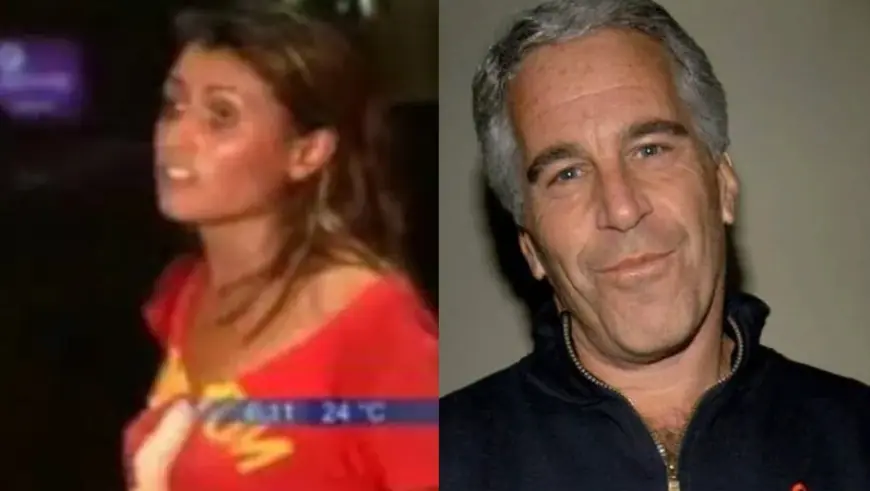
A 17-year-old video of a distressed young woman outside a hotel in Monterrey, Mexico—identified online as Gabriela Rico Jiménez—has gone viral again in the first week of February 2026, driven by fresh social-media claims tying her to newly released Jeffrey Epstein records. The renewed attention is turning a long-circulating mystery into a fast-moving misinformation problem: the video is real and unsettling, but many of the sweeping allegations now attached to it are not publicly substantiated.
The story matters because it sits at the intersection of two highly sensitive topics—human trafficking investigations and missing-person fears—where viral speculation can overwhelm verifiable facts and put real people at risk.
What the 2009 video shows
The clip, filmed in early August 2009, shows a young woman outside an upscale hotel in Monterrey pleading for help, appearing frightened and disoriented. In the footage, she makes extreme allegations and names prominent figures. Police detain her on camera. The woman is frequently described online as a model and as being 21 years old at the time, though those biographical details are not consistently documented in public records.
What happens immediately after the on-camera detention is the central gap: the video ends without providing clear, confirmed information on where she was taken, whether she was hospitalized, or whether she later returned home safely.
Why “Gabriela Rico” is trending again now
The renewed surge is tied to the latest large-scale public release of Epstein-related material by the U.S. government in late January 2026. That release has triggered mass searches for any name that can be connected—directly or indirectly—to Epstein, parties, yachts, or “elite networks,” even when the underlying connection is tenuous or unverified.
In that environment, older viral mysteries have been repackaged as “proof” of broader conspiracies, often with confident captions that outpace what the public record can support. Gabriela Rico Jiménez’s story has become one of the most shared examples because the original video is dramatic, the allegations are sensational, and the aftermath is unclear—an ideal recipe for viral distortion.
What’s actually confirmed about any Epstein connection
At this time, there is no publicly confirmed, authoritative record establishing that Gabriela Rico Jiménez was a victim in the Epstein case, a witness in an Epstein-related matter, or directly connected to Epstein’s known criminal activity.
Some posts point to references in investigative notes as validation. Even when such names appear in large document dumps, a name’s appearance alone does not demonstrate wrongdoing, involvement, or accuracy. Public releases can include unverified tips, hearsay, leads that went nowhere, duplicates, and partial notes without context.
Separately, fact-checking efforts circulating in Spanish-language media have highlighted how quickly the “Epstein files confirm” framing has spread beyond what the documents clearly show, urging readers to separate the existence of a viral video from claims of corroboration.
The key unknowns that keep fueling speculation
The lack of a clear, consolidated public timeline after the detention is what keeps the story endlessly recyclable. Several basic questions remain unresolved in the public view:
-
Was Gabriela Rico Jiménez formally processed by police, and under what basis?
-
Was she taken to a hospital or psychiatric facility that night?
-
Did family members file a missing-person report, and if so, what agency handled it?
-
Is she alive and simply living privately under a different name, or is she genuinely missing?
Without official, primary documentation in the public domain, the vacuum gets filled by stitched-together screenshots, recycled captions, and “explainer” videos that cite one another.
Key takeaways for readers right now
-
The 2009 Monterrey video is authentic footage of a woman in distress, but it does not, by itself, prove the wider claims now attached to it.
-
The latest Epstein document releases have reignited online pattern-matching; that is not the same thing as verified connection.
-
The most responsible next step is demanding primary documentation—official reports, court filings, or direct statements from relevant agencies—rather than relying on viral narration.
What to watch next
If credible clarity emerges, it will likely come from one of three places: Mexican local authorities providing records or a case update; a documented family statement that can be verified; or a clearly identifiable official record that resolves whether a missing-person case exists (and where it stands). Absent that, the pattern is predictable: the clip will cycle again with each major news moment involving trafficking, elite crime claims, or large-scale document releases.
For now, the safest conclusion is narrow: Gabriela Rico Jiménez is the name most commonly associated online with a 2009 Monterrey incident captured on video, and the recent spike in attention is being propelled by Epstein-file discourse that has not produced a confirmed, direct link in the public record.
Sources consulted: U.S. Department of Justice, Associated Press, Al Jazeera, Maldita.es