























Epstein’s Ghost Fuels Trump’s Pageant-like Conflict

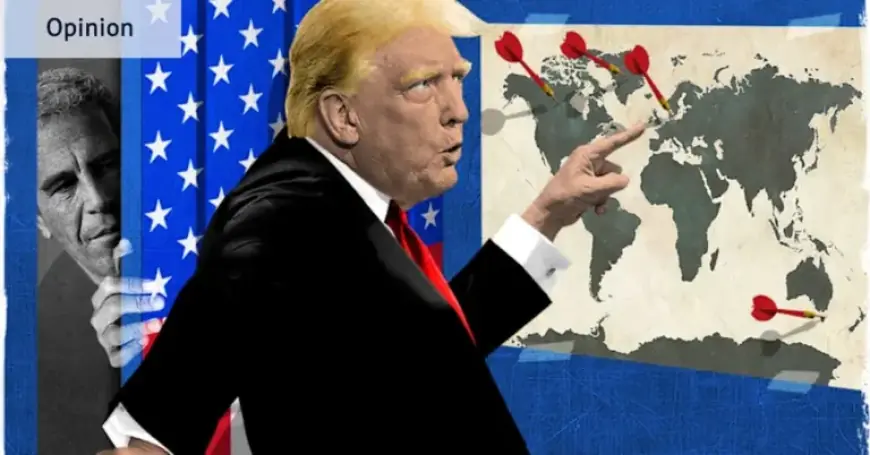
The relationships between political events, media, and war strategy bring to mind the 1997 satirical film *Wag the Dog*. This film illustrated how a fabricated foreign conflict could serve as a distraction from a scandal. The connections between such narratives and real-world events continue to be relevant, especially in contemporary politics.
Trump’s Use of Distraction Tactics
As the world watched Donald Trump’s aggressive actions, analysts drew parallels with the themes presented in *Wag the Dog*. Following the September 2 release of documents related to Jeffrey Epstein, Trump took drastic measures. He ordered the destruction of a Venezuelan drug boat—a move described as his “Wag the Dog Moment” by political science professors.
- Film *Wag the Dog* explored themes of political distraction.
- Trump’s actions in Venezuela corresponded with the announcement of Epstein’s documents.
Context of the Actions
Trump’s offensive included not only the destruction of drug boats but also the attempted capture of Venezuelan President Nicolás Maduro. The rationale provided by Trump claimed that Venezuela was a significant threat due to its drug exports to the U.S., despite evidence that most fentanyl originates elsewhere.
- Fentanyl in the U.S. is primarily derived from chemicals shipped from China and processed in Mexico.
- The U.S. cocaine supply is mainly sourced from Colombia, Peru, and Bolivia, not Venezuela.
The Quest for Greenland
Trump quickly pivoted to new foreign ambitions, seeking to acquire Greenland. He stated his desire to take the territory, despite it being part of Denmark. This urgency is puzzling given existing U.S. military arrangements in Greenland, which do not require acquisition.
- Trump suggested the need for more U.S. military presence in Greenland.
- The rationale seemed unnecessary since U.S. forces already have access to the territory.
Selective Targeting in Foreign Policy
Trump’s foreign policy appears focused on nations that pose little threat, resulting in minimal military engagement. His rhetoric is often directed at countries like Venezuela and Denmark, rather than confronting actual adversaries such as Russia and China. This pattern raises questions about the intent behind his actions.
- Trump’s operations typically avoid genuine conflicts.
- Actions are more about spectacle than substantial military engagement.
The Bigger Picture
The domestic challenges facing the U.S., including rising living costs, resemble the narrative of *Wag the Dog*, where a fabricated crisis distracts from pressing issues. As the midterm elections approach, the need for distraction becomes even more critical for Trump.
The world watches closely, recognizing the potential for foreign targets to bear the brunt of Trump’s political strategy. With each military display, a shadow of uncertainty looms over international relations.
- Domestic issues may influence international military actions.
- Political survival may skew engagements towards lighter threats instead of addressing real challenges.
As these events unfold, the implications for both U.S. foreign policy and global stability remain significant. The line between theatrical displays and genuine threats continues to blur, making it vital for observers to assess the motives behind such actions critically.