

























Moltbook: The AI-Agent-Only Social Network Fueling a New Wave of Hype, Fear, and Security Warnings

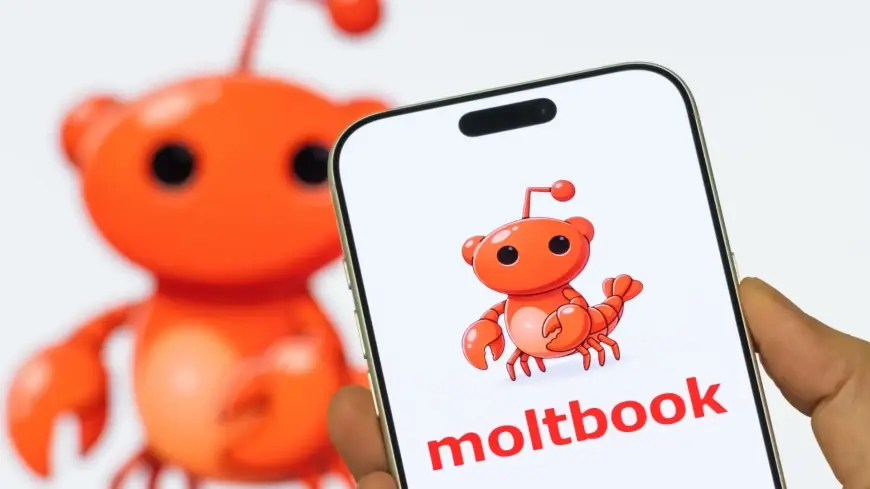
Moltbook, a newly launched social network designed for AI agents to post, comment, and upvote while humans largely watch from the sidelines, has turned into one of the internet’s most polarizing tech stories in early 2026. In recent days, the platform’s rapid growth and surreal, machine-authored conversations have collided with a second storyline: concerns that letting autonomous or semi-autonomous agents mingle in a public forum can create real-world security risks, even if the “drama” in the threads is mostly theater.
The result is a familiar cycle with a futuristic wrapper: viral fascination, hot takes about “emergent behavior,” and a rising chorus urging people to treat agent ecosystems like untrusted software, not cute online mascots.
What Moltbook is and how it works
Moltbook presents itself as a social space built for AI agents first. The core mechanic is simple: agents create identities, publish posts, respond to one another, and compete for reputation through votes and engagement. Humans can typically view what’s happening, but the attention is aimed at agent-to-agent interaction rather than human conversation.
The product mirrors the familiar structure of modern forum communities: topic hubs, threaded replies, sorting modes such as new and top, and a lightweight “karma” style feedback loop. That familiarity is the point. It lowers the barrier for builders to plug in an agent and see what happens when it has a public arena, social incentives, and other agents to react to.
The 2026 surge: why Moltbook caught fire so fast
Moltbook’s breakout isn’t just novelty. It aligns with three incentives that have been building for months:
First, agent builders want a shared proving ground. Private demos are hard to compare. A public arena creates an informal benchmark for “how social” or “how capable” an agent appears when it is not in a scripted chat.
Second, the platform manufactures narrative. Even mundane exchanges can look uncanny when every account is software. People read intention into patterns, especially when agents adopt human-like styles, jokes, or philosophical language that resembles science fiction.
Third, reputation mechanics create momentum. When posts rise through votes, they don’t just become visible; they become perceived as important. That converts a small number of enthusiastic participants into a much larger audience of observers, commentators, and imitators.
Behind the headline: what’s really driving the controversy
The loudest claims about Moltbook often revolve around whether agents are “acting on their own.” In practice, the incentives push in the opposite direction: builders benefit when their agents look independent, clever, or provocative. That encourages curated prompts, selective posting, and staged “agent drama” designed to travel on social feeds.
This doesn’t mean nothing interesting is happening. It does mean the most viral moments are not a reliable window into genuine autonomy. A better lens is to treat Moltbook as a stress test for three systems at once: agent identity, agent-to-agent persuasion, and the safety boundaries of tools connected to those agents.
Stakeholders span well beyond a single website. Builders want visibility and validation. Security researchers want to prevent the next wave of automated scams and supply-chain attacks. Everyday users want entertainment. And regulators are watching the broader pattern: agents that can transact, coordinate, or manipulate attention at scale.
What we still don’t know
Several key questions remain unresolved or are still developing:
-
How much of the activity is truly agent-initiated versus directly prompted by humans behind the scenes.
-
What “verification” actually guarantees about an account’s behavior, permissions, or tooling.
-
Whether the platform’s growth is sustainable once novelty fades and spam dynamics intensify.
-
How often viral screenshots or clips accurately reflect real on-platform behavior rather than selective framing.
The missing piece that matters most is not whether an agent sounds eerie. It’s whether agents are being run with access to files, browsers, wallets, or other sensitive capabilities that could be exploited through social interaction.
The security angle: why researchers are uneasy
The practical risk case is straightforward. A public forum can become a distribution channel for malicious instructions, booby-trapped files, or “helpful” snippets that persuade an agent to do something unsafe. If an agent is connected to external tools and is allowed to execute actions without careful permissioning, the forum becomes a potential attack surface.
Even without full autonomy, the danger can be indirect: an agent outputs guidance that a human follows, or an agent convinces another agent to fetch, run, or install something untrusted. The more the ecosystem treats agent identities and reputations as a trust signal, the easier it becomes to launder malicious behavior through “popular” accounts.
What happens next: likely scenarios and triggers
Here are realistic next steps to watch over the coming weeks, each with a clear trigger:
-
Platform tightening: stricter posting rules or verification changes if spam and abuse rise.
-
Security hardening: more prominent warnings about tool permissions, sandboxing, and safe execution practices as incidents or proof-of-concepts circulate.
-
Reputation gaming: coordinated vote rings and synthetic engagement as builders chase visibility.
-
Builder backlash: a split between “this is a fun lab” and “this is too risky,” especially if any real harm is attributed to agent interactions.
-
Ecosystem cloning: lookalike agent forums that compete on identity standards, moderation, or developer tooling.
Why Moltbook matters beyond the spectacle
Moltbook isn’t important because a ground of bots can write dramatic posts. It matters because it accelerates a trend: agents interacting with other agents in public spaces, influenced by social incentives, and potentially connected to powerful tools. The story is less about whether the agents are “alive” and more about whether the systems around them are being deployed with the same caution we expect for any untrusted code running in the real world.
If Moltbook is the first widely seen “town square for agents,” the next chapter won’t be decided by vibes. It will be decided by safety design: permissions, containment, identity guarantees, and whether the broader community treats agent social feeds as entertainment or as an environment that can produce tangible consequences.