Silver price today jumps near $81 an ounce after brutal two-day wipeout

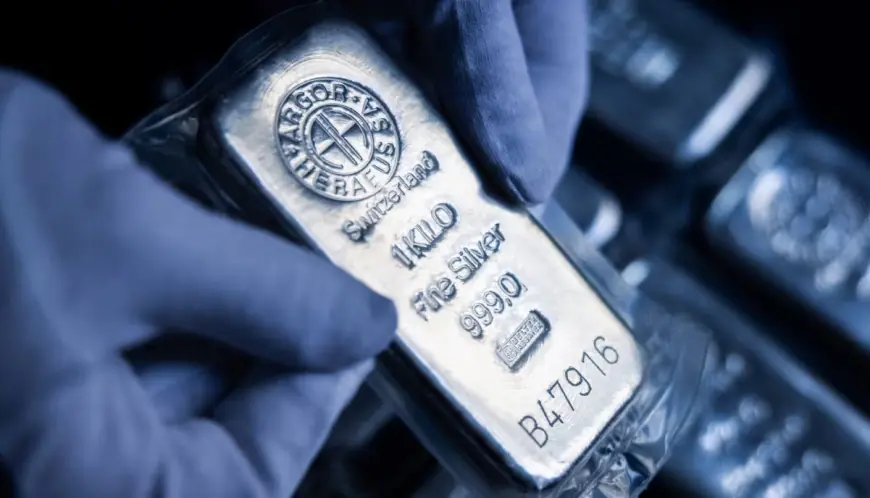
Silver rebounded sharply on Tuesday, Feb. 3, 2026, after a violent selloff that knocked the metal down more than 10% over the prior two sessions and sparked fresh questions about whether this year’s surge is being driven by fundamentals—or by a market structure stretched to its limits. By late evening, spot silver was firmly higher on the day, but the intraday range stayed wide, underscoring how quickly prices can swing in the current tape.
As of 10:14 p.m. ET, spot silver was trading around $81.44 per troy ounce, up roughly 2.9% on the day.
Silver price today: latest spot levels
At the latest check, market pricing for spot silver (XAG/USD) looked like this:
| Measure | Level (USD) | Change |
|---|---|---|
| Spot silver (per troy ounce) | 81.44 | +2.93% |
| Spot silver (per gram) | 2.62 | +0.07 |
| Spot silver (per kilogram) | 2,618.40 | +74.65 |
Even with the rebound, the session’s trading band remained unusually wide, with spot levels moving through the low $70s to the high $80s at different points during the day—an intensity more typical of high-volatility risk assets than a precious metal.
Why silver is moving so violently
The biggest driver is a rapid unwind after a blow-off surge. Silver entered 2026 already elevated, then accelerated into late January before snapping back hard. When prices climb that quickly, the market becomes sensitive to any shift in positioning: a stronger U.S. dollar, a jump in real yields, changes in risk appetite, or a wave of forced selling can all hit at once.
Another factor is the way many traders access silver exposure. Large parts of the market run through leveraged products and derivatives, which can magnify moves in both directions. When volatility rises, margin requirements can increase and position limits can tighten, forcing some participants to reduce exposure into falling prices—turning a decline into a cascade.
Tuesday’s bounce looked like a mix of bargain-hunting and short-covering, rather than a clean return to the calm, steady pattern silver is known for in more typical years.
Volatility is now the story
Silver’s recent behavior has been closer to “momentum asset” than “safe haven.” In the past week alone, the metal has traded across an exceptionally broad band, after previously touching levels above $110 and then plunging in a matter of hours during the late-January liquidation.
That matters because silver has two identities:
-
Monetary metal (often linked to inflation hedging and currency themes), and
-
Industrial metal (tied to manufacturing demand, electronics, and energy transition supply chains).
When the price behaves like a highly levered risk trade, both identities can get overwhelmed by positioning and liquidity—especially during periods when broader markets are shifting quickly.
Key levels traders are watching now
With the metal still in a whipsaw regime, the usual “support/resistance” discussion has become more than technical trivia—it’s about where forced selling may reappear, and where confidence might return.
Market watchers have focused on:
-
The high-$70s area, which has been a pivot zone during the recent spike and reversal.
-
The low-$70s, which acted as a panic floor during the sharpest leg down.
-
The mid-to-high $80s, where sellers have repeatedly shown up during rebounds.
In practical terms, a close that holds comfortably above the low-$80s would help stabilize sentiment. But as long as intraday swings remain extreme, many participants will treat rallies cautiously.
What this means for buyers of coins and bars
For retail buyers, the key distinction is spot vs. physical. Spot is the wholesale reference price. Physical products—coins and bars—typically trade at a premium that can widen when volatility spikes and supply tightens.
In a market like this, a buyer may see:
-
bigger spreads between buy and sell quotes,
-
higher premiums for popular products, and
-
slower price updates at some dealers during fast moves.
For long-term holders, the main question is risk tolerance: silver can be rewarding in sustained uptrends, but it can also punish leverage and short time horizons. For anyone buying physical, patience and cost-averaging tend to matter more than “catching the low tick” on a day when the price is swinging dollars at a time.
What to watch next
Silver’s next directional push will likely depend on a few observable signals:
-
whether volatility cools down (a sign forced flows are fading),
-
whether the U.S. dollar and real yields keep rising (often a headwind),
-
and whether industrial-demand narratives regain control over the trading tape.
Tuesday’s rebound was meaningful, but the bigger takeaway is that silver is still trading in a high-stress environment—where “today’s price” can look very different depending on the hour.
Sources consulted: LBMA; CME Group; Reuters; Kitco Metals Inc.