

























China Targets America’s Vulnerabilities Under Trump Administration

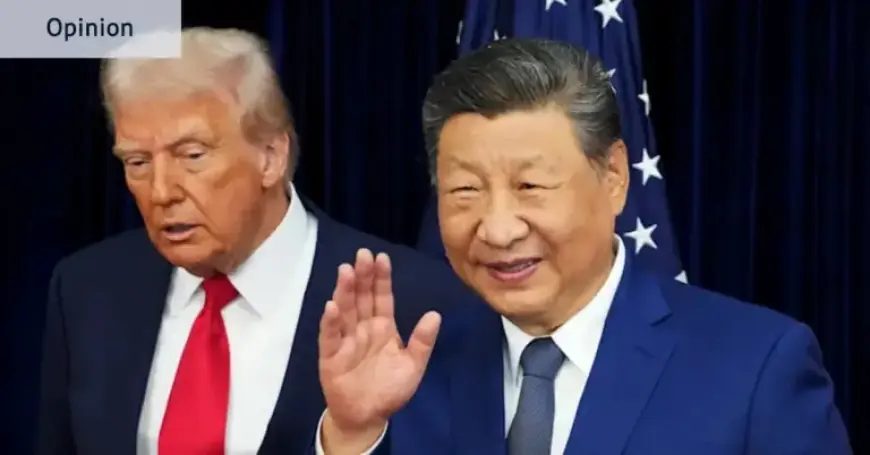
Amid heightened geopolitics, China has been increasingly vocal about its ambitions to internationalize the renminbi. A recent article in Qiushi magazine revisited comments from President Xi Jinping, originally made in 2024. This move signals China’s intention to leverage perceived vulnerabilities in the United States, particularly under the Trump administration.
China’s Strategy to Elevate the Renminbi
In his remarks, Xi emphasized that a robust financial nation should have a strong currency capable of global trade and investment. He identified several prerequisites for the renminbi’s ascent to a global reserve currency:
- A powerful central bank with effective monetary management.
- Globally competitive financial institutions.
- International financial centers attracting global capital.
China has accelerated the use of the renminbi in trade with various countries, including Russia and Iran. Currently, approximately one-third of its bilateral trade transactions are settled in its currency. Notable events, such as China’s refusal to allow BHP to land iron ore unless trades were denominated in renminbi, illustrate its growing assertiveness.
Impact of U.S. Policies on Global Trust
The current U.S. administration, particularly under Trump, has fostered a climate of uncertainty. His unpredictable policies and trade wars have eroded trust among global investors and allies. Concerns about U.S. government debt and the perceived potential for currency depreciation contribute to this distrust.
China appears to be capitalizing on these vulnerabilities as it aims to reshape global financial dynamics. The dollar, while still dominant, has seen a decline in its share of foreign exchange transactions and reserves.
Global Economic Shifts and the Dollar’s Decline
Despite the U.S. dollar’s current dominance, its position is weakening. It represents about 89% of foreign-exchange transactions and 60% of global debt. However, China’s currency is used in less than 9% of transactions and represents only 1.93% of global reserves.
To truly challenge the dollar, China would need to implement significant reforms. These include:
- Free trading of the renminbi.
- Open capital accounts for cross-border transactions.
- A freely floating currency determined by market dynamics.
As of now, China maintains tight capital controls, making it difficult to achieve these goals without compromising the Communist Party’s grip on control.
The Future of Global Currencies
While China’s ambitions to solidify the renminbi’s status as a competing global currency face considerable obstacles, the current climate presents an opportunity. Countries are already diversifying their reserves, potentially reducing their reliance on U.S. assets.
Although China’s path is complicated by its existing economic structure, the international landscape continues to evolve. In this context, both China and European nations are inclined to chip away at the dollar’s dominance, seeking to stabilize their own economies against the unpredictable shifts stemming from U.S. policies.