

























Government Shutdown Update 2026: Partial Federal Shutdown Continues as Senate Democrats Press ICE Funding Demands Ahead of House Vote

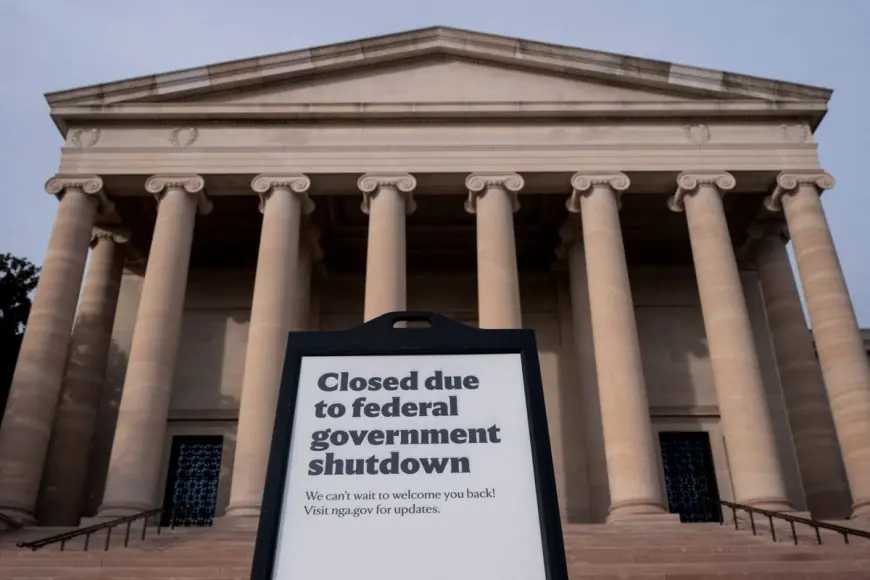
A partial federal government shutdown is underway today, Monday, February 2, 2026, ET, after a funding lapse over the weekend and a standoff over immigration enforcement policy. The immediate question for workers, contractors, travelers, and anyone trying to access federal services is no longer “will it shut down?” but “how long will it last, and what exactly has reopened versus stayed closed?”
Right now, the shutdown is best described as partial and procedural: many essential functions continue, but a large set of agencies affected by the lapsed appropriations are operating under shutdown rules until Congress completes final action. The fastest path out runs through a House vote, followed by the president’s signature.
Is the government shut down today?
Yes. As of February 2, 2026, ET, the federal government is in a partial shutdown due to an appropriations lapse that began after a funding deadline passed without final enactment.
“Partial” matters. Some parts of the government had already been funded earlier and are not directly impacted. Others are funded in a package that cleared the U.S. Senate but still needed action in the House.
What happened: why the shutdown started
The shutdown stems from timing and a political split inside a broader funding package.
A compromise package advanced in the Senate late last week to keep most agencies funded through the fiscal year while using a short stopgap measure for Department of Homeland Security. But because the House was not in position to pass the final package before the deadline, funding lapsed and shutdown procedures kicked in.
The biggest flashpoint is not the overall spending number. It is the fight over immigration enforcement and whether new constraints should be tied to Homeland Security funding, including oversight of Immigration and Customs Enforcement operations.
Senate Democrats and ICE funding: what the fight is really about
The current impasse is being driven by a demand from Senate Democrats for enforcement reforms after a deadly incident in Minneapolis that has become central to the political argument. In response, lawmakers moved to separate Homeland Security from the longer-term agency funding bills and instead extend Homeland Security funding temporarily while negotiations continue.
What makes this unusual is leverage. A shutdown is typically used to squeeze concessions on spending levels. Here, the leverage is being applied to policy and operational rules for immigration enforcement, including demands that have been discussed publicly such as body cameras, identification requirements for agents, limits on certain tactics, and clearer use-of-force standards.
That is why you’re seeing “Senate vote on ICE funding” searches spike. The Senate action was less about a clean “yes or no” on immigration enforcement and more about whether Homeland Security gets full-year funding without new guardrails.
Where Donald Trump, Mike Johnson, and Capitol Hill leaders fit in
The shutdown politics are being shaped by two competing pressures:
-
Speed versus substance
Speaker Johnson is under pressure to reopen the government quickly, but the fastest legislative path usually requires bipartisan cooperation and procedural shortcuts. If Democrats refuse to help expedite, the House must use a slower process, which can extend the shutdown even if there are votes to pass a deal. -
Immigration policy versus funding continuity
The White House has incentives to keep immigration enforcement central to its agenda, while Democrats have incentives to show they are responding to civil-liberties concerns. That clash turns Homeland Security funding into a proxy war over how enforcement is carried out.
Meanwhile, Senate Republicans, including figures such as Mitch McConnell, face a balancing act between party unity, institutional norms, and avoiding prolonged disruption that can boomerang politically.
What we still don’t know
Several key details will determine whether this is a short shutdown or a messier one:
-
Whether House leaders can assemble votes quickly enough to pass the Senate package as-is, or whether changes trigger another Senate round.
-
Whether Democrats’ Homeland Security reform demands consolidate into a narrow list that can actually pass both chambers.
-
How “orderly shutdown” guidance is implemented across agencies today, which affects whether employees are furloughed immediately or kept briefly to close out operations.
Second-order effects: who feels it first
Even short shutdowns create predictable ripple effects:
-
Federal workers and contractors: uncertainty about pay timing, furlough status, and project interruptions.
-
Public-facing services: slower processing times, delayed appointments, and backlogs that take weeks to unwind.
-
Security and safety functions: many continue as “essential,” but administrative and support components can be strained.
-
Politics: immigration becomes even more central, with each side trying to define the shutdown as either necessary accountability or reckless obstruction.
What happens next: realistic scenarios and triggers
-
Shutdown ends within 24 to 48 hours
Trigger: the House passes the Senate package without major alterations, followed quickly by enactment. -
A short extension, then a deal on Homeland Security changes
Trigger: lawmakers agree to a limited set of reforms that both parties can claim as a win, while reopening the government. -
The shutdown drags into the week
Trigger: procedural delays in the House, or a standoff where neither side will provide votes to fast-track action. -
A deal that reopens government but punts the hardest questions
Trigger: a temporary Homeland Security measure is extended again, deferring deeper ICE oversight disputes. -
A broader political escalation
Trigger: the immigration enforcement controversy widens, increasing demands and hardening opposition, raising the cost of compromise.
One practical takeaway: if you’re asking “did the government shut down today,” the answer is that it is already shut down in part, and today’s votes determine whether it stays that way into midweek.