Production Cars with Multiple Engines: A Historical Overview

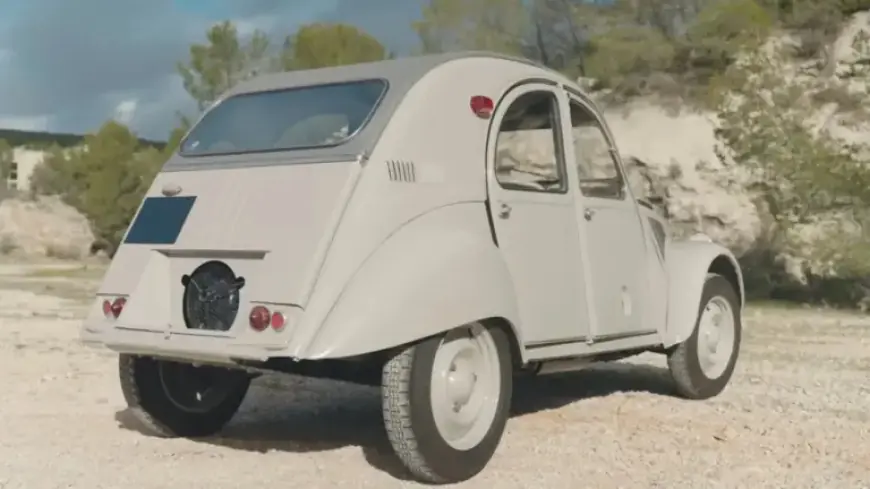
Throughout automotive history, twin-engine cars have been a fascinating innovation. While they often conjure images of custom builds or dragsters, there exists a unique subset of production cars featuring dual engines. These vehicles are designed not only for performance but also for practical purposes in challenging terrains. This article delves into production cars with two combustion engines, highlighting notable examples in the automotive industry.
Production Cars with Multiple Engines
The Citroën 2CV Sahara
Citroën stands out as the sole automaker to successfully produce a twin-engine model available to consumers—the 2CV Sahara. Launched in the 1950s, this car was originally created to meet the needs of motorists in Africa, where conditions required a more rugged vehicle than the standard 2CV.
- Engine Configuration: The Sahara featured a 425cc two-cylinder engine positioned at both the front and rear. Each engine was modified with larger carburetors and a raised compression ratio.
- Power Output: The combined output was modest, at 13.5 horsepower, yet sufficient for its intended purpose.
- Top Speed: The 2CV Sahara could reach a maximum speed of 60 mph.
- Popularity and Value: As of 2026, these vehicles have gained collector status, with sales reaching €132,250 (~$157,000) at auction.
Experiments by Other Automakers
While Citroën successfully marketed the 2CV Sahara, other manufacturers explored twin-engine concepts primarily for enhanced performance.
Alfa Romeo Bimotore
One notable effort was the Alfa Romeo Bimotore from the 1930s. Designed as a race car, it featured two straight-eight engines delivering a remarkable total of 540 horsepower. Despite its impressive specifications, the Bimotore faced challenges due to its high fuel consumption and tire wear.
Volkswagen’s Pikes Peak Golf
Volkswagen also ventured into the realm of twin engines with their MK2 Golf designed for the Pikes Peak International Hill Climb. This vehicle sported two 1.8-liter engines, yielding a total of 640 horsepower. This setup allowed the Golf to accelerate to 62 mph in just 3.4 seconds. However, mechanical failure prevented it from finishing the race.
Conclusion
The concept of production cars with multiple engines remains rare. The Citroën 2CV Sahara is a remarkable example of practicality and ingenuity, catering to specific driving conditions. Meanwhile, brands like Alfa Romeo and Volkswagen showcase how experimentation with twin-engine setups can push the envelope in performance. While these designs may not have gained widespread adoption, they highlight a creative avenue in automotive engineering.