






















Catherine O’Hara cause of death: What’s confirmed, what isn’t, and why details are limited

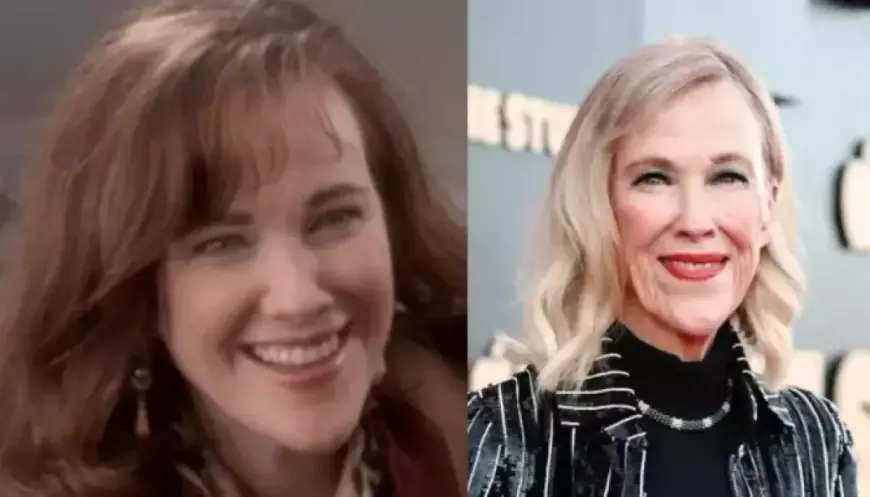
Catherine O’Hara’s death on Friday, Jan. 30, 2026, triggered an immediate wave of tributes—and an equally immediate question: what, exactly, was the cause of death? The clearest answer right now is also the simplest: no specific medical cause has been publicly disclosed. Public statements describe only a “brief illness,” and officials have not released additional medical details.
That gap between public curiosity and confirmed information is common in celebrity deaths, especially in the first 24–72 hours, when families and representatives often prioritize privacy and when medical examiners may not yet have final findings to share.
What’s confirmed so far
Public statements from O’Hara’s representatives and major wire-service reporting align on the key outline: she died at 71 in Los Angeles following a short illness. Beyond that, there are a few elements that are broadly consistent across credible accounts, even if the fine detail varies.
-
Date of death: Friday, Jan. 30, 2026 (ET)
-
Age: 71
-
Location: Los Angeles
-
Public description of cause: “brief illness” (no diagnosis named)
-
Response to a medical emergency: Emergency responders were called to her home for breathing difficulties, and she was transported for urgent care.
Her representatives—working through Creative Artists Agency—did not provide a diagnosis or a longer medical explanation in the initial confirmation.
The breathing difficulties call and timeline
Several accounts describe an early-morning emergency response at O’Hara’s home tied to breathing trouble. Los Angeles Fire Department personnel responded to a medical call involving respiratory distress, and O’Hara was taken to a hospital in serious condition before she died later that day.
Because some public statements describe her death as occurring “at home” while other reporting emphasizes the hospital transport, the most careful way to frame it is this: the medical emergency began at her home, and she died later on Jan. 30 after being moved for urgent treatment. Officials have not released a detailed timeline that reconciles every minute of the morning.
Why the cause of death hasn’t been specified
When a family or representatives use a phrase like “brief illness,” it can cover a wide range of conditions—from an acute infection to a sudden complication of an existing health issue. But without a diagnosis from the family, her doctors, or a medical examiner, anything more specific would be guesswork.
There are also practical reasons details may not appear quickly:
-
Privacy: Families often choose not to disclose diagnoses, particularly when the death follows a short illness.
-
Process: If a medical examiner is involved, an official cause can take time, especially if testing is required.
-
Accuracy: Representatives may limit statements to what can be confirmed immediately without medical nuance.
The result is a familiar early-news posture: the public gets confirmation of the death and broad context, but not a definitive medical explanation.
Health history that’s being discussed—and what it doesn’t prove
In the hours after O’Hara’s death, attention resurfaced around a rare congenital condition she had spoken about publicly: situs inversus totalis, in which internal organs can be mirrored from typical positions. The condition is often asymptomatic and can be compatible with a normal lifespan, though it can complicate medical care depending on circumstances.
What matters for the cause-of-death question is this: no public statement has connected that condition to her death, and it should not be treated as an explanation. The only confirmed public language remains “brief illness,” plus the description of breathing difficulties immediately preceding emergency care.
A career remembered for precision and warmth
The uncertainty around the medical details has not slowed the tributes. O’Hara’s career touched multiple generations—from her early ensemble work on SCTV after training with The Second City, to scene-stealing film roles in Beetlejuice and Home Alone, to her award-winning turn as Moira Rose in Schitt's Creek.
She is survived by her husband, Bo Welch, and their two sons. As public interest in the cause of death continues, any additional medical detail—if it comes at all—is most likely to arrive either through a family statement or through an official determination released through appropriate channels.
Sources consulted: Reuters, Associated Press, People, Entertainment Weekly, Creative Artists Agency, Los Angeles Fire Department