

























Gold and Silver Prices Today: Why Gold Is Down, Why Silver Is Dropping Harder, and What to Watch Next

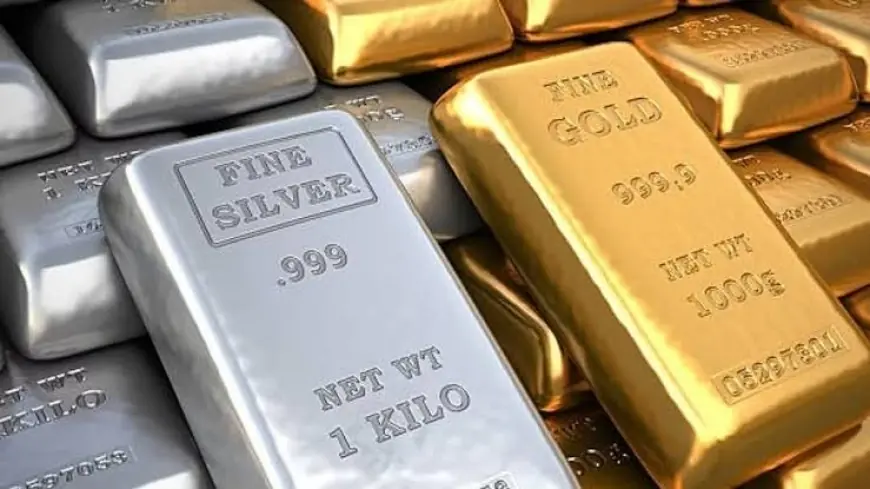
Gold and silver prices today are swinging sharply after a steep late-week selloff that reversed a blistering run to fresh highs. In the latest widely quoted spot market prints, spot gold is around $4,894–$4,905 per ounce, while spot silver is around $85–$86 per ounce, with silver’s drop far larger in percentage terms.
For U.S.-listed ETFs that many retail investors use as a proxy: SPDR Gold Shares (GLD) and iShares Silver Trust (SLV) both fell sharply in the same risk-off move, reflecting the downturn in the underlying metals.
Why is gold down today?
The immediate driver has been a fast change in macro expectations—especially around U.S. monetary policy and the dollar—after news flow late in the week triggered profit-taking in what had become a crowded “real assets” trade. When the dollar strengthens and interest-rate expectations shift toward tighter policy (or fewer/ later rate cuts), non-yielding assets like gold tend to come under pressure because the opportunity cost of holding them rises.
Just as important as “the reason” is “the positioning.” Gold had rallied aggressively for months, and parabolic moves often end with forced selling as leveraged trades unwind and systematic strategies cut exposure once volatility spikes.
Why is silver dropping today—and why is it falling more than gold?
Silver is behaving like silver often does in extremes: it magnifies the move. It has a dual identity as both precious metal and industrial input, and it typically carries higher volatility than gold. In this downswing, the same macro shock that hit gold also slammed silver harder, with spot prices down roughly a quarter from the prior peak zone in some widely followed market snapshots.
Another factor: silver’s recent run-up had been even more stretched. When momentum breaks, silver can see sharper air pockets because the market is thinner, speculative participation is heavier, and liquidation tends to cascade quickly.
Gold spot price, silver spot price, and copper price today
Here are the widely cited “spot” reference points (these can vary slightly by venue and time):
-
Gold spot price: about $4,894–$4,905/oz
-
Silver spot price: about $85–$86/oz
-
Copper price: about $5.99/lb
Many traders track these through major quote dashboards such as Kitco because the quotes update quickly and display both spot and futures-linked references.
Gold price today in India and gold rate today
For “gold price today in India,” the number depends on city, tax treatment, and whether you’re looking at bullion reference rates or retail jewelry quotes (which include making charges and retailer spreads). Two commonly cited national dashboards show different snapshots for 24K per gram, which is a good illustration of why shoppers should treat online numbers as indicative, not final:
-
24K gold (India) per gram: ₹16,058 (one dashboard)
-
24K gold (India) per gram: ~₹16,943 (another dashboard)
If you’re buying jewelry rather than bullion, the “out-the-door” price can diverge materially from these reference rates.
Behind the headline: what’s really going on
Context: Gold and silver had become a top-tier “fear-and-debasement” trade—part inflation hedge, part geopolitical hedge, part dollar hedge. That kind of narrative can persist for a long time, until one catalyst forces investors to reprice the path of rates and the dollar.
Incentives:
-
Traders want to protect profits after a big run; that accelerates selling once momentum breaks.
-
Long-term holders want confirmation that this is a correction, not a regime change.
-
ETF investors often react to headlines, which can amplify one-day flows in products like GLD and SLV.
Stakeholders: miners, refiners, jewelers, central banks, futures traders, and households using gold as a store of value all experience the same move differently. A plunge can boost jewelry demand (lower prices) while simultaneously hurting mining equity sentiment and triggering margin stress in derivatives.
Missing pieces: whether the selloff was mostly discretionary profit-taking or forced liquidation; whether the dollar move persists into next week; and whether physical buying (bars/coins/jewelry) meaningfully absorbs supply at these levels.
Second-order effects: sharp drops can tighten financing conditions for mining projects, swing inflation expectations, and spill into other “real asset” trades. They can also reshape retail behavior—buyers who felt “priced out” rush in, while recent entrants panic out, widening volatility.
What happens next: realistic scenarios (and triggers)
-
Stabilization and range trading
Trigger: the dollar cools and gold holds key support zones for several sessions. -
Another leg down (capitulation)
Trigger: renewed volatility + margin calls + systematic de-risking. -
V-shaped bounce, then chop
Trigger: short covering collides with bargain hunting, especially in silver. -
Divergence: gold steadies, silver stays wild
Trigger: industrial-demand worries linger while monetary hedging demand returns first to gold. -
Rotation into proxies (ETFs/futures) vs. physical
Trigger: investors choose liquidity and tight spreads over coins/bars when uncertainty is high.
If you tell me your country/city (for “near me” bullion/jewelry pricing) and whether you care about spot, futures, or retail buy price, I can translate these moves into the most relevant “what you’d actually pay” view.