
























Gold Price Today Slides Below 4,910 After Historic Selloff as Dollar Rebound Rewrites the Trade

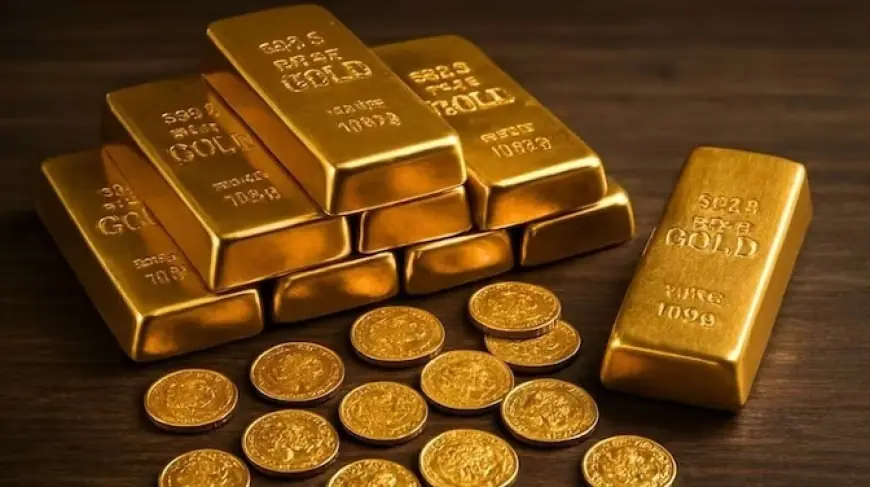
Gold price today is sharply lower in early U.S. trading on Saturday, January 31, 2026 ET, after a violent reversal that snapped a blistering rally from recent record highs. As of 9:26 AM ET, spot gold was about 4,902.85 per troy ounce, down roughly 9 percent on the day, with pricing swinging widely as traders reassess what had become a crowded, momentum-driven bet.
The speed of the move matters as much as the level. Gold can fall on any given day, but a one-session slide of this size typically signals forced selling, leveraged positioning unwinding, and a sudden shift in assumptions about interest rates and the U.S. dollar.
Gold Price Today: Where the Market Stands Right Now
The market is trading in a “gap between narratives” moment: gold is still priced at an elevated level compared with earlier in the month, but it is no longer behaving like a one-way safe-haven surge.
Key markers traders are watching today include:
-
The 5,000 level, which has acted like a psychological magnet for both buyers and sellers
-
The high 4,700s to high 4,800s zone, where dip-buying often shows up first after a waterfall selloff
-
Volatility itself, because big intraday ranges can continue for days as positions rebalance
Even if you do not trade, those levels shape what happens next: when price stabilizes, demand returns; when price slices through support quickly, it often triggers another wave of selling.
What Happened: From Record Highs to a Rapid Reversal
Gold entered the end of January with a powerful tailwind: investors had piled into precious metals amid fears about currency debasement, geopolitical risk, and the path of U.S. monetary policy. That momentum pushed gold to fresh highs late Thursday, January 29, 2026 ET, and sentiment became increasingly “nothing can stop this” across retail and institutional corners alike.
Then the story changed in hours. On Friday, January 30, 2026 ET, the White House announced it would nominate Kevin Warsh to lead the Federal Reserve, triggering a sharp bounce in the U.S. dollar and an abrupt repricing of expected rate cuts. Gold, which pays no yield, tends to struggle when the dollar strengthens and real yields rise, because holding cash-like assets becomes more attractive on a relative basis.
That announcement did not create the entire selloff by itself. It was the match in a room full of dry wood: crowded positioning, extreme recent gains, and a market primed for profit-taking.
Behind the Headline: Incentives, Stakeholders, and the Mechanics of the Drop
The incentives were clear before the fall: gold had become a high-conviction trade that offered both narrative comfort and recent performance. When an asset rises rapidly, “owning it” can feel like the prudent choice, and not owning it can feel like career risk for money managers.
When the narrative flips, the incentives reverse just as fast:
-
Leveraged traders face margin calls and must sell, regardless of conviction
-
Systematic strategies reduce exposure when volatility spikes
-
Risk managers cut position sizes after outsized moves
-
Short-term holders lock in gains to avoid giving profits back
Stakeholders are not just traders. Central banks, jewelry manufacturers, refiners, miners, and retail coin and bar buyers all respond differently. Central banks tend to move slowly, but retailers can disappear overnight if they fear catching a falling knife. Miners can see their equity valuations whip around even more violently than the metal itself, because profits are leveraged to price.
The missing piece, and the reason this story stays hot, is transparency: the public sees the price drop, but not the plumbing. A big slide often reflects liquidation and hedging flows that are invisible until after the fact.
What We Still Don’t Know
Several questions will shape where gold goes next:
-
How much of Friday’s move was forced selling versus discretionary profit-taking
-
Whether the dollar’s rebound sustains into next week
-
How quickly buyers reappear in physical markets after such a shock
-
Whether broader risk assets stabilize or follow metals lower
This uncertainty is why “gold price today” can remain a headline for days: the first drop is only the start of the repricing process.
What Happens Next: Scenarios and Triggers to Watch
-
Stabilization and range trading
Trigger: the dollar cools off and gold holds above the high 4,700s, encouraging gradual dip-buying. -
Another leg down
Trigger: rising real yields, tighter financial conditions, or more forced liquidation into thin liquidity. -
Sharp rebound, then choppy consolidation
Trigger: bargain-hunting collides with short covering, but volatility remains elevated as traders reduce exposure. -
Rotation into “safer” hedges
Trigger: investors choose cash, short-duration instruments, or defensive equities instead of non-yielding metals. -
Slow rebuild of the bull case
Trigger: persistent inflation anxiety, renewed geopolitical stress, or sustained central bank demand that quietly absorbs supply.
Why It Matters Beyond Traders
Gold is a financial barometer. When it surges, it often signals anxiety about currency, inflation, or stability. When it crashes after a parabolic run, it signals something else: confidence is returning in the dollar, liquidity conditions are tightening, or speculative positioning has become too extreme to sustain.
For households, the practical impact shows up in jewelry pricing and in the timing decisions of anyone buying coins or bars. For markets, it shows up in sentiment: if gold cannot hold its gains, other “crowded trades” can become vulnerable too.
Gold price today is not just about where the metal is trading at 9:26 AM ET. It is about whether the market is transitioning from a fear-driven sprint to a more disciplined, rate-sensitive environment — and whether investors are ready to pay up for protection when the cost of money is rising again.