























Melania Movie Sparks Harsh Reviews and Soft Ticket Sales as Melania Trump Documentary Hits Theaters

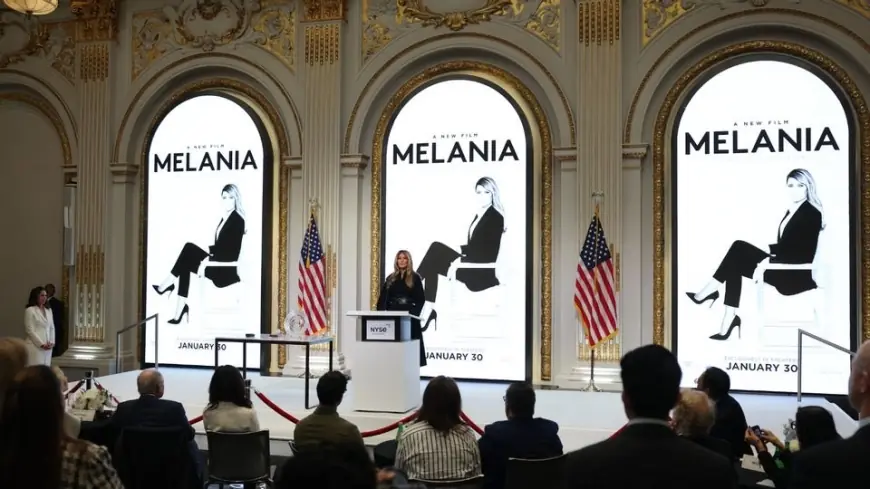
The Melania movie, a new Melania Trump documentary directed by Brett Ratner, opened in U.S. theaters on Friday, January 30, 2026 ET, and it is already colliding with two problems that can define a theatrical run: brutal early reviews and signs of a weak box office start. The film’s rollout has included high-profile screenings and a splashy Washington premiere, but the conversation quickly shifted to whether the project can draw a sustained audience beyond the political and curiosity-driven crowd.
For moviegoers searching “Melania movie near me,” the immediate practical reality is uneven showtime availability. Some venues are keeping multiple daily screenings, while others appear to be trimming showtimes as demand becomes clearer through the weekend.
What the Melania Trump Movie Is and Why It’s Unusual
The Melania Trump movie is framed as an intimate, behind-the-scenes look at Melania Trump during the roughly 20 days leading into her husband’s January 2025 presidential inauguration. In theory, that window offers built-in drama: security logistics, public scrutiny, internal staff tensions, and the careful choreography of image.
In practice, the film’s premise is also its vulnerability. A short, controlled timeline can easily become a glossy highlight reel if the documentary does not show meaningful conflict, candid reflection, or verifiable decision-making. Early critical reaction suggests many reviewers believe the movie leans toward staged moments and curated aesthetics rather than revelation.
Melania Movie Reviews and the Review-Aggregation Score Problem
Melania movie reviews have been notably negative in the first wave, and the film’s early score on a major review-aggregation site has landed in the single digits. That kind of number tends to become a headline by itself, because it provides a simple shorthand that travels faster than nuance.
But the deeper issue is what those reviews signal to three groups at once:
-
Casual viewers deciding how to spend a Friday night
-
Theater managers deciding which screens to reassign next week
-
The broader political audience that will interpret the film as either image-making or image-breaking
Even viewers who never watch the documentary may absorb the “consensus” and move on. That is the reputational gravity of aggregator-driven entertainment: it compresses complicated reactions into one scroll-stopping metric.
Melania Box Office: Why Ticket Sales Matter More Than the Premiere
The Melania box office story is developing, but early indicators point to a modest opening weekend. For a documentary with a large marketing push and wide placement, the key question is not whether it can win one big weekend, but whether it can avoid rapid drop-offs and canceled screenings by week two.
Theatrical documentaries often survive on targeted audiences and strong word of mouth. This one faces the opposite dynamic: intense awareness paired with skepticism. If the film becomes an event only for critics, political diehards, and curiosity seekers, it risks front-loading its revenue and then fading quickly.
Where Is Melania Trump From, and Why That Background Still Shapes the Narrative
For viewers asking “where is Melania Trump from,” she was born in what is now Slovenia, in the former Yugoslavia, and she spent her early life there before building an international modeling career and later moving to the United States. That origin story has long been part of her public brand: outsider, self-contained, highly image-conscious, and careful with access.
The documentary’s challenge is that biography alone does not automatically produce a compelling on-screen arc. Audiences often want stakes: what she believes, what she fears, what she chooses, and what costs those choices impose on others.
Kennedy Center Premiere and the Stakeholder Chessboard
The Kennedy Center premiere gave the project institutional polish and a sense of cultural importance. That matters because the stakeholders are not limited to filmgoers.
Key stakeholders include:
-
Melania Trump’s personal and political brand team
-
The director and producers seeking a high-profile comeback and commercial validation
-
Theater chains balancing demand with limited screen capacity
-
Political allies and opponents who will weaponize the film’s reception
-
Corporate and philanthropic players watching how cultural capital can be traded for access and goodwill
Incentives are overlapping and sometimes conflicting. A prestige premiere elevates the film’s status, but it also raises expectations. If the movie feels thin, the gap between presentation and content becomes part of the criticism.
What We Still Don’t Know
Several pieces remain unclear as the opening weekend unfolds:
-
Whether theaters will keep the current number of daily showings into next week
-
How much of the audience is organic demand versus pre-buys, group sales, or concentrated interest in a handful of markets
-
Whether a second wave of reviews will soften, or harden, the early narrative
-
How the film will perform once it is no longer a novelty and becomes a straightforward value proposition against other weekend releases
What Happens Next: Realistic Scenarios and Triggers
-
Stabilizes at low but steady numbers
Trigger: a core audience treats it as a must-see cultural artifact, keeping weekday attendance from collapsing. -
Fast theatrical contraction
Trigger: continued sparse auditoriums lead theaters to reduce screens and consolidate showtimes within 7 to 10 days. -
Shifts into a political lightning rod rather than a movie
Trigger: viral clips and commentary outpace actual viewing, making “the film” something most people talk about but few watch. -
Post-theatrical performance becomes the real story
Trigger: once it becomes easier to watch at home, total viewership rises even if theatrical revenue disappoints. -
Recut, reframed, or expanded follow-up content
Trigger: the team responds to criticism by repositioning the material, adding context, or extending the project in a new format.
The second-order effect to watch is how entertainment distribution, cultural institutions, and political branding increasingly blur. If this release is perceived as a template, future political figures may push more aggressively into prestige-film style storytelling, even when traditional documentary standards like distance and editorial independence are contested.
For audiences, the immediate takeaway is simple: the Melania documentary has arrived as a high-profile experiment in image, access, and attention. Whether it becomes a sustained theatrical draw or a short-lived headline will likely be decided by the most unglamorous metric of all: how many seats are filled this weekend, and how many showtimes still exist next Friday.