
























Elon Musk stirs merger talk as TSLA swings and xAI funding reshapes strategy

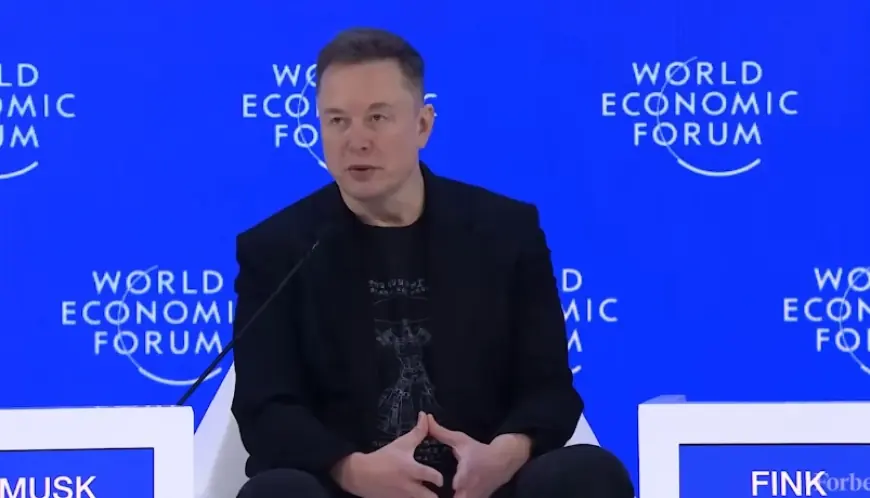
Elon Musk set off a fresh round of market volatility late this week after new details surfaced around possible consolidation across his companies, a development that pushed TSLA sharply higher in intraday trading even as investors continued to digest Tesla’s latest earnings and spending plans. The same set of developments keeps xAI at the center of Musk’s push to reframe his empire around AI infrastructure, data access, and robotics rather than a pure electric-vehicle story.
The immediate stakes are practical: corporate structure can determine which balance sheets fund AI buildouts, how data is shared across products, and how public-company shareholders are exposed to private-company risk.
Elon Musk weighs a mega-merger structure
Discussions have been described this week involving a potential tie-up between SpaceX and xAI ahead of a possible SpaceX public offering later in 2026. Separate chatter has also floated the idea of SpaceX exploring a Tesla combination, though deal terms, timing, and feasibility remain unclear and nothing has been formally announced.
For investors, the core question is whether Musk is trying to create a single “Musk platform” with shared financing and data, or simply aligning operations through narrower partnerships and internal contracts. The distinction matters because a true merger would change governance, disclosure, and risk concentration—especially if a public company like Tesla is pulled further into funding AI projects that are still loss-making.
TSLA whipsaws after earnings and spending signals
Tesla’s latest earnings update came with a heavy emphasis on spending and a strategic pivot that markets are still trying to price. Management outlined large capital needs tied to AI compute, autonomy development, and robotics manufacturing capacity. Traders have treated that as both bullish (bigger ambition, larger total addressable market) and risky (returns depend on execution and regulatory approvals).
At the same time, Tesla disclosed a $2 billion investment in xAI, a move that sharpened investor focus on related-party dynamics and how Tesla intends to benefit—through autonomy models, data pipeline synergies, or shared compute. The disclosure added a new layer to “why is TSLA moving?” conversations: the stock is no longer reacting only to deliveries and margins, but to whether Tesla becomes a funding engine for Musk’s AI stack.
xAI’s cash, valuation, and the data question
xAI entered 2026 with a major financing milestone: an upsized Series E that raised $20 billion and priced the company at a scale that places it among the most valuable private AI firms. The funding is being used to expand training infrastructure and deploy new model capabilities, but it also raises a familiar constraint for frontier AI: data.
That helps explain why potential combinations with SpaceX and its Starlink business keep coming up. Starlink touches a massive global user base and generates extensive operational and network telemetry. Even without a merger, tighter collaboration could increase the amount of data available for model training, product improvement, and personalization—while also intensifying privacy and regulatory scrutiny.
Privacy and regulatory scrutiny rises alongside the AI push
One of the most sensitive developments involves Starlink’s updated privacy-policy language that permits the use of customer data to train machine-learning and AI systems unless users opt out. The change has amplified concerns from privacy advocates about how broadly “training” could be interpreted, what categories of data may be used, and whether users will meaningfully understand the opt-out mechanism.
For Musk’s broader strategy, this is a flashpoint: AI products tend to improve with more and richer data, but the political and regulatory environment around consumer privacy is moving in the opposite direction. If regulators decide the disclosures are insufficient, or if enforcement actions follow, the short-term cost could be reputational and legal—while the long-term cost could be limits on the very data flows the strategy relies on.
Key figures and dates investors are tracking
| Item | What’s in focus (ET) |
|---|---|
| xAI Series E | $20B raised (announced Jan. 6, 2026) |
| Tesla investment in xAI | $2B disclosed during late-January earnings window |
| Merger discussions | SpaceX–xAI described as under consideration ahead of a 2026 IPO window |
| Starlink privacy update | AI training use allowed with opt-out; change effective Jan. 15, 2026 |
| TSLA reaction | Shares moved sharply on consolidation chatter and AI-spend guidance |
What to watch next
Markets will likely keep treating this as a rolling story with three near-term signposts: (1) whether any formal filing or board action appears that clarifies a merger path, (2) how Tesla describes governance and expected return on its xAI investment in subsequent disclosures, and (3) whether privacy regulators or lawmakers escalate scrutiny of Starlink’s new AI-training language.
If these pieces move toward tighter consolidation, investors may reward the “AI platform” narrative while demanding clearer guardrails. If they stall, TSLA’s moves may revert to the familiar drivers—deliveries, margins, and the pace of autonomy progress—while xAI continues building behind private-company walls.
Sources consulted: Reuters; xAI (company blog); Bloomberg; The Wall Street Journal; Associated Press.