
























Katherine O’Hara, Comedy Cornerstone of “Schitt’s Creek” and “Home Alone,” dies at 71

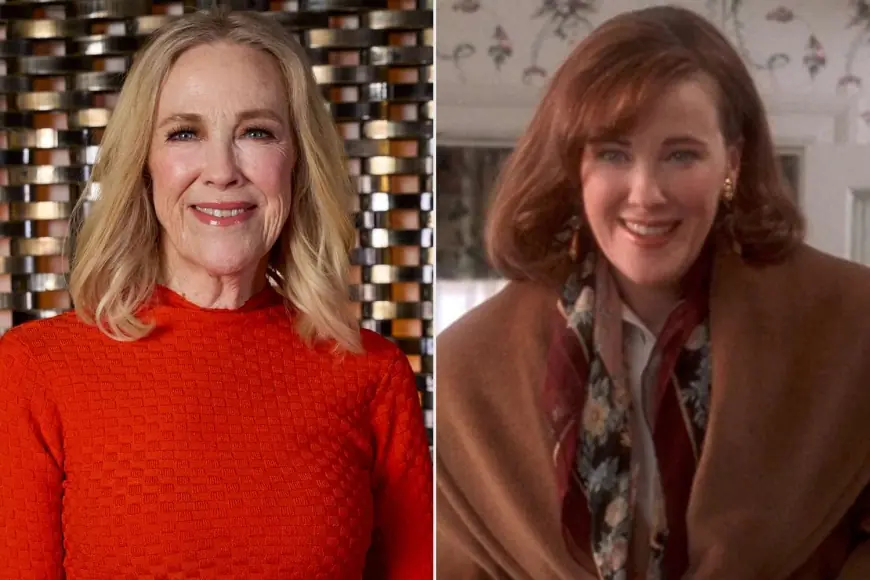
Katherine O’Hara, the Emmy-winning performer whose offbeat precision helped define modern screen comedy, died Friday, Jan. 30, 2026, in Los Angeles. She was 71. Her death was confirmed by representatives, who said she died after a brief illness.
Over a career that stretched from Canadian sketch comedy to Hollywood studio hits and, finally, a streaming-era renaissance, O’Hara built a rare kind of stardom: the scene-stealer who never felt like a guest in someone else’s movie or show. Her characters were big, musical, and razor-specific—yet often landed with an emotional honesty that made the laughs sharper.
From Toronto improv to national TV fame
Born in Canada and shaped by Toronto’s improv scene, O’Hara emerged from a generation of performers who treated character as craft, not costume. She rose through the city’s comedy pipeline into The Second City orbit and then into mainstream visibility on SCTV, where her versatility—accents, physicality, and a knack for playing delusion with dignity—made her a standout.
Her collaborations during that era laid the foundation for decades of ensemble chemistry, especially with Eugene Levy, a creative partnership that would later become central to her most celebrated late-career work.
Hollywood roles that became cultural shorthand
O’Hara’s filmography is packed with performances that audiences can recall in a single image: a look of panic, an operatic line reading, a comedic pause that turns into a punchline.
Her most widely recognized mainstream role remains the mother at the center of the Home Alone films—an anxious, determined parent whose sincerity grounded the chaos. She also carved out an enduring place in cult comedy and genre-adjacent favorites, including Beetlejuice, where her presence matched the film’s manic energy without losing human detail.
In the 1990s and 2000s, she became synonymous with improvisation-driven comedy through her work in Christopher Guest’s mockumentary-style films, where she could build a full character from a gesture, a vowel shift, or a brittle smile that revealed insecurity under bravado.
“Schitt’s Creek” and the late-career peak
For many viewers, O’Hara’s defining creation is Moira Rose in Schitt’s Creek—a former soap star with an accent that seemed to travel internationally mid-sentence and a wardrobe that functioned like emotional armor. The role turned O’Hara into a streaming-era icon, delivering catchphrases and GIF-able moments while still allowing real tenderness to break through the artifice.
Moira worked because O’Hara never played her as a joke. Even at maximum theatricality, the character’s vanity and vulnerability sat side by side, and the comedy landed as character truth rather than parody. The show’s awards run cemented O’Hara’s place in the canon, but it also introduced her to a new audience that hadn’t grown up with her earlier work.
A career built on precision, not volume
O’Hara’s most consistent skill was control: she could go loud without becoming empty, and she could go small without fading. Directors and co-stars routinely leaned on her to set a tone—especially in ensemble projects—because her choices created a rhythm others could play against.
She also moved comfortably between mediums. Beyond live-action roles, she did notable voice work and guest appearances across television, bringing the same calibrated oddness to a single scene that she could sustain across a full season.
Key milestones at a glance
| Moment | Why it mattered |
|---|---|
| Breakout on “SCTV” | Established her as an elite character comedian |
| “Home Alone” films | Cemented mainstream recognition |
| Christopher Guest films | Showcased improvisational range and depth |
| “Schitt’s Creek” | Delivered a signature role and awards-era acclaim |
| Continued late-career visibility | Kept her active in high-profile projects into the 2020s |
Family and legacy
O’Hara is survived by her husband, Bo Welch, and their two sons. Tributes Friday quickly focused on the same qualities audiences recognized on screen: originality, warmth, and an instinct for finding the human beat inside heightened comedy.
Her legacy isn’t only a list of titles; it’s the particular standard she set. O’Hara made character comedy feel both fearless and exacting—proof that a performance can be outrageous and still honest.
Sources consulted: Associated Press; People; The Guardian; Los Angeles Times; CBS News